




What is Vehicle-to-Vehicle (V2V) Communication?
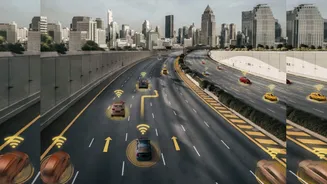
At its core, Vehicle-to-Vehicle (V2V) communication is a technology that allows cars to wirelessly exchange real-time information with each other. Think of it as a constant, high-speed conversation between vehicles on the road. They share data like their
speed, location, direction of travel, and whether they are braking or accelerating. This isn't about streaming movies or making calls; it's about sharing crucial safety data within milliseconds to create a 360-degree awareness bubble around each car. Unlike current safety systems that rely on cameras and sensors, which can be blocked by other vehicles or blind corners, V2V can 'see' around obstacles, providing warnings about dangers before a driver or onboard sensor ever could.
India's Big Push for Connected Cars
Recognizing its potential to curb the country's high rate of road fatalities, the Ministry of Road Transport and Highways (MoRTH) has proposed a plan to make V2V communication systems mandatory. According to a draft notification, the rollout will be phased. From October 1, 2027, any new vehicles voluntarily fitted with V2V systems must comply with a new standard, AIS-230. Then, from October 1, 2028, these systems will become mandatory for all newly manufactured two-wheelers, passenger vehicles, and commercial trucks. This move is part of a larger strategy to implement an Intelligent Transportation System (ITS) in India, laying the groundwork for smarter, safer, and more efficient mobility.
Why Sudden-Braking Alerts Are the Key Feature
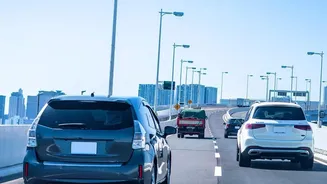
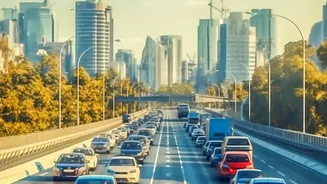
Among the various applications of V2V technology, the Emergency Brake Alert is arguably the most critical for Indian roads. Picture a common scenario on a packed highway: a car several vehicles ahead slams on its brakes. Due to the traffic, you can't see the brake lights. In a V2V-equipped car, the braking vehicle would instantly broadcast an alert that ripples through the traffic queue. Your car would receive this warning, flashing an alert on your dashboard seconds before you might have otherwise reacted, potentially preventing a dangerous pile-up. This function directly addresses one of the most frequent causes of collisions in India's dense and often unpredictable traffic conditions. It provides a proactive safety net where driver reaction time and line-of-sight are limited.
The Technology Behind the Warning
This near-instant communication is powered by a technology called Cellular Vehicle-to-Everything (C-V2X). India's proposed standard, AIS-230, is based on this system. It operates on a specific frequency band (5.9 GHz) that the Department of Telecommunications has set aside and exempted from licensing, specifically for these intelligent transport applications. This means vehicles won't be relying on standard mobile networks, which can get congested. Instead, they use a dedicated, low-latency channel to ensure safety messages are delivered instantly and reliably. Besides sudden braking, this system can also warn of wrong-way drivers, approaching emergency vehicles, and forward collision risks.
Challenges on the Road Ahead
While the potential is enormous, the path to full implementation has its bumps. One major challenge is ensuring all vehicles, regardless of manufacturer, can communicate with each other seamlessly. The cost of installing these on-board units is another consideration, particularly for entry-level vehicles and two-wheelers. Furthermore, as cars become more connected, ensuring the cybersecurity of the network to prevent hacking or data breaches becomes paramount. Experts also note that for the system to be truly effective, it needs to reach a critical mass of users, which will take time after the 2028 mandate kicks in. The unique and chaotic nature of Indian traffic—with a mix of cars, bikes, auto-rickshaws, and pedestrians—presents a test unlike anywhere else.