



Trouble Before Takeoff
The journey's challenges begin long before the first flap of a migratory wing. In their summer breeding grounds, often in the high latitudes of the northern hemisphere, birds face rapidly changing conditions. Climate change is a primary culprit, altering
the very environmental cues—like temperature and plant growth—that birds rely on to time their nesting. Warmer, earlier springs can cause a mismatch between when birds arrive and when their primary food sources, like insects, are most abundant. This timing disruption can lead to fewer successfully raised young. Furthermore, the relentless encroachment of human activity causes significant habitat loss and degradation, from deforestation to agricultural intensification, shrinking the safe spaces available for nesting and raising chicks.
A Perilous Path Through the Skies
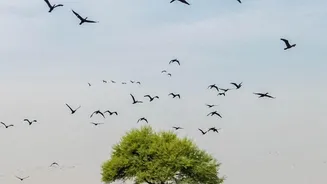
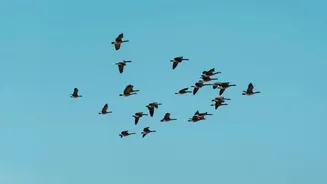
Once airborne, the birds' journey is a high-stakes marathon fraught with both natural and man-made dangers. Mortality rates can be up to 15 times higher during migration than during the more stable breeding and wintering periods. A major threat is the loss of crucial stopover sites—wetlands, forests, and grasslands that act as vital refuelling stations. Urban and agricultural expansion means these sites are disappearing, forcing birds to fly longer distances without rest and food, often leading to exhaustion. The modern landscape presents a deadly obstacle course. Artificial light from cities disorients birds that migrate at night, causing them to circle buildings until they are exhausted or collide with them. In the United States alone, it's estimated that nearly one billion birds die each year from colliding with glass on buildings. Power lines, communication towers, and wind turbines add to this gauntlet of airborne hazards.
No Safe Haven at the Destination
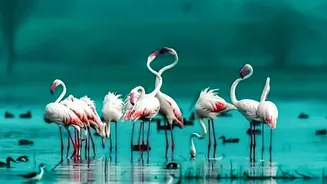
For the birds that survive the arduous flight, their wintering grounds are not always the safe refuge they once were. These habitats, many of which are in the Global South, including India, face intense pressure. The conversion of wetlands and grasslands for agriculture and urban development continues unabated, shrinking the areas birds depend on for food and shelter. Pollution is another insidious threat. Pesticides used in agriculture can poison birds directly or contaminate their food sources, affecting their health and reproductive success. In some regions, illegal hunting and trapping still take a heavy toll on already stressed populations. Even seemingly small changes, like unusually cold winters, can lead to mass starvation events when birds arrive in a weakened state.
The India Connection
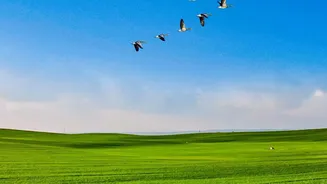
India plays a critical role in this global story. The country lies at the confluence of three major migratory flyways, most notably the Central Asian Flyway, making it a vital wintering destination for millions of birds like the Bar-headed Goose and the Amur Falcon. The health of India’s wetlands, grasslands, and coastal areas is therefore of international importance. Thankfully, there is growing awareness and action. India has a National Action Plan for the conservation of migratory birds and is a party to the Convention on Migratory Species (CMS). Conservation stories like that of the Amur Falcon in Nagaland, where communities have transitioned from hunting the birds to protecting them, show that local action can have a global impact. These efforts are crucial, as the survival of these species depends on a chain of safe habitats stretching across continents.