






The Telecom Foundation: Cutting Scams at the Source
The first line of defense is the telecom network itself. Spearheaded by the Department of Telecommunications (DoT) and the Telecom Regulatory Authority of India (TRAI), the focus is on sanitizing the very numbers used by fraudsters. A key recent move
is the expansion of dedicated number series for legitimate businesses. Following the 1600-series for banks and government bodies, TRAI has now mandated a '1601' number series for utilities, courier, and logistics companies for their service calls. This helps citizens instantly identify a genuine call from, say, their gas provider, as it will not come from a standard 10-digit mobile number. These numbers cannot be used for promotional calls and are assigned directly to verified entities, making impersonation much harder. Supporting this is the Sanchar Saathi portal, which allows citizens to block stolen phones and report fraudulent connections, helping to build a cleaner database of mobile users.
The Financial Firewall: Protecting Your Money in Real-Time
Once a fraudulent message or call gets through, the next battleground is the financial transaction. Here, the Reserve Bank of India (RBI) and the National Payments Corporation of India (NPCI) are building a firewall. With UPI transactions soaring, security protocols are being constantly updated. Recent rules mandate stronger two-factor authentication for digital payments to combat fraud linked to static PINs and SMS OTPs. A crucial innovation is the Financial Fraud Risk Indicator (FRI), a system that allows telecom intelligence to be shared with banks in real-time. When you initiate a UPI payment, the recipient's phone number is cross-checked against a national database of numbers flagged for fraud. Based on a risk score, the bank or payment app can then flag or even block the transaction before your money is lost. The government has also streamlined reporting through the National Cyber Crime Helpline '1930' and the Citizen Financial Cyber Fraud Reporting and Management System (CFCFRMS), which has reportedly saved over ₹11,158 crore from being siphoned off by fraudsters as of June 2026.
The Digital Platform Patrol: From WhatsApp to Google
Scammers have increasingly migrated to Over-The-Top (OTT) platforms like WhatsApp, Telegram, and social media, where regulation has historically been weaker. This is now changing. Tech giants are deploying their own resources and collaborating with the government. Platforms use AI and machine learning to proactively detect and block spam accounts and malicious links. User reporting features are also a key tool, feeding data back into these AI systems. Importantly, there's growing coordination with government bodies like the Indian Cyber Crime Coordination Centre (I4C). Information shared on government portals, such as fraudulent numbers reported on Chakshu, is used by platforms to take down bad actors. This collaboration has resulted in the blocking of thousands of mobile applications linked to fraud.
Connecting the Layers: A Unified Defense
The true strength of India's new strategy lies not in any single layer, but in how they connect. It is a 'whole-of-government' approach that treats a scam as a single chain of events, from the fraudulent SIM card to the mule bank account. Data from the National Cyber Crime Reporting Portal, the Sanchar Saathi portal, and bank fraud reports are all fed into a central system called the Digital Intelligence Platform (DIP). This platform provides a unified view of a fraudster's activities across different services. For instance, the 'Pratibimb' module maps the geographic locations of criminals, helping law enforcement dismantle organised networks. The Supreme Court has also pushed for better coordination, ordering the RBI to create standard procedures for handling mule accounts used to launder stolen money. This integration ensures that a scammer blocked by a telecom operator can also be flagged by a bank and de-platformed by a social media app, closing loopholes that previously allowed them to operate freely.
The Evolving Threat: New Challenges Ahead
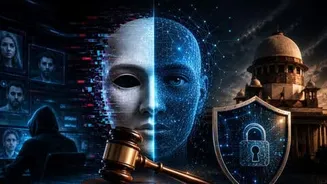
Despite these significant strides, the fight is far from over. Scammers are constantly evolving their tactics. The rise of AI-powered deepfakes and voice cloning presents a new and sophisticated threat, making impersonation scams even more convincing. The problem of 'digital arrests', where fraudsters impersonate police or CBI officials, has become a high-value form of extortion. While authorities are exploring new laws to tackle these specific crimes, they represent the constant cat-and-mouse game being played. Regulators and tech companies also face the challenge of implementing strong security measures without creating unnecessary friction for legitimate users, as seen in debates over AI-based spam blocking which could accidentally block critical OTPs.