



What Happened to Google Earth?
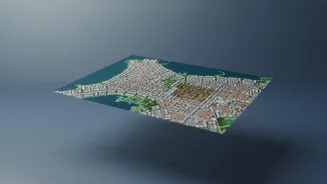
In late July 2026, Google launched an ambitious new feature within Google Earth that allowed users to generate artificial intelligence images directly on top of the platform's trusted satellite and aerial imagery. Within approximately 24 hours, Google pulled
the feature entirely. The reason for the stunningly fast rollback was that researchers and users immediately demonstrated how the tool could be used to create convincing but entirely fictional scenes of real-world locations. Examples that quickly circulated online included fabricated refugee camps, military strikes, and damage near sensitive sites like hospitals. The feature, powered by Google's Nano Banana 2 image model, was intended for creative uses like real estate planning. However, its integration into a platform widely used by journalists and investigators for verification created an immediate crisis of trust.
A Crisis of Borrowed Credibility
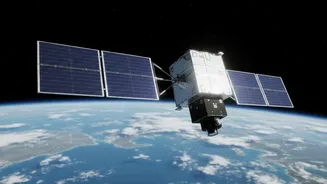
The core problem was not simply that AI could generate fake images, a capability that has existed for some time. The issue was one of borrowed authority. By embedding the generator inside Google Earth, the AI-created fictions were given the implied credibility of one of the world's most trusted geographic reference tools. Disinformation experts warned that this made it far easier to create and spread convincing fakes that could erode public trust in satellite imagery itself. While Google noted that the generated images carried a digital watermark and did not alter the public map for other users, critics pointed out a fatal flaw in that logic. Once a user takes a screenshot, the image is detached from its original context, and the watermark becomes an unreliable safeguard. The screenshot becomes the evidence, and any explanation is lost.
The Irresistible Rush to Automate
The Google Earth incident is a high-profile example of a broader trend across the tech industry: an immense competitive pressure to deploy generative AI features quickly. From chatbots that end up giving incorrect policy advice to customers, to AI-powered drive-thrus that mangle orders, companies are racing to automate processes to cut costs and appear innovative. AI is being integrated into everything from chatbot services and vehicle software to hiring tools. The allure is obvious: AI promises scale and efficiency that human teams cannot match. However, as these systems are pushed into public-facing roles without sufficient real-world testing and robust human oversight, the reputational and financial costs of failure are becoming increasingly apparent. An AI model that confidently hallucinates information can create legal liabilities, while algorithms that inherit and amplify biases can cause significant societal harm.
Why Human Eyes Still Matter
This rollback brings renewed focus to the irreplaceable role of human review. AI models are powerful pattern-matchers, but they lack genuine understanding, context, and intuition. A human reviewer provides the essential 'common sense' check. They can spot nuanced errors, identify culturally inappropriate or harmful content, and, most importantly, ask whether an output makes sense in the real world. In the case of AI mapping, human cartographers and geographers understand the complex processes that shape a landscape, something an AI merely mimics, often with bizarre results like distorted buildings or nonsensical features. While AI can generate an image that looks like a map, it doesn’t understand what a map is. This gap between convincing output and actual comprehension is where human oversight becomes critical, acting as the final defence against the spread of misinformation.