







What is the Proposed 'Red Warning' Label?
The Food Safety and Standards Authority of India (FSSAI) has submitted a proposal to the Supreme Court for a new front-of-pack labelling system. This system would feature a distinct, red hexagonal symbol, much like a stop sign, to instantly flag products
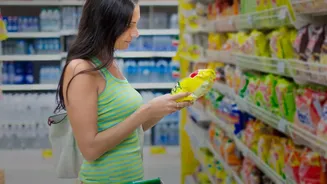
high in salt, added sugar, and saturated fat. The labels would clearly state “HIGH SUGAR,” “HIGH SALT,” or “HIGH FAT”. The proposal suggests a phased implementation. Initially, the warning would apply to products exceeding limits for two or more of these nutrients. Later, it would extend to products high in even a single one. Certain single-ingredient items like ghee, oil, honey, and jaggery would be exempt. This shift aims to give consumers a simple, pictorial warning that is easy to understand at a glance, a stark contrast to the complex nutritional tables currently on the back of packages.
A Decade-Long Push Met With Delays
The idea of a clear, front-of-pack label (FoPL) is not new. The first recommendation for such a system was made by an FSSAI-constituted expert committee back in 2014. Over the years, various drafts and proposals were floated, including a traffic-light system in 2018 and, more recently, a controversial “Health Star Rating” (HSR) system. The HSR model, similar to energy ratings on appliances, would have assigned stars based on a product's overall nutritional profile. However, public health advocates and consumer organizations strongly opposed this, arguing it could be misleading. They feared that food companies could manipulate the ratings by adding small amounts of 'positive' ingredients like fibre to offset high levels of sugar, salt, or fat, making an unhealthy product appear healthier than it is.
The Supreme Court’s Decisive Intervention
The recent momentum is a direct result of the Supreme Court's intervention. Hearing a Public Interest Litigation (PIL), the court sharply questioned FSSAI’s delays and its previous pivot away from clear warning labels. In August 2026, a bench including Justice JB Pardiwala gave the regulator a final chance, asking, “You don't want people of this country to remain healthy? More particularly growing children?” The court criticized the notion of expecting consumers to perform calculations based on complex nutritional tables while shopping, stressing the need for an easily understandable, interpretive label. This judicial pressure effectively forced a change in FSSAI's approach, pushing it to prioritize a system that clearly warns consumers about health risks over industry-favoured alternatives.
Why Simple Warnings are More Effective
Health experts argue that for a country with diverse literacy levels like India, simple, pictorial warnings are far more effective than star ratings or detailed numerical charts. International experience supports this. Chile, which introduced a similar black stop-sign warning label system in 2016, saw a nearly 24% drop in the purchase of sugary drinks. Such labels have been shown to help consumers, including children, quickly identify unhealthy products and make healthier choices. Studies show that shoppers spend less than ten seconds looking at food labels, making instant comprehension crucial. A clear warning system empowers consumers to make informed decisions and encourages manufacturers to reformulate their products to be healthier to avoid the negative label.
What Happens Next for Consumers?
While the proposal is a significant victory for public health, these red warnings will not appear on shelves overnight. The FSSAI's affidavit is a proposal, which must now go through the formal process of amending existing food safety regulations. This involves notifying a draft for public comment before it can be finalized and made mandatory. The two-phase rollout is also designed to give the food industry time to adapt and reformulate products. For the Indian consumer, this marks a potential turning point in food transparency. If implemented effectively, the weekly grocery run could soon involve much less guesswork, with clear, unambiguous signs guiding healthier choices for millions of families across the country.