



Rivers in the Sky
First, what exactly is an atmospheric river? The term paints a surprisingly accurate picture. They are long, narrow corridors of concentrated water vapour flowing through the sky, much like a river on land. These aerial conveyor belts can stretch for
thousands of kilometres, carrying immense amounts of moisture from warmer, tropical and subtropical regions toward the poles. When these plumes of moisture hit colder air or mountainous terrain, they release their payload as heavy rain or snow. Though they can occur globally, their impact on a place as cold and dry as Antarctica is particularly dramatic. These events are relatively rare, occurring only a few days a year in any given location, but their influence is enormous.
The Double-Edged Sword of Moisture
The latest research complicates the narrative of Antarctic ice loss by revealing the dual nature of these weather events. On one hand, atmospheric rivers are responsible for the vast majority of extreme snowfall events on the continent. One recent study published in the journal Nature found that a period of intense atmospheric river activity between 2021 and 2023 dumped an astonishing 695 billion tons of snow on East Antarctica. This massive accumulation temporarily slowed the continent's overall rate of ice loss, illustrating how these events can help build up and replenish the ice sheet. However, this is only half the story. The same systems that deliver nourishing snow can also transport warm, moist air that triggers extensive surface melting, especially in coastal areas. This melt can destabilize the floating ice shelves that act as crucial dams, holding back the continent's massive glaciers.
A History of Destabilisation
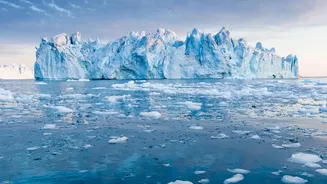
The destructive potential of atmospheric rivers is not just theoretical; it has been observed in some of the most dramatic ice collapses in recent history. Scientists now link atmospheric river events to the final collapse of the Larsen A and Larsen B ice shelves in 1995 and 2002, respectively. These events brought repeated bursts of warm air and moisture that led to widespread melting, fatally weakening the ice. More recently, an extreme atmospheric river in March 2022 caused temperatures in parts of East Antarctica to soar an unprecedented 30 to 40 degrees Celsius above normal, leading to significant surface melt and the collapse of the Conger ice shelf. These incidents demonstrate that while snowfall inland can add mass, warmth and rain on the coasts can accelerate ice loss at an alarming rate.
Why It Matters for India and the World
The fate of Antarctica's ice is not a distant, abstract concern. The continent holds enough frozen water to raise global sea levels by nearly 60 meters. While a complete melt is not imminent, even small changes in its stability can have profound consequences for coastal communities across the globe, including India's 7,500-kilometre coastline. As the climate warms, models predict that atmospheric rivers will become more frequent and intense, carrying even more moisture. This creates a high-stakes uncertainty: will the increased snowfall be enough to offset the increased melting? Scientists are racing to better understand this delicate balance. The stability of cities from Mumbai to Chennai and Kolkata depends on what happens in the coldest, most remote place on Earth. The growing influence of these 'rivers in the sky' is a critical piece of the global climate puzzle.