








A Sky Crowded with Commerce
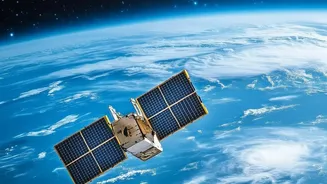
What was once the exclusive domain of government spy agencies is now a booming commercial market. Thanks to reusable rockets and the miniaturization of technology, the cost to build and launch a satellite has plummeted. This has enabled companies to deploy
vast constellations of small satellites that can image the entire planet with unprecedented frequency and detail. This shift from a few large, government-owned platforms to many specialized commercial ones means that high-resolution optical and all-weather radar imagery is more accessible than ever before, available for purchase by businesses, researchers, and almost anyone.
The AI Magnifying Glass
The sheer volume of data beamed down from these constellations would be overwhelming without another key technology: artificial intelligence. AI is the engine that transforms raw satellite pixels into actionable intelligence. Machine learning algorithms can automatically detect and classify objects, track changes over time, and identify patterns invisible to the human eye. For example, AI can analyze satellite imagery to count cars in retail parking lots to gauge economic activity, monitor construction progress in new housing developments, or track ships to expose illegal fishing operations.
An Unprecedented Power for Good
This combination of private satellites and AI is a powerful tool for positive change. In agriculture, it enables precision farming, helping to monitor crop health and improve yields. For climate action, it allows for near real-time tracking of deforestation, glacier melt, and carbon emissions. After natural disasters like floods or wildfires, satellite data helps first responders identify the hardest-hit areas and deliver aid more effectively. This capability provides critical intelligence that supports environmental protection, humanitarian aid, and sustainable development.
The Unregulated Frontier
However, this rapid technological advance has a darker side. The same tools that track deforestation can also be used for widespread surveillance, raising significant privacy concerns. While current commercial resolutions may not identify individual people, they can track movements and reveal sensitive information about groups or locations. Furthermore, the widespread availability of this data creates risks for national security, as it can be purchased and potentially misused by various actors. There are also growing concerns about the potential for 'deepfake' satellite imagery being used for disinformation.
A Widening Governance Gap
This is why attention is growing: the technology has raced far ahead of the rules meant to govern it. International space law, largely drafted during the Cold War, was designed for nations, not private corporations. The 1967 Outer Space Treaty, for instance, holds nations responsible for the activities of their private companies, but this creates potential loopholes where companies might operate from states with lax enforcement. There is currently no uniform global framework to manage the privacy, security, and ethical challenges posed by a commercialized, data-driven space industry. This regulatory gap means that key questions about data ownership, access, and accountability remain unanswered as private companies become the primary gatekeepers to this powerful new view of our world.