






2014 Jammu and Kashmir Floods
In September 2014, incessant monsoon rains caused the Jhelum and Chenab rivers to overflow, leading to the worst floods in Jammu and Kashmir in over a century. The deluge submerged vast areas, including much of Srinagar, with floodwaters reaching depths
of 12 feet in some neighbourhoods. The disaster claimed nearly 280 lives in India and affected thousands of villages, with 390 being completely submerged. The floods caused immense damage to homes, infrastructure, and agriculture, leaving a trail of destruction that highlighted the region's vulnerability to extreme weather events.
2015 Nepal Earthquake
On April 25, 2015, a catastrophic 7.8 magnitude earthquake struck Nepal, with its epicentre in the Gorkha district, northwest of Kathmandu. It was the worst natural disaster to hit the country since 1934. The quake and its powerful aftershocks, including a major 7.3 magnitude tremor in May, killed nearly 9,000 people across Nepal, India, China, and Bangladesh and injured almost 22,000. It triggered deadly avalanches on Mount Everest and landslides in the Langtang Valley. The disaster left millions homeless, destroyed over 600,000 structures, and caused economic losses estimated at up to $10 billion, nearly half of Nepal's GDP at the time.
2016 Uttarakhand Forest Fires
Between April and May of 2016, a series of widespread wildfires raged across the forests of Uttarakhand. Exacerbated by a severe heatwave and drought, nearly 1,600 separate fires were detected, burning approximately 4,500 hectares of forest land. The fires were particularly severe in districts like Pauri and Nainital, which are rich in flammable pine trees. The disaster resulted in nine fatalities, significant loss of biodiversity, and shrouded the region in heavy smoke that hampered rescue operations, which required thousands of personnel and Indian Air Force helicopters to control.
2021 Chamoli Disaster, Uttarakhand
On February 7, 2021, a massive rock and ice avalanche broke off from Ronti Peak in Uttarakhand's Chamoli district. The collapse, involving an estimated 27 million cubic metres of material, generated a devastating debris flow that tore through the Rishiganga and Dhauliganga river valleys. The flood destroyed two hydropower projects and left over 200 people dead or missing, most of whom were workers at the construction sites. Scientific analysis later confirmed the cause was not a glacial lake outburst but a massive landslide, with the energy of the fall melting the ice and creating a destructive slurry of mud and rock.
2023 Joshimath Land Subsidence
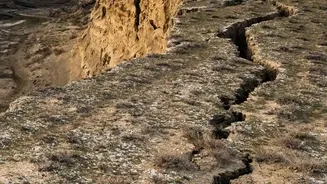
In January 2023, the Himalayan town of Joshimath in Uttarakhand captured national attention as hundreds of buildings suddenly developed deep cracks, forcing residents to evacuate. The town, built on ancient landslide debris, experienced rapid land subsidence, sinking 5.4 cm in just 12 days between December 2022 and January 2023. By February, over 860 homes were reported to have cracks, and the entire town was declared a disaster-affected zone. Residents and experts pointed to unplanned development and major infrastructure projects, like hydropower tunnels, as contributing factors to the destabilisation of the fragile land.
2023 Sikkim Glacial Lake Outburst Flood
In the pre-dawn hours of October 4, 2023, the South Lhonak glacial lake in northern Sikkim breached its moraine dam following heavy rains. This triggered a glacial lake outburst flood (GLOF) that sent a torrent of water down the Teesta River, with levels rising by up to 20 feet. The floodwaters destroyed the Chungthang dam in minutes and caused widespread devastation downstream, killing over 90 people and affecting tens of thousands. Scientific studies had long identified the rapidly growing lake as a GLOF hazard, making the disaster a tragic fulfillment of expert warnings.
2026 Nepal Flash Floods
A massive flash flood in August 2026 killed over 160 people in the border areas of Nepal and Tibet, sweeping away entire villages. This event was the latest in a series of deadly incidents linked to the region's increasing instability. Experts note that such disasters are becoming more frequent and complex, often originating from previously unmonitored 'blind spots' in the high mountains. The cause was identified as a glacier collapse, highlighting a deadly pattern where warming temperatures are destabilising frozen slopes, leading to sudden and catastrophic events with little to no warning.