


From Humble Dish to Divine Offering
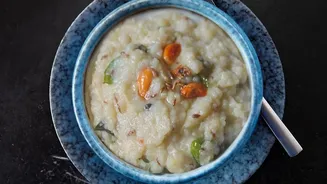
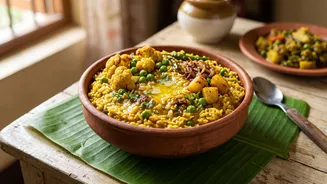
At its core, Bhoger Khichuri is a simple, one-pot meal of rice and lentils. Yet, its significance in Bengali culture is profound. The word ‘Bhog’ translates to a devotional offering made to a deity. Therefore, Bhoger Khichuri is not merely food; it is a sacred
preparation first offered to gods and goddesses during festivals before being distributed as ‘prasad’ (a blessed offering) to devotees. This act elevates the dish from a staple comfort food to a carrier of divine blessings. Its history is deeply entwined with major Bengali festivals like Durga Puja, Saraswati Puja, and Lakshmi Puja, where it serves as a central element of the community feast. Historical texts suggest that Maa Durga herself is depicted cooking khichuri, cementing its divine connection in cultural memory.
The Purity of 'Niramish' Cooking
What sets Bhoger Khichuri apart from its everyday counterpart is its strict adherence to 'niramish' or sattvic principles. This means it is prepared without any onions or garlic, which are considered 'tamasic' or items that can dull the senses, making them unsuitable for a divine offering. The flavour profile is built on a foundation of aromatic spices like cumin, ginger, bay leaves, cinnamon, cardamom, and cloves. The key ingredients are typically fragrant, short-grained Gobindobhog rice and roasted moong dal (split yellow lentils). The dal is dry-roasted until it emits a nutty aroma, a crucial step that imparts a distinctive, soulful flavour to the final dish. A generous amount of ghee is used not just for richness, but for its purity in ritual cooking.
A Symbol of Communal Harmony
During Durga Puja, especially on the day of Ashtami, large cauldrons of Bhoger Khichuri are cooked in community kitchens set up in ‘pandals’ (temporary structures housing the deity). The act of cooking and sharing this meal is a powerful social glue, breaking down barriers of class and caste. People from all walks of life gather to partake in the feast, reinforcing a sense of unity and collective celebration. This communal aspect is as vital to the experience as the taste of the khichuri itself. It represents a harmonious blend of elements—rice, dal, and vegetables—mirroring how the festival brings together diverse people into a single, joyful community.
The Perfect Accompaniments
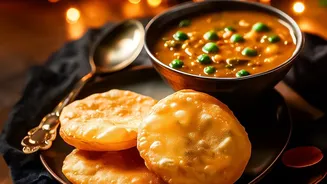
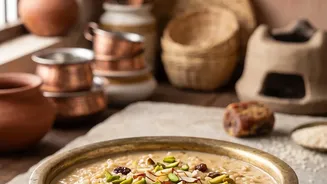
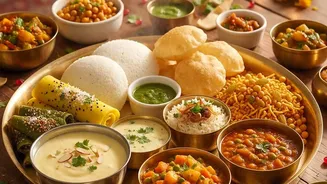
While Bhoger Khichuri is a complete meal in itself, it is traditionally served as part of a larger platter that creates a symphony of textures and flavours. Common accompaniments include 'labra', a mixed vegetable medley cooked with panch phoron (a five-spice blend). Alongside it, you will often find different types of 'bhaja' (fritters), such as 'beguni' (batter-fried eggplant slices) or 'aloo bhaja' (crispy fried potatoes). To round off the meal, a sweet and tangy tomato or date chutney and a serving of 'payesh' (rice pudding) are often included. Together, this combination creates a balanced and deeply satisfying culinary experience that is cherished by Bengalis.