
A Tale of Planetary Opposites
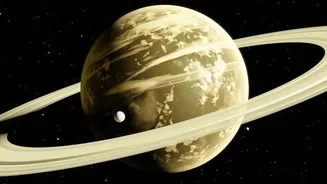
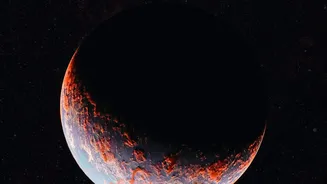
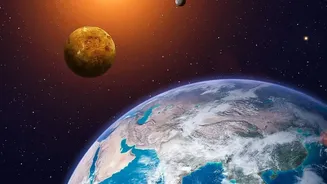
For decades, the mystery of Venus's missing moon has puzzled astronomers. Did it never form one, or was a once-loyal companion destroyed in a cosmic catastrophe? Previous theories often involved a second massive impact that shattered an existing moon.
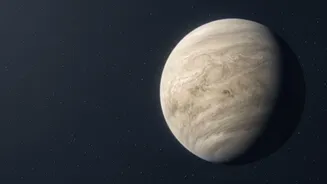
But new research published in The Astrophysical Journal suggests a quieter, more inevitable demise. A team led by astrophysicist Stephen Kane at the University of California, Riverside, suggests that Venus may have been its own moon's undoing. The culprit, according to their work, is the planet’s incredibly sluggish rotation.
The Physics of Planetary Spin
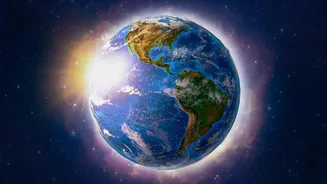
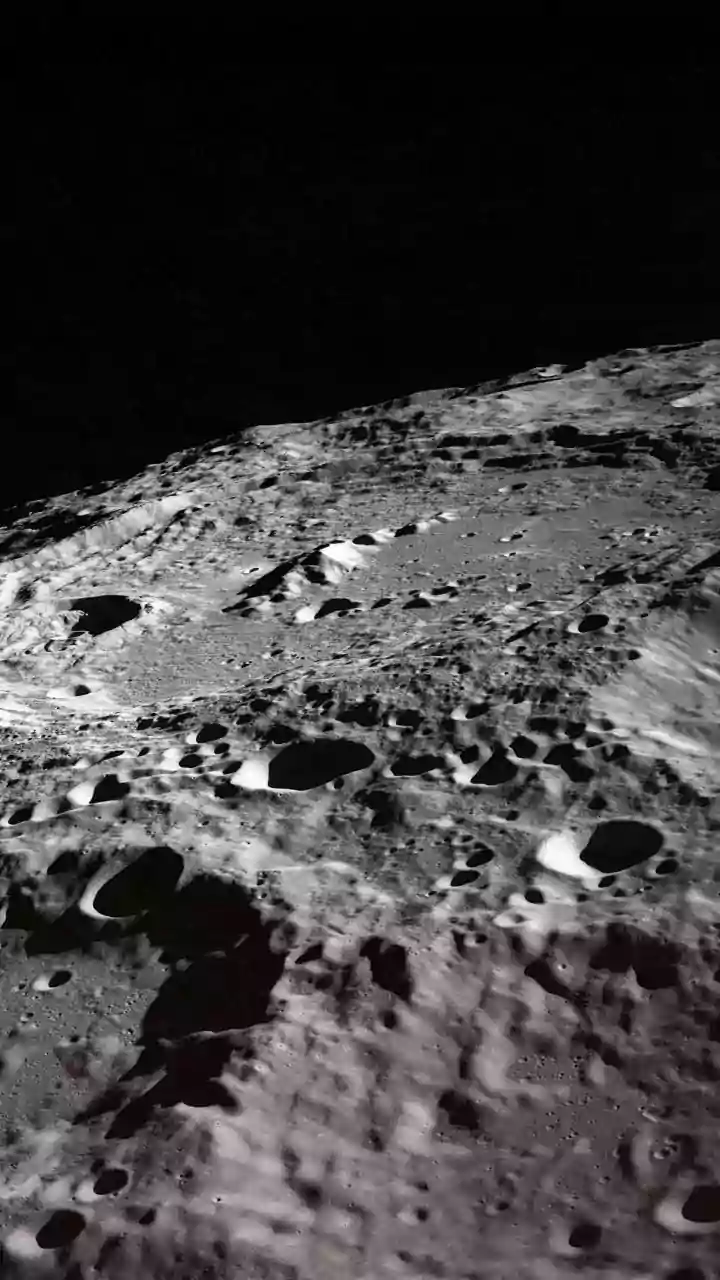
The relationship between a planet and its moon is a gravitational tug-of-war where rotation is key. Earth rotates relatively quickly, completing a spin every 24 hours. This rapid spin transfers rotational energy to our Moon, pushing it slowly farther away from us at a rate of about four centimetres per year. We know this with certainty thanks to mirrors left on the lunar surface by Apollo astronauts. Venus is the polar opposite. A single day on Venus lasts 243 Earth days—longer than its year. According to the new theory, this extremely slow rotation would have had the reverse effect on a hypothetical moon. Instead of pushing it away, Venus's gravity and slow spin would have worked together to reel it in.
Rewinding the Clock with Code
To test this hypothesis, Kane's team developed sophisticated computer models to simulate the gravitational dance between Venus and a potential moon over billions of years. They first validated their simulations by accurately recreating the known evolution of the Earth-Moon system. Then, they ran numerous scenarios for Venus, inputting different initial rotation speeds and a wide range of hypothetical moon sizes, from a fraction of our Moon's mass to ten times as large. The results were surprisingly consistent. In almost every simulation, the moon’s orbit decayed, and it began a death spiral towards the planet.
An Inevitable Collision
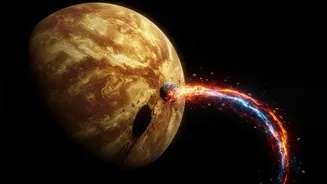
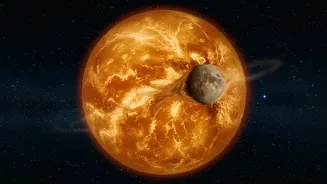
The models showed that a moon orbiting a slowly rotating Venus would lose orbital energy and spiral inwards until it crashed into the planet. The simulations indicated that larger moons would have been consumed even faster. Depending on the initial conditions, this cosmic collision could have happened in as little as 30 million years or taken up to 1.7 billion years, but the final outcome was almost always the same. According to Kane, Venus did not require an external catastrophe to become moonless; its own physical properties naturally caused its moon to collapse onto it.
Implications for a Hostile World
While this study presents a possible history rather than direct observational proof, it offers a powerful explanation for Venus's current state. The immense energy delivered by such a colossal impact could have had dramatic consequences, potentially altering the planet’s climate, contributing to the loss of any ancient oceans, and perhaps even influencing its strange, slow, backward rotation. Before its destruction, a moon could have helped stabilize Venus's axial tilt and driven tides if oceans were present. Its loss could have been a pivotal moment that set Venus on a very different evolutionary path from Earth. The research also has implications beyond our solar system, suggesting that slowly rotating exoplanets may be unlikely to retain large moons, a factor that could influence their long-term stability and potential for habitability.