







Understanding NavIC's Strategic Role
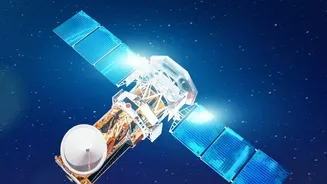
Navigation with Indian Constellation, or NavIC, is India’s autonomous regional satellite navigation system. Developed by the Indian Space Research Organisation (ISRO), it's the country's answer to foreign-owned systems like the American GPS, Russia's
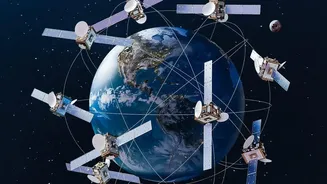
GLONASS, or China's BeiDou. Unlike these global systems, NavIC is designed specifically to provide accurate positioning, navigation, and timing (PNT) services for India and a region extending 1,500 kilometres beyond its borders. This regional focus allows its satellites, placed in orbits high above India, to provide a stronger and more reliable signal in challenging terrains like dense forests and deep valleys. The system offers a Standard Positioning Service (SPS) for civilian use and an encrypted Restricted Service (RS) for strategic users like the armed forces. This dual-use capability is vital for national security, ensuring that India has an independent and sovereign navigation system that cannot be denied or degraded by foreign powers during a conflict.
The Atomic Clock Crisis
The journey of NavIC has been hampered by a persistent technical issue: the failure of atomic clocks on its first-generation satellites. These clocks are the heart of any navigation satellite, providing the ultra-precise time measurements needed to calculate a user's exact position. Even a minuscule error of a billionth of a second can throw off a location by several metres. The initial constellation of NavIC satellites was equipped with imported rubidium atomic clocks, many of which began failing prematurely. This led to a gradual degradation of the constellation. A minimum of four functional satellites are required to provide an accurate three-dimensional position fix. Due to the clock failures and ageing satellites, NavIC's operational fleet dwindled, falling below this critical threshold and rendering its standalone positioning service inactive.
Enter NVS-03: A Generational Leap
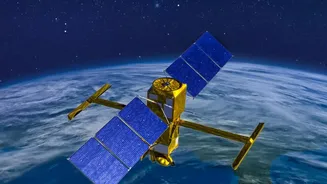
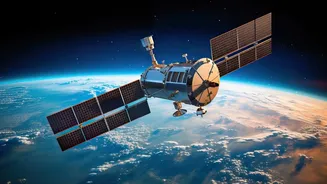
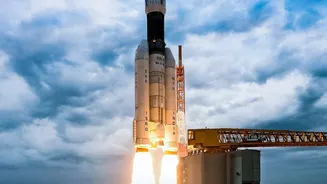
The NVS series represents the second generation of NavIC satellites, designed to fix the problems of the past and build a more robust system for the future. The upcoming launch of NVS-03 is a critical step in this process. One of the most significant upgrades in this new generation is the inclusion of an indigenously developed Rubidium Atomic Frequency Standard (RAFS). Developed by ISRO's Space Applications Centre, this 'Made in India' atomic clock reduces the reliance on foreign components that caused the earlier issues, marking a major milestone in India's quest for technological self-reliance, or Aatmanirbhar Bharat. The NVS satellites, including NVS-03, are also designed for a longer mission life of 12 years, compared to the 10-year lifespan of their predecessors, ensuring greater continuity of service.
The Game-Changing L1 Band
Perhaps the most impactful upgrade in the NVS series is the addition of the L1 frequency band, which operates at 1575.42 MHz. The original NavIC satellites broadcast signals in the L5 and S bands. While effective, these required specialised hardware for reception. The L1 band, however, is the most widely used frequency for civilian navigation services globally, used by systems like GPS. By adding an L1 signal, ISRO is making NavIC interoperable and compatible with the vast ecosystem of consumer electronics. This means that, going forward, everything from commercial smartphones and wearables to in-car navigation systems can be designed to receive NavIC signals without needing a separate, dedicated chip. This move dramatically lowers the barrier to adoption and paves the way for NavIC to become a common feature for millions of Indian users. Chipset manufacturers like Qualcomm have already begun to incorporate support for NavIC's L1 signal.
Restoring Independence and Expanding the Future
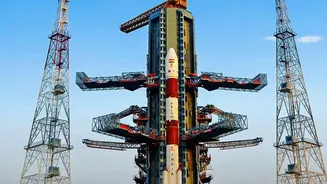
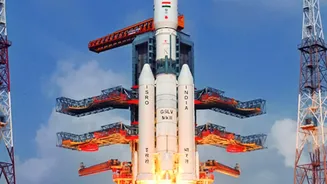
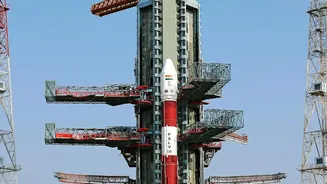
The launch of NVS-03, targeted for October 2026, is set to restore the NavIC constellation to the minimum required four satellites, reactivating its crucial positioning services for both civilian and military users. Its successful deployment will follow NVS-01 (launched in 2023) and will compensate for the loss of NVS-02, which failed to reach its intended orbit in early 2025. By restoring the constellation with a technologically superior satellite, ISRO is not just patching up the system but significantly enhancing it. The combination of the indigenous atomic clock and the consumer-friendly L1 band bolsters NavIC's reliability and usability. This ensures that India's strategic autonomy in navigation is secured while also opening up a new world of commercial and civilian applications, from disaster management and vehicle tracking to precise timing for financial markets and power grids.