




The Woman Behind the Movement
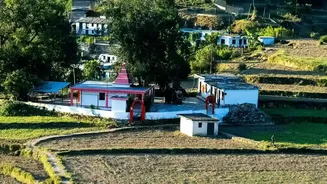
Trinity Saioo, a schoolteacher from Mulieh village, never set out to be a revolutionary. A mother and educator, she initially turned to farming to support her family. However, her decision in 2003 to cultivate a specific local variety of turmeric, known
as Lakadong, set her on an extraordinary path. Realising it was far more profitable than the common Lachein variety, she began sharing her knowledge with other women in her community. This simple act of sharing blossomed into a powerful, women-led agricultural movement. For her incredible work in empowering farmers and popularising this unique spice, she was awarded the Padma Shri, India's fourth-highest civilian honour, in 2020.
Lakadong: The Golden Spice of Jaintia Hills
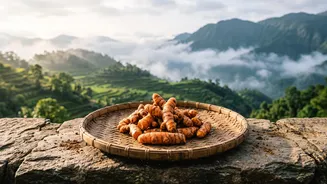
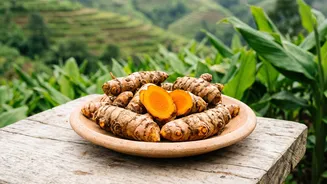
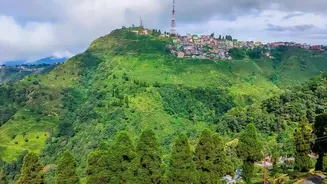
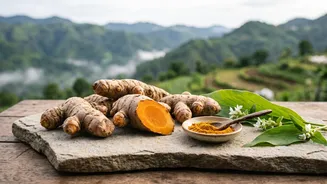
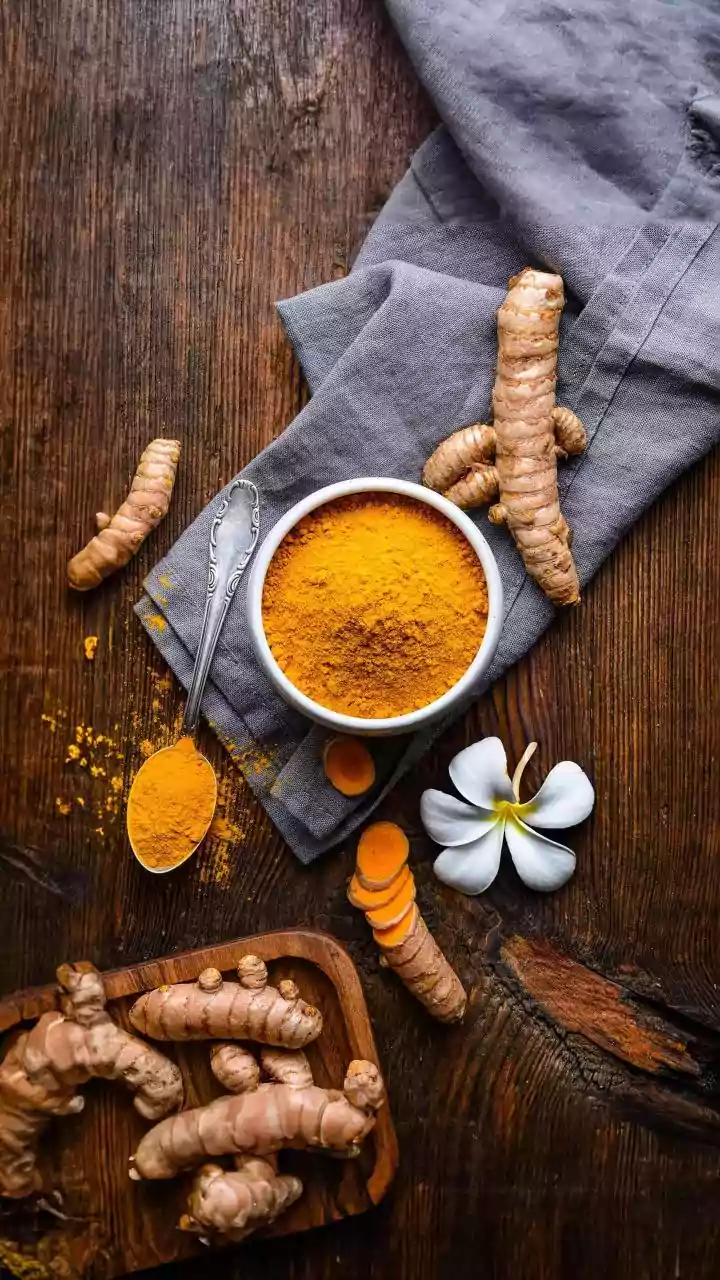
Not all turmeric is created equal. The Jaintia Hills are home to the Lakadong variety, a spice prized globally for its exceptional quality. Its uniqueness lies in its remarkably high curcumin content, the compound responsible for turmeric's vibrant colour and potent anti-inflammatory properties. While most turmeric varieties contain 2-3% curcumin, Lakadong boasts a concentration of 7-12%. This superior quality is a product of its specific terroir—the cool climate, fertile soil, and traditional farming methods of the region contribute to its potency. For years, however, its value was not widely recognised locally, with many farmers growing less profitable varieties.
The Wisdom of Traditional Cultivation
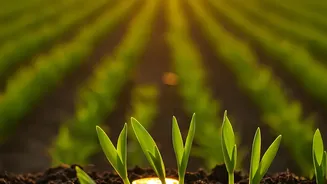
Saioo’s initiative is deeply rooted in the indigenous agricultural practices of Meghalaya. The success of Lakadong turmeric is not based on modern, chemical-intensive farming, but on time-tested local knowledge passed down through generations. Farmers use organic methods, relying on natural inputs like cow dung and vermicompost instead of synthetic fertilisers and pesticides. They practice mixed cropping, planting maize or beans alongside the turmeric to maintain soil fertility naturally. Seed preservation is also a critical practice; the best 'mother' rhizomes from each harvest are carefully selected and stored for the next planting season, ensuring the genetic purity and strength of the crop. This holistic approach respects the local ecology and produces a pure, high-quality spice.
Empowering a Community of Women
Trinity Saioo, affectionately known as 'Turmeric Trinity', did more than just encourage farmers to switch crops; she built an entire support system. She guided illiterate women through the paperwork needed to access government subsidies and organic certifications. Recognising the challenges, she helped form cooperatives like the Life Spice Federation of Self Help Groups and the Ieng Skhem Spice Producer Industrial Co-operative Society, which now involve over 800 farmers. By organising the women, she enabled them to handle processing—from harvesting and sun-drying to packaging—and marketing, ensuring they retained a larger share of the profits. As a result, many women farmers have been able to double or even triple their incomes, build new homes, and secure a more stable future for their families.
From Local Farms to a National Mission
The impact of Saioo's work has rippled out far beyond her village. Her success was instrumental in prompting the state government to launch 'Mission Lakadong' in 2018. This ambitious initiative aims to significantly scale up the production of Lakadong turmeric, improve processing infrastructure, and expand its market reach both nationally and internationally. The movement Saioo started with a handful of women has become a cornerstone of the state's agricultural policy. It stands as a powerful testament to how grassroots leadership, combined with the preservation of traditional knowledge, can create lasting economic and social change.