





A New Chapter in Space Exploration
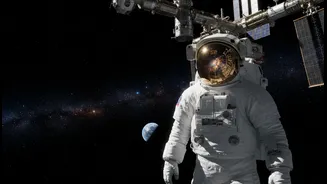
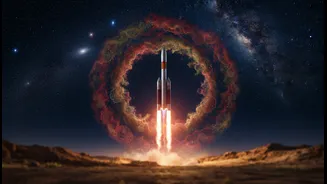
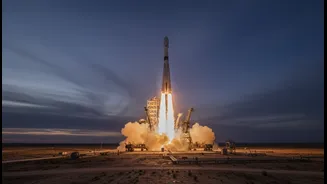
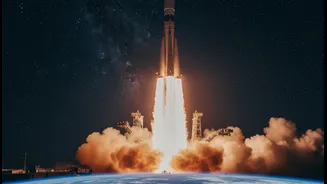
On July 14, 2026, the Soyuz MS-29 spacecraft successfully lifted off from the Baikonur Cosmodrome in Kazakhstan, carrying a three-person crew destined for the International Space Station (ISS). Onboard are Roscosmos cosmonauts Pyotr Dubrov and Anna Kikina,
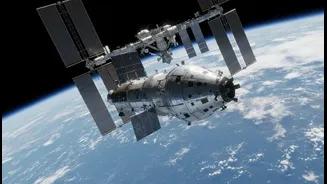
alongside NASA astronaut Anil Menon, an American of Indian and Ukrainian heritage. The launch places a spotlight not just on the ongoing international cooperation required to maintain the orbiting laboratory, but also on the personal journey of an astronaut with deep Indian roots. Menon's eight-month mission aboard the station is dedicated to scientific research and technology demonstrations.
The Journey of Anil Menon
Born in Minneapolis, Minnesota, to a father from Kerala, India, and a mother from Ukraine, Anil Menon's path to space has been multi-faceted. Before being selected by NASA in 2021, he built an impressive career as an emergency medicine physician, a US Space Force colonel, and served as SpaceX's first flight surgeon, where he helped establish their medical program for human spaceflight missions. His experience extends to providing medical care in extreme environments, from working with the Himalayan Rescue Association on Mount Everest to serving with the US Air Force in Afghanistan. Menon also spent a year in India as a Rotary Ambassadorial Scholar, supporting polio vaccination efforts, strengthening his connection to his heritage long before this spaceflight.
A Legacy of Indo-Russian Cooperation
Menon's flight on a Russian Soyuz spacecraft from the same cosmodrome where Rakesh Sharma began his historic journey in 1984 is rich with symbolism. India's space program has long-standing ties with Russia, dating back to the Soviet era. The USSR launched India's first satellite, Aryabhata, in 1975 and provided crucial assistance in the early years of ISRO's development. This partnership reached a pinnacle with Sharma’s flight aboard the Soyuz T-11. More recently, this collaboration has been vital for India's own human spaceflight ambitions. The four Indian Air Force pilots selected as astronauts for the upcoming Gaganyaan mission completed their rigorous training at Russia's Gagarin Cosmonaut Training Center.
Science and Collaboration Above the World
During his eight months on the ISS as part of Expeditions 74 and 75, Menon will conduct a variety of scientific experiments. His research will focus on the physiological effects of long-duration spaceflight, including studies on how microgravity impacts the human body. One key area of his work will involve testing technologies to produce intravenous fluids from the station's water supply, a critical capability for future deep-space missions to the Moon and Mars. His mission underscores the ISS's role as a unique laboratory where international crews work together on science that benefits life on Earth and prepares humanity for future exploration.
Inspiring India's Future in Space
While Anil Menon is a NASA astronaut, his journey resonates deeply with India's own space aspirations. His flight serves as a powerful inspiration as ISRO prepares for its landmark Gaganyaan mission, which aims to send Indian astronauts into orbit on an Indian launch vehicle. The continued partnership with agencies like Roscosmos, demonstrated by flights like Soyuz MS-29, is a crucial element of the global space ecosystem. These collaborations provide invaluable experience and maintain relationships that have been built over decades. As India cements its position as a major spacefaring nation, the success of astronauts of Indian heritage on the world stage adds to a growing sense of national pride and encourages a new generation to look towards the stars.