





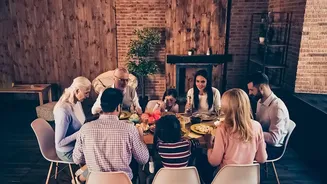


The Power of the Shared Table
In the rush of daily life, sitting down for a meal together can feel like a revolutionary act. Research consistently shows that regular family meals are a cornerstone of family connection. It’s less about what’s on the plates and more about what happens
around the table. This shared time creates a predictable space for communication, allowing family members to discuss their day, share experiences, and offer support away from digital distractions. Studies indicate that this simple ritual is linked to stronger emotional bonds, higher self-esteem in children, and lower levels of stress for the whole family. The festive season, with its natural focus on food and gathering, provides the perfect excuse to reclaim the dinner table as a hub for connection, turning a simple meal into a meaningful moment of togetherness.
Small Traditions, Big Impact
Family traditions are the threads that weave the fabric of a family's unique identity. They don't need to be complicated or expensive; in fact, the most powerful ones are often small and consistent. These rituals, whether daily, weekly, or seasonal, act as anchors in our busy lives, providing a sense of stability, security, and belonging. For children, knowing what to expect from a family ritual creates a sense of emotional safety that can reduce anxiety. For adults, it's a chance to slow down and be present. A tradition could be as simple as decorating the house together on a specific day, watching the same festive movie every year, or going for a walk to see the lights. These repeated, intentional activities reinforce family values and create a shared history, strengthening relationships and building a library of cherished memories.
Finding Connection in Everyday Moments
Meaningful family time isn't always a scheduled event. The festive season is full of small, in-between moments that can be turned into opportunities for connection. Involving children in simple tasks like preparing a festive dish, wrapping gifts, or writing cards makes them feel valued and part of a team. These shared activities teach responsibility and create a sense of contribution. Even a simple, recurring gesture, like a special handshake or a group hug before leaving the house, can build a supportive and loving home environment. The key is to recognize that strong families are not built on grand gestures but on a foundation of small, consistent moments of connection repeated over time. These seemingly insignificant interactions are what build the emotional glue that holds a family together.
Redefining Quality Time
One of the biggest sources of festive stress is the pressure to create 'perfect' moments. It's helpful to redefine what quality time really means. It is not about the scale of the activity, but the quality of the connection. Children are more likely to remember the feeling of joy and connection than the elaborate details of an outing. Instead of aiming for a flawless, jam-packed holiday schedule, focus on connection over perfection. This might mean letting go of certain expectations to make space for simple, stress-free activities like a family board game night, reading stories aloud, or simply looking through old photo albums. These low-pressure activities encourage laughter and conversation, fostering genuine bonds without the exhaustion that often accompanies overly ambitious plans.