





Tempura, Japan
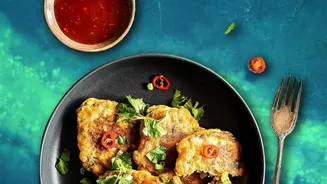
A world away from heavy, greasy batters, Japanese tempura is celebrated for its incredibly light and crisp coating. Introduced by Portuguese missionaries in the 16th century, this technique involves frying seafood and vegetables in a delicate batter made
from cold water, flour, and egg. The key is minimal mixing and ice-cold water to prevent gluten from developing, resulting in a feather-light crunch that enhances the fresh flavours of ingredients like shrimp, eggplant, and sweet potato.
Samosa, India
This iconic triangular pastry has a rich history that began in Central Asia and the Middle East, where it was known as 'sanbosag'. It journeyed to the Indian subcontinent with traders and invaders around the 13th century. While early versions were filled with minced meat, the Indian adaptation often features a savoury, spiced mixture of potatoes and peas, all encased in a flaky, deep-fried crust. Served hot with chutney, it's a beloved snack across the nation.
Fried Chicken, United States
While fried chicken is a global food, the American Southern style is iconic. Its origins are a blend of Scottish frying techniques and West African seasoning traditions, brought to the American South by immigrants and enslaved Africans. Enslaved cooks perfected the dish, which became a staple for special occasions and a symbol of Black entrepreneurship. The process of coating chicken in a seasoned flour batter and frying it to a crispy golden-brown creates a juicy, flavourful result that is now a worldwide comfort food.
Churros, Spain and Portugal
These ridged sticks of fried dough are a sweet sensation. Made from a simple choux-like pastry piped directly into hot oil, churros are fried until crunchy and often dusted with cinnamon sugar. Their exact origin is debated, but they are a staple in Spain and Portugal, frequently enjoyed for breakfast or as a late-night snack, famously paired with a cup of thick, hot chocolate for dipping.
Arancini, Italy
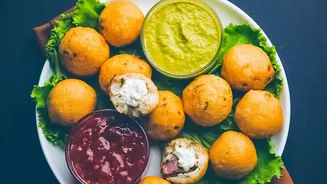
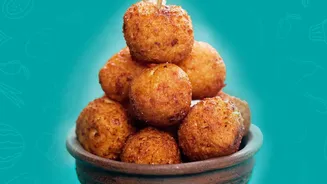
Hailing from Sicily, arancini, meaning 'little oranges', are delicious balls of rice stuffed with a savoury filling, coated in breadcrumbs, and deep-fried. Their origin is traced back to the Arab rule of Sicily in the 10th century, with the breadcrumb coating added later to make them easier to transport. Common fillings include a rich meat ragù with peas and mozzarella or a simpler combination of butter and ham.
Falafel, Middle East
A cornerstone of Middle Eastern cuisine, falafel's origins are widely believed to be in Egypt, where it was first made with fava beans. Today, these deep-fried balls or patties are more commonly made from ground chickpeas, mixed with herbs like parsley and cilantro, and spices such as cumin and coriander. Crispy on the outside and tender on the inside, falafel is a popular street food, often served in a pita bread with salad and tahini sauce.
Coxinha, Brazil
Meaning 'little thigh' in Portuguese, the coxinha is a popular Brazilian snack shaped to resemble a chicken drumstick. It consists of shredded, seasoned chicken meat, often mixed with creamy requeijão cheese, which is then covered in a soft dough, battered, and fried to a golden crisp. Originating in São Paulo, this savory, teardrop-shaped croquette is a beloved street food and party appetizer across the country.
Jalebi, India and Middle East
This dazzlingly sweet treat is a common sight at celebrations across South Asia and the Middle East. Jalebi is made by piping a fermented batter of wheat flour and yogurt in spiral shapes into hot oil. Once fried to a crisp, the swirls are immediately soaked in a warm, sugary syrup, often flavoured with cardamom or rose water. The result is a uniquely complex snack that is simultaneously crispy, chewy, and syrupy.
Banh Ran/Banh Cam, Vietnam
These Vietnamese fried rice balls are a delightful snack that comes in both sweet and savory varieties. The shell is made from glutinous rice flour, which gives it a satisfyingly chewy texture, and is often coated in sesame seeds. The sweet version (bánh rán) is typically filled with a sweetened mung bean paste, while the savory version is often stuffed with minced pork and mushrooms and served with a tangy dipping sauce.
Frites, Belgium
While often called 'French fries', this global staple has its origins in Belgium. The story goes that in the Meuse Valley, locals would fry small fish, and when the rivers froze in winter, they would cut potatoes into a similar shape and fry them instead. The secret to authentic Belgian frites is double-frying: first at a lower temperature to cook the potato through, and then at a higher temperature to achieve that perfect crispy, golden exterior and fluffy interior.