







The AI Energy Dilemma
Artificial intelligence, particularly the training of large language models, is an incredibly energy-intensive process. The workhorses for these tasks have traditionally been Graphics Processing Units (GPUs), which excel at performing many calculations
at once. However, they are notoriously power-hungry. An AI-focused server rack can draw more than ten times the power of a traditional one. As India scales its AI capabilities, with tens of thousands of GPUs already deployed under government initiatives, the cumulative energy consumption is becoming a national concern. This surge in demand is not just a technical issue; it's an infrastructural challenge that could impact India's broader energy security and decarbonisation goals.
India's Data Centre Boom
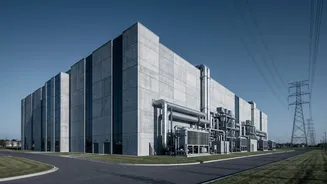
To power its trillion-dollar digital economy aspirations, India is witnessing an unprecedented data centre construction boom. Capacity has surged dramatically, growing from just 375 megawatts (MW) in 2020 to a projected 2 gigawatts (GW) by the end of 2026. This growth is set to accelerate, with some projections showing capacity reaching 12 GW by 2030, a more than fivefold increase from 2025. This expansion, fuelled by cloud adoption and AI workloads, is attracting billions in investment. However, the Ministry of Power has raised alarms, projecting that data centres could demand as much as 17 GW of electricity by 2031-32, a figure that has nearly doubled from earlier estimates and poses a significant challenge for grid stability.
Smarter Silicon for a Greener Future
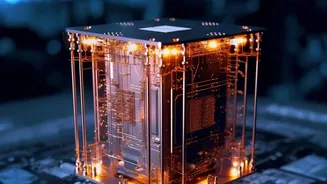
The solution may lie not just in building more power plants, but in the very design of the chips inside the servers. While GPUs are versatile, they were originally designed for graphics, not specifically for AI. A new generation of specialised chips, known as AI accelerators or Application-Specific Integrated Circuits (ASICs), is changing the game. These include Google's Tensor Processing Units (TPUs) and custom Neural Processing Units (NPUs). Because they are purpose-built for AI tasks, they strip away unnecessary functions, allowing them to perform AI calculations with far greater energy efficiency. Industry analyses suggest that these custom chips can reduce the costs associated with AI inference by 40-60% compared to GPUs, largely through lower power consumption.
The Ripple Effect of Efficiency
Adopting energy-efficient chips has a cascading effect throughout a data centre. A more efficient chip runs cooler, which in turn reduces the immense energy required for cooling systems—a function that can account for a huge portion of a data centre's total power usage. This allows for more computing power to be packed into the same physical space, improving overall efficiency. For India, this is crucial. By prioritising the adoption of energy-efficient hardware, the country can moderate the skyrocketing energy forecasts for its data centre sector. This would not only ease the pressure on the national grid but also align the nation's digital ambitions with its climate commitments, such as its goal to achieve Net Zero by 2070.
A National Push for Sustainable AI
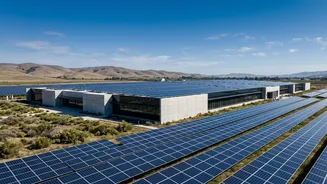
Recognising this challenge, the Indian government is beginning to connect its ambitious 'IndiaAI Mission' and 'India Semiconductor Mission' with its green energy goals. Policies are being developed to promote renewable energy use for data centres and encourage efficient energy management. State governments are offering subsidies and incentives for facilities that meet green standards, and there are calls to declare large data centres as 'designated consumers' under the Energy Conservation Act, which would subject them to mandatory efficiency audits. By fostering an ecosystem that not only builds data centres but also develops and deploys energy-efficient technologies, India can ensure its digital transformation is both powerful and sustainable.