



A Landmark Project Nearing Reality
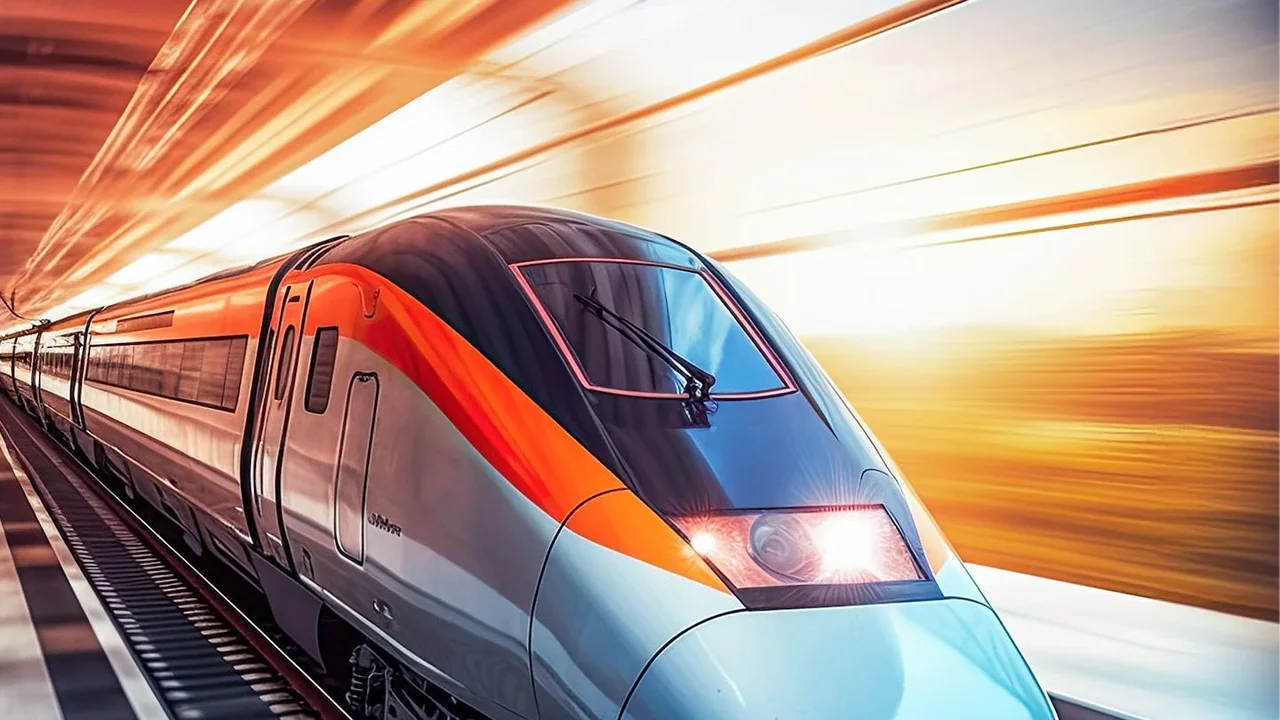
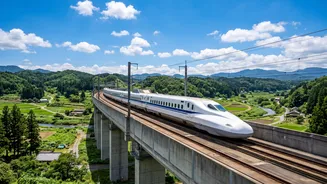
After years of planning and overcoming significant hurdles like land acquisition, construction on the 508-kilometre Mumbai-Ahmedabad High-Speed Rail (MAHSR) corridor is advancing rapidly. As of late 2026, significant portions of the elevated viaduct,
piers, and bridges across major rivers are complete. The government is targeting the inaugural run on the Surat to Bilimora section in Gujarat by August 2027, with the entire corridor expected to be completed in phases. This first section will serve as a crucial test before the network expands to connect the full route, including the complex underground station at Mumbai's Bandra Kurla Complex.
More Than Just Speed: Redefining Travel
The most tangible impact will be the dramatic reduction in travel time. A journey that currently takes seven to eight hours by conventional rail or road will be slashed to just around two hours. This will enable same-day return trips between the two financial powerhouses, a game-changer for business travellers, professionals, and tourists. Imagine leaving Mumbai in the morning, attending meetings in Ahmedabad, and being back home for dinner. This level of connectivity, currently only possible with air travel (including airport time), will become more accessible and convenient, effectively turning the entire corridor into a single, integrated economic zone.
The Economic Ripple Effect
The bullet train's economic significance extends far beyond ticket fares. The project is a massive job creator, providing employment to over one lakh people during its construction phase. It also serves as a powerful catalyst for the 'Make in India' initiative, with efforts underway to develop indigenous capabilities in high-speed rail technology. The corridor is expected to spur urban development and boost real estate values around its 12 stations. By linking industrial hubs like Vapi, Surat, and Vadodara more efficiently with Mumbai, the project will strengthen supply chains, attract investment, and enhance the region's overall economic competitiveness.
A Leap in Technology and Skill
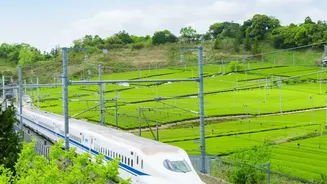
The project, built in collaboration with Japan, brings the world-renowned Shinkansen technology to India. This involves not just importing trains but also a massive transfer of technical expertise in civil engineering, signalling, and operations. Indian engineers and workers are gaining invaluable experience in building world-class infrastructure, from casting girders to laying noise-abatement panels and constructing a 7-km undersea tunnel. This knowledge and institutional capacity are perhaps the project's most durable legacy, creating a blueprint that can be replicated for future high-speed corridors across the country.
Overcoming the Hurdles
The journey has not been without its challenges. The project has faced significant delays, primarily due to complex land acquisition processes and the impact of the COVID-19 pandemic. These delays have also led to substantial cost escalations from the initial estimates. Constructing such a massive project through densely populated areas and varied terrain, including building India's first undersea rail tunnel, presents immense technical and logistical challenges. However, with construction now in full swing across both Gujarat and Maharashtra, the project has gained significant momentum, moving from a civil construction story to one involving simultaneous track, electrical, and signalling work.