




A nationwide ground stop brought US air travel to a standstill, causing chaos for thousands. Now, investigators are focusing on a surprising culprit: a routine telecommunications upgrade at a small FAA facility in El Dorado, Arkansas.
A Nation Grounded
On Friday, November
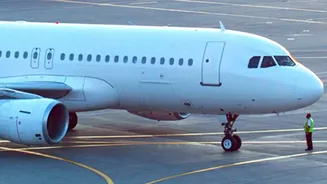
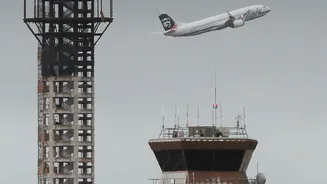
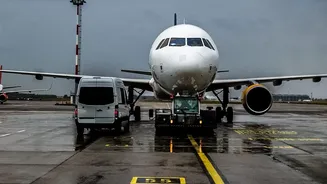
13, the Federal Aviation Administration (FAA) took the rare step of issuing a nationwide ground stop for all departing flights, a measure only seen twice before since 9/11. For nearly five hours, the skies over the world's busiest airspace fell unusually quiet. While the more than 3,000 aircraft already in the air were guided down safely, thousands of other flights were stuck on the tarmac. The disruption cascaded through the system, leading to more than 18,000 cancellations by the following Monday and leaving travelers stranded across the country. The cause was not a cyberattack, as many first feared, but a technical failure that exposed the fragility of the nation's aviation infrastructure.
The Unlikely Epicenter in Arkansas
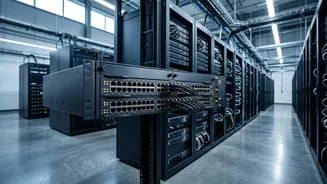
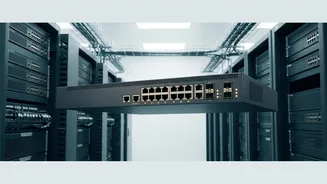
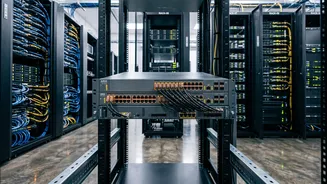
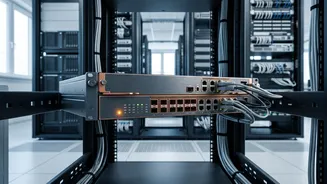
The investigation quickly zeroed in on El Dorado, a small city in southern Arkansas. At a remote FAA facility there, a federal contractor, L3Harris Technologies, was performing what was considered routine maintenance. The work involved upgrading the FAA's telecommunications network by replacing old copper wires with modern fiber-optic lines and installing a new router. Officials have said that once this new router, made by Juniper Networks, came online, it began to flood the FAA network with an overwhelming amount of data—roughly 1,000 connection attempts every four to five seconds. This digital deluge appears to have triggered a chain reaction of instability across the system.
How One Router Caused Chaos
The FAA's telecommunications network is the digital backbone of air travel, connecting around 5,000 facilities and carrying vital radar, voice, and flight data. According to officials, the massive volume of traffic from the new router in Arkansas, along with a similar issue at a facility in Amarillo, Texas, destabilized this critical system. The data overload caused intermittent failures in radar and communications feeds at 17 of the nation's 22 high-altitude air traffic control centers. Without reliable systems to track and communicate with aircraft, the FAA made the call to ground all departures out of an abundance of caution. Technicians were able to stabilize the network by blocking traffic from the Arkansas and Texas sites and disabling a specific function on about 60 other new routers as a precaution.
A System Under Scrutiny
The incident has placed the FAA's modernization efforts, its contractors, and its procedures under intense scrutiny. Investigators are now working to determine the precise root cause: was it faulty equipment, an error during installation, or a fundamental design flaw in how new and old technologies interact? L3Harris, which owns and maintains the network under contract, is cooperating with the investigation, and the routers in question have been sent to a lab for forensic analysis. Questions have also been raised about the decision to perform the maintenance during the day. While the FAA stated that such work at remote facilities was considered low-risk, the event has prompted a reevaluation of those procedures. The union representing FAA technicians noted it was not consulted on the work.
A Wake-Up Call for Infrastructure
Beyond the immediate cause, the flight halt has reignited a broader debate about the state of America's critical infrastructure. The FAA's system has been described as a mix of decades-old technology and modern components, and a 2024 government report had already warned about the risks of accelerating modernization without adequate testing. While billions have been allocated for upgrades, this event shows how a single point of failure can have nationwide consequences. It serves as a stark reminder that in a highly interconnected system, even a 'routine' change at a 'remote' location can introduce unforeseen risks. The incident underscores the immense challenge of overhauling legacy systems that the public relies on every single day.