



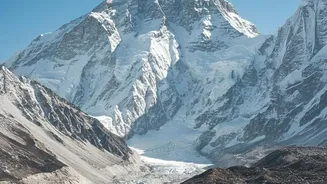
The Third Pole Is Warming Fast
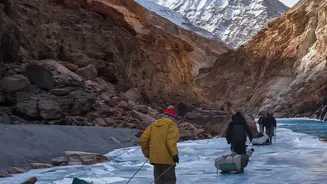
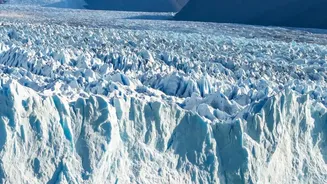
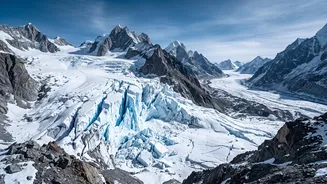
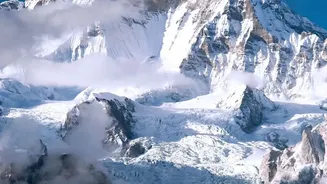
The Hindu Kush Himalaya region, often called the 'Third Pole' for holding the largest concentration of ice outside the polar regions, is warming at nearly twice the global average rate. This accelerated warming is causing glaciers to retreat and thin
at an alarming pace. Studies show that Himalayan glaciers are melting 65% faster since 2010 than in the previous decade. This rapid melt does more than just shrink the glaciers; it destabilises the entire high-mountain environment, setting the stage for a new generation of hazards. The water that sustains almost two billion people across Asia is now becoming a source of increasing danger.
From Ice Dams to Water Bombs
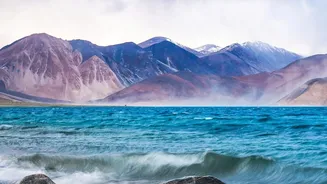
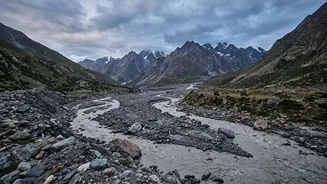
One of the most direct consequences of melting glaciers is the formation and expansion of glacial lakes. As glaciers retreat, they leave behind depressions that fill with meltwater, often dammed by unstable walls of loose rock and debris known as moraines. These moraine dams are weak and can fail suddenly due to various triggers, including rockfalls, avalanches, or simply the pressure of the growing lake. The result is a Glacial Lake Outburst Flood (GLOF), a sudden and catastrophic release of huge volumes of water and debris that rushes downstream with immense destructive force. Recent GLOF events, like the one at South Lhonak Lake in Sikkim in 2023, demonstrate the devastating impact on downstream communities and infrastructure.
The Ground Is Becoming Unfrozen
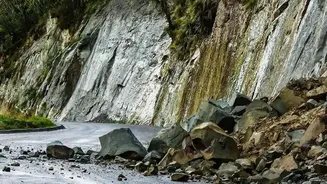
Beyond GLOFs, a more insidious threat is emerging from the ground itself: thawing permafrost. Permafrost is soil, rock, and ice that has remained frozen for many years, acting like a hidden glue that holds steep mountain slopes together. As high-altitude temperatures rise, this frozen ground begins to thaw, weakening its binding power and making entire slopes unstable. This loss of stability increases the frequency and severity of rockfalls and landslides. Scientists now understand that this process played a key role in the 2021 Chamoli disaster in Uttarakhand. The catastrophe was not a GLOF, as initially suspected, but a massive rock and ice avalanche from a slope likely destabilised by long-term warming. The energy from the fall melted the ice, creating a deadly debris flow that destroyed two hydropower projects and left over 200 people dead or missing.
A Cascade of Interconnected Hazards
The new Himalayan risk landscape is defined by these interconnected, cascading events. A rockslide from a thawing slope can fall into a glacial lake, triggering a GLOF. A GLOF can then gather more debris as it travels, transforming into a massive and highly mobile flow that can wipe out bridges, roads, and hydropower plants miles downstream. Compounding this, climate change is also bringing more intense rainfall to the region, which can further saturate already unstable slopes and increase the likelihood of landslides. This creates a complex web of multi-hazard risks where one disaster can quickly trigger another, making prediction and mitigation incredibly challenging.
The Race to Adapt and Predict
In response to these growing threats, India is stepping up its monitoring efforts. The National Disaster Management Authority (NDMA) has initiated a risk mitigation program targeting high-risk glacial lakes across Himalayan states like Uttarakhand, Himachal Pradesh, and Sikkim. However, the challenges are immense. Many of these potential hazard sites are in remote, inaccessible locations, making on-the-ground monitoring difficult. While satellite imagery and seismic sensors provide crucial data, creating a comprehensive early-warning system that can provide timely alerts to vulnerable downstream communities requires significant investment and cross-border cooperation. Experts argue that development in these fragile zones, especially large infrastructure like hydropower projects, must undergo far more rigorous climate and geological risk assessments to avoid creating new vulnerabilities.