







A New Eye on Our Star
Atop Haleakalā in Hawaii, the Daniel K. Inouye Solar Telescope has opened a new window to our star. Operated by the U.S. National Science Foundation, this four-meter telescope is an engineering marvel, capable of producing images of the sun’s surface
with astonishing detail. It can resolve features as small as 20 to 30 kilometres across, a feat akin to spotting a small coin from dozens of kilometres away. These are the highest-resolution images of the sun ever taken from the ground, revealing a turbulent, boiling pattern of gas that covers its entire surface. The images show cell-like structures, each about the size of Texas, which are the visible signature of convection currents that transport heat from the sun's interior.
Whirlpools on a Boiling Surface
Among the most exciting new discoveries are tiny, swirling vortices on the sun's visible surface, or photosphere. For the first time, scientists have directly observed a phenomenon known as the Kelvin-Helmholtz instability on our star. This effect occurs when two fluids, or in this case plasmas, flow past each other at different speeds, creating distinctive whirlpool patterns like waves breaking in the ocean. While seen in Earth's clouds and on other planets, observing these tiny vortices—some just 20 kilometres wide—on the sun is a major breakthrough. These swirls are not just beautiful; they provide crucial clues about how energy and magnetism are transported across the sun.
Solving a Fiery Mystery
These new observations may help solve one of the longest-standing puzzles in solar physics: the coronal heating problem. The sun’s surface, the photosphere, is about 5,500°C, but its outer atmosphere, the corona, sizzles at millions of degrees. For decades, scientists have debated how the corona gets so incredibly hot. The newly discovered vortices could be a key part of the answer. These constant, swirling motions may twist the sun's magnetic field lines, building up and transferring energy from the surface into the upper atmosphere, which could explain the corona's extreme temperatures.
A Global Effort, An Indian Contribution
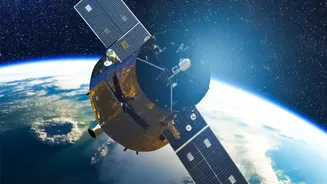
The quest to understand the sun is a global one, and India is playing a vital role with its own dedicated solar observatory, Aditya-L1. While the Inouye telescope provides incredibly detailed views of small sections of the sun from the ground, Aditya-L1 offers a continuous, unobstructed view of the entire solar disk from space. Positioned 1.5 million kilometres from Earth, Aditya-L1's instruments are designed to study the sun’s upper atmosphere, including the chromosphere and corona, and the explosive events that shape space weather. For example, its SUIT instrument recently captured unprecedented images of a solar flare in the near-ultraviolet range, filling a crucial data gap. These complementary missions—one piercing the veil from Earth, the other watching from afar—work in tandem to build a complete picture of our dynamic star.
Why This Matters for Earth
Understanding the sun isn't just an academic exercise; it has practical implications for our technologically dependent lives. The sun drives space weather, sending out solar flares and coronal mass ejections (CMEs) that can disrupt satellites, power grids, and communication systems. By observing the fine-scale magnetic structures and plasma flows on the sun's surface, scientists hope to better predict these powerful events. Data from missions like Aditya-L1 is already helping researchers understand the impact of solar storms on Earth's magnetic shield. The more we learn about the fundamental processes driving our star, the better we can protect our infrastructure and astronauts from its occasional fury.