



Jasmine (Mogra)
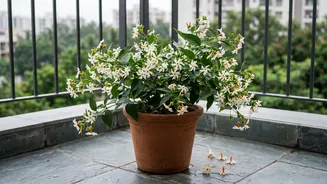
No list of fragrant Indian plants is complete without Mogra, also known as Arabian Jasmine. Its iconic, sweet fragrance is deeply woven into Indian culture, used in everything from garlands to evening rituals. Mogra is a sun-loving shrub that thrives
on balconies and terraces that receive at least five to six hours of direct sunlight. For abundant blooms, use a well-draining soil mix and water only when the top inch or two of soil feels dry. Avoid letting the plant sit in water. Pruning the plant after a flowering cycle encourages bushier growth and more flowers in the next season. Though it can be kept indoors briefly, it flowers best with consistent outdoor sun exposure.
Tuberose (Rajnigandha)
Known as the 'fragrance of the night', Rajnigandha releases its powerful and enchanting scent after dusk. This perennial plant grows from bulbs and produces tall spikes of pristine white flowers, making it a favourite for both gardens and pots. Rajnigandha is surprisingly easy to care for, thriving in full sun and well-drained soil. Plant the bulbs in a spot that gets six to eight hours of direct sunlight. Water it moderately, allowing the soil to dry out slightly between waterings to prevent the bulbs from rotting. During its growing season, a balanced fertilizer every few weeks will support its stunning floral display.
Night-flowering Jasmine (Parijat/Harsingar)
The Parijat tree is a symbol of love and divinity, famous for its small, white flowers with vibrant orange stems that bloom at night and carpet the ground by morning. The fragrance is sweet and delicate, filling the early morning air. This plant requires at least six hours of daily sunlight to flourish. It prefers well-draining soil and should be watered moderately, about twice a week, ensuring the soil doesn't become waterlogged. While it can grow into a large shrub or small tree in the ground, Parijat can also be successfully grown in a large container on a sunny patio, though it is not suited for indoor living. Regular pruning helps maintain its shape.
Gardenia (Gandharaj)
Often called 'Gandharaj' or the 'king of fragrances', the Gardenia is prized for its creamy white, rose-like flowers and intoxicating perfume. The dwarf varieties are particularly well-suited for pots on balconies. Gardenia prefers bright, but not scorching, sunlight—morning sun with afternoon shade is ideal, especially during hot Indian summers. It thrives in acidic, well-drained soil and requires consistent moisture, so don't let the soil dry out completely. A common issue is bud drop, which can be caused by sudden temperature changes or dry air; misting the leaves in the morning can help maintain the humidity it loves.
Frangipani (Champa)
Instantly recognisable by its beautiful, waxy flowers, Champa offers a sweet, tropical fragrance that is especially strong at night. This plant is remarkably low-maintenance and drought-tolerant once established, making it perfect for busy homeowners. Champa loves full sun and requires well-draining soil, as it is susceptible to root rot in waterlogged conditions. It is an excellent choice for a sunny corner of a garden or a large pot on a terrace. Water it deeply but infrequently, allowing the soil to dry out between waterings. Pruning can be done to shape the plant, but it generally requires minimal intervention to produce its lovely blooms.