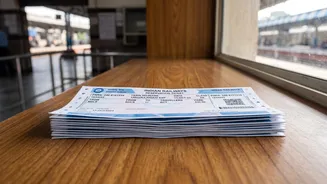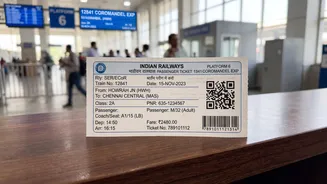





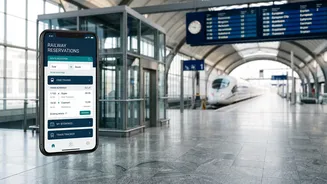
Indian Railways has extended its optional travel insurance to passengers buying tickets at counters, a significant move for offline travellers. For a nominal fee, it offers a safety net, but the protection comes with crucial conditions.
What is the New Counter Insurance?
Effective October
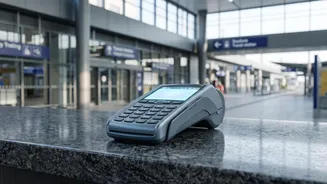
27, 2026, Indian Railways now allows passengers who purchase reserved tickets at physical Passenger Reservation System (PRS) counters to opt for travel insurance. This facility, previously exclusive to online bookings via the IRCTC website and app, is now accessible to a wider section of travellers. Prompted by a Supreme Court directive, the scheme aims to provide a financial safety net against unforeseen incidents during a train journey. For a minimal premium of just 45 paise per passenger, travellers can get coverage of up to ₹10 lakh. However, there's a key requirement: passengers who choose this insurance must pay for their ticket and the premium using a digital payment method like UPI or a card; cash payments are not eligible for this option. This is because the 45-paise premium cannot be practically collected in cash as coins of that denomination are no longer in circulation.
Coverage: What You're Protected Against
The insurance policy provides a substantial financial cushion in the event of a train accident or other specified 'untoward incidents' during the journey. The coverage is quite comprehensive for the low premium. It includes a payment of up to ₹10 lakh in the unfortunate event of death or permanent total disability. For permanent partial disability, the compensation is up to ₹7.5 lakh. Additionally, the policy covers hospitalisation expenses for injuries sustained during the journey, with a limit of up to ₹2 lakh. The scheme also includes a provision of ₹10,000 for the transportation of mortal remains. These benefits apply per insured passenger and cover the journey from the train's actual departure to its arrival, including the process of boarding and de-boarding.
The Fine Print: Key Conditions and Exclusions
While the coverage is significant, passengers must be aware of the conditions under which it applies. The policy does not cover everything. For instance, there is no coverage for incidents arising from intentional self-injury, suicide attempts, or acts committed under the influence of alcohol or drugs. Accidents that occur while crossing railway tracks or while engaging in adventure sports are also explicitly excluded. Furthermore, the policy does not cover natural death or illnesses that are not a direct result of a journey-related accident. Any medical treatment that is not deemed medically necessary, such as cosmetic surgery (unless required for reconstruction after an accident), is not covered. The insurance is also not applicable to children below the age of five.
How to Opt_In at the Counter
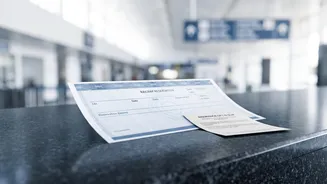
Availing the insurance at a reservation counter is a straightforward process. When filling out the reservation form, passengers must indicate that they want to opt for the travel insurance. Crucially, they must provide a valid mobile number on the form, as the policy details will be sent via SMS to this number. The most important step is the payment. To get the insurance, the entire transaction—both the ticket fare and the 45nd paise premium—must be paid digitally. Railway staff at the counters have been instructed to ensure digital payment for all insurance_linked bookings. This facility is available for passengers with confirmed (CNF), Reservation Against Cancellation (RAC), or partially confirmed tickets at the time of booking.
Counter vs. Online: Are They the Same?
The new scheme for counter tickets effectively mirrors the one that has been available to online bookers for years. The premium of 45 paise per passenger is identical, as are the coverage amounts for death, disability, and hospitalisation. The terms and conditions, including the list of exclusions, are also the same for both booking methods. The primary goal of this rollout was to eliminate the disparity between online and offline passengers, ensuring equitable access to this safety feature. The main operational difference lies in the payment mandate at the counter, where digital payment is compulsory to opt_in, a rule necessitated by any nominal premium amount. For online bookings, payment is inherently digital, so this is a seamless part of any process.