





The Problem of Code
For years, Volkswagen Group, the giant behind brands like VW, Audi, and Porsche, has been struggling with a very modern problem: software. Its in-house software division, CARIAD, was created in 2020 with the ambitious goal of building a unified software platform
for all its cars. However, the unit has faced immense challenges, leading to billions in losses, significant product delays for key models like the electric Porsche Macan and Audi Q6 e-tron, and executive shake-ups. The dream of a single, seamless operating system proved far more complex than anticipated, racking up losses of over €2 billion in the first nine months of 2024 alone. This internal struggle left VW vulnerable in a world where cars are becoming computers on wheels.
A Multi-Billion Euro Handshake
To solve its software crisis, Volkswagen is turning outwards. The company announced a major partnership with American electric vehicle startup Rivian. The deal involves VW investing up to $5 billion to create a joint venture. This new entity will combine Rivian's acclaimed software and electrical architecture with VW's massive global manufacturing scale. The plan is for the two companies to co-develop the underlying technology for their next generation of vehicles. Initially, VW will invest $1 billion, with billions more to follow as the partnership hits key milestones. This collaboration is a strategic shortcut for VW, giving it immediate access to the kind of advanced, centralized software platform it has failed to build on its own.
The Race for the Software-Defined Car
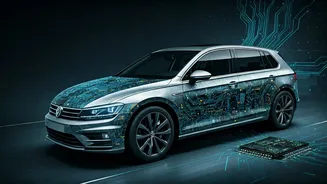
This deal is about survival in the new automotive era. The industry is rapidly moving toward the 'software-defined vehicle' (SDV). In an SDV, features like performance, infotainment, and even safety systems are controlled by software and can be updated remotely, just like a smartphone. This is a fundamental shift from traditional cars, where functions are tied to fixed hardware. Companies like Tesla and a wave of Chinese EV manufacturers have built their success on this software-first approach. For legacy automakers like VW, which have historically excelled at hardware and engineering, this is a monumental transition. The partnership with Rivian is an admission that to compete effectively, VW needs to accelerate its software capabilities immediately.
What This Means for Future Cars
For customers of Volkswagen, Audi, Porsche, and even VW's new Scout brand, this deal could bring significant changes. The joint venture's technology is expected to appear in new VW Group vehicles as early as 2027. The goal is to create vehicles with a far more advanced, seamless, and reliable user experience. This includes smarter infotainment systems, more robust driver-assistance features, and the ability to receive over-the-air (OTA) updates that add new functions or improve performance over the vehicle's lifetime. By adopting Rivian's 'zonal architecture,' which simplifies the complex wiring and numerous electronic control units (ECUs) in modern cars, future models should also be more efficient to build and potentially more reliable.
A High-Stakes Gamble
While the logic is clear, success is not guaranteed. The partnership is a high-stakes gamble. Integrating the technology and corporate cultures of a German industrial giant and an American tech startup will be a formidable challenge. Furthermore, while Rivian's software is highly regarded, the company itself is still working towards profitability. However, standing still was not an option for Volkswagen. The automotive world is being reshaped by code, and this multi-billion-euro deal is VW's decisive move to secure its place in that future. It’s a costly and risky bet, but one that the company believes it must make to stay relevant for decades to come.