



The Science of Sun-Seeking
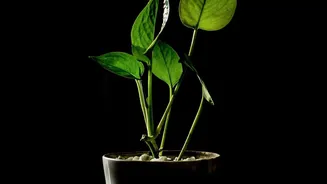
The familiar sight of a plant bending towards a window is a phenomenon called phototropism. At its core, this is a plant's strategy for survival. Plants convert sunlight into energy through photosynthesis, a process fueled by a green pigment called chlorophyll
found in their leaves and stems. To maximize the light they capture, plants have developed a sophisticated internal guidance system. This response is controlled by a plant hormone called auxin. When light hits one side of a plant, auxin concentrates on the shadier side. This accumulation causes the cells on the dark side to elongate, or grow faster, which in turn causes the stem to bend and angle the leaves towards the light source. This ensures that as many leaves as possible get the light they need to produce energy for the entire organism.
Do Leaves Really Take Turns?
While the headline's idea of leaves politely 'taking turns' is a charming simplification, there is truth to the idea that plants can perform complex movements. Besides the slow-growth bend of phototropism, some plants also exhibit heliotropism, or solar tracking. This is a more direct, daily movement where leaves or flowers change their orientation to follow the sun across the sky. Sunflowers are a classic example, with young flowers facing east at dawn and following the sun to the west by dusk. This movement is often driven by changes in water pressure within a flexible, joint-like structure at the base of the leaf or flower called a pulvinus. While most houseplants won't dramatically track the sun, their leaves can make small adjustments. The stalk that connects a leaf to the stem, called a petiole, allows for subtle repositioning to optimize light exposure and avoid shading lower leaves. So, while the whole plant leans, individual leaves also work to find their own spot in the sun.
Why Rotation Is Still Your Job
Even with these clever natural mechanisms, a houseplant's environment is fundamentally unnatural. In the wild, sunlight moves across the sky, providing more balanced light. Indoors, the primary light source is a stationary window. Left to its own devices, a plant will permanently lean, developing strong, dense foliage on the side facing the window and sparse, weak, or 'leggy' growth on the other. This not only creates a lopsided appearance but can also impact the plant's structural integrity over time. Manually rotating your plant is the only way to counteract this one-sided stimulus and encourage symmetrical, balanced growth. It ensures that all parts of the plant are stimulated to grow, resulting in a fuller, stronger, and healthier specimen.
A Simple Rotation Schedule
So, how often should you play turntable for your green friends? There’s no single ironclad rule, but a good general guideline is to give your plant a quarter-turn every one to two weeks. An even easier habit to adopt is to rotate the pot a quarter-turn every time you water it. This simple system makes it easy to remember and provides consistent results. The ideal frequency can depend on your specific conditions. Plants in lower light might need more frequent turns (every few weeks), while those in very bright spots may only need it every month or two. Pay attention to your plant; if you notice a distinct lean, it's time for a turn. The goal is to promote even growth and prevent a permanent tilt. However, be mindful of flowering plants like orchids, which may drop their buds if rotated after they've set.
Beyond the Turn: More Light-Loving Tips
Rotating your plant is also the perfect opportunity for a quick health check-up. As you turn it, inspect the leaves (top and bottom) for any signs of pests or disease. This regular inspection can help you catch problems before they escalate. You can also boost your plant's ability to photosynthesize by gently wiping down its leaves with a damp cloth. Dust accumulation can block light, reducing the plant's ability to feed itself. Improved air circulation is another side benefit of handling your plants regularly; good airflow helps prevent fungal issues and deters pests. By making rotation a part of your routine, you’re not just encouraging even growth—you're being a more attentive and proactive plant parent.