





A 'Once-in-a-Lifetime' Scar
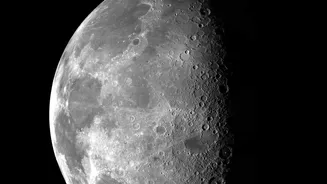
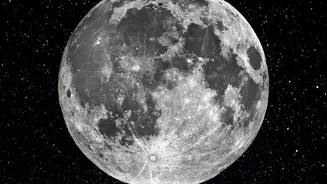
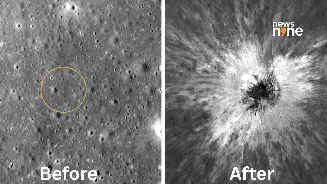
Scientists have announced the discovery of a massive new crater on the Moon, the result of a powerful impact that occurred undetected back in 2024. Named McGetchin crater, the feature is larger than the Roman Colosseum, measuring an impressive 222 metres
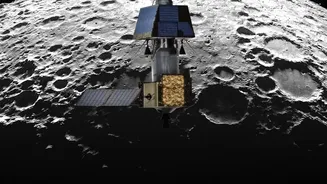
across and 43 metres deep. Such a large-scale impact is estimated to happen only once every 132 years, making this a statistically rare and invaluable event for researchers. The crater was formed when a fragment of an asteroid or comet struck the Moon's near side. Despite its size, the impact escaped real-time detection from telescopes on Earth and in space, and its existence was only confirmed after scientists combed through vast amounts of data from NASA’s Lunar Reconnaissance Orbiter (LRO). The initial images were taken in May 2024, but the feature wasn't formally identified until August 2025, with more detailed pictures confirming the find earlier this year.
An Accidental Cosmic Laboratory
More than just a new pockmark on the lunar surface, McGetchin crater serves as a natural laboratory for understanding the dynamics of the Moon. Because it is so fresh, it gives scientists a pristine look at the immediate aftermath of a major impact before the harsh environment of space has had time to erode the evidence. This provides a rare glimpse into the powerful forces that shape the lunar landscape. For decades, our understanding of such events was based on theory and observation of ancient craters. Now, we have a real-world example to study in high resolution. This event is a treasure trove of information, churning up the lunar surface for more than 100 kilometres and creating a unique opportunity to study the physical properties of the Moon's soil, or regolith.
Reading the Scars: What the Crater Reveals
The observations from the LRO have yielded several surprising findings. First, the material blasted out from the impact—known as ejecta—was thrown away at a higher angle than models predicted. This detail is critical for understanding how dust and rock fragments travel after an impact, which has direct safety implications for any nearby hardware or habitats. Furthermore, instruments on the orbiter detected a seven-kilometre-wide 'cold spot' around the crater. This thermal anomaly suggests the impact significantly loosened and fluffed up the topsoil over a vast area, changing its thermal properties. One scientist compared the effect to gardening on a massive scale, turning over and loosening a huge patch of compacted ground. This provides unprecedented data on the mechanics of lunar soil, information that is difficult, if not impossible, to replicate in a lab on Earth.
From Discovery to Engineering Blueprints
This is where the discovery becomes a game-changer for the business of space exploration. NASA and its commercial partners are investing billions to build a sustainable presence on the Moon, including habitats, power systems, and landing pads. The success of this infrastructure depends on a deep understanding of the ground it's built on. The data from McGetchin crater provides invaluable, real-world engineering specifications. Understanding how the regolith behaves after being disturbed by an impact helps engineers design better rovers, build more stable landing pads, and plan construction projects that can withstand the unique lunar environment. It informs how to protect equipment from the abrasive, electrostatically charged dust that can be thrown for miles. In essence, nature has provided a free, full-scale stress test on the very materials and terrain future astronauts will need to work with, helping to reduce the risks and costs associated with building the first off-world economy.