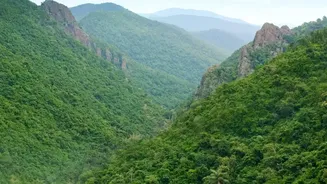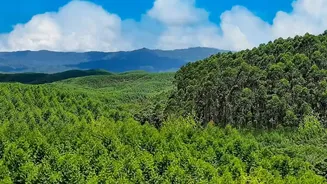







The Grand Promise of a Greener Planet
At the heart of this global ambition is the Bonn Challenge, a massive effort launched in 2011. The goal was to bring 150 million hectares of the world’s deforested and degraded land into restoration by 2020 and a staggering 350 million hectares by 2030.
This initiative, along with others under frameworks like the UN Decade on Ecosystem Restoration, brought total commitments to over a billion hectares. The idea wasn't just about planting trees; it was about Forest Landscape Restoration (FLR), an approach that aims to regain ecological function and enhance human well-being in deforested or degraded areas. By restoring forests, countries aim to fight climate change, protect biodiversity, and secure livelihoods for millions.
Ambition vs. Reality: A Widening Gap
Despite the bold pledges, recent reports paint a sobering picture. According to a September 2026 report from the UN's Food and Agriculture Organization (FAO), progress is insufficient. While countries have made commitments covering over a billion hectares, only a fraction of that area is actually undergoing restoration. An analysis by the International Union for Conservation of Nature (IUCN) in August 2026 found that while over 124 million hectares are under some form of restoration, this represents just over 10% of the pledged amount. The world continues to lose forests at an alarming rate, with an estimated 489 million hectares vanishing between 1990 and 2025, an area greater than the European Union. This creates what the UN calls a 'widening gap' between what our ecosystems can provide and what society needs.
The Roots of the Problem
So, why is progress so slow? The challenges are complex and interconnected. A primary hurdle is a massive funding gap. A survey of over 200 forestry teams worldwide revealed that 95% lack sufficient funding to secure land, staff, and supplies. Many projects struggle to access carbon markets, which could provide a vital revenue stream but are often too complex and costly for smaller teams to navigate. Another critical issue is the supply of seeds. A lack of access to diverse, native seeds hampers efforts to restore genuine ecosystems, with many projects resorting to planting fast-growing monocultures that don't support biodiversity. Furthermore, insecure land rights, where local communities don't have legal control over the forests they live in, leave these areas vulnerable to exploitation. Finally, a lack of technical staff and monitoring technology makes it difficult to track progress and prove that restoration efforts are successful.
Pockets of Hope and India's Progress
The global picture may be challenging, but there are notable successes. In Costa Rica, a crowdfunding initiative has planted over 250,000 trees while creating green jobs. In Mozambique, the Gorongosa National Park has seen its population of large animals rebound from 7,000 to over 100,000 following extensive restoration efforts. India, for its part, has emerged as a significant contributor to the global goal. The country pledged to restore 26 million hectares by 2030, one of the largest commitments globally. According to a progress report released in June 2026, India has already brought nearly 21.8 million hectares under restoration through methods like agroforestry, natural regeneration, and mangrove planting. This effort has reportedly created over a billion person-days of employment and sequestered significant amounts of carbon, with states like Telangana leading the way.