





The Billion-Kilometre Pantry Problem
Feeding astronauts is relatively straightforward on the International Space Station, which is close enough for regular resupply missions. But a trip to Mars is a different beast entirely. A round trip could take three years, making it impossible to pack
enough pre-packaged meals. This logistical nightmare prompted NASA and the Canadian Space Agency to launch the Deep Space Food Challenge, an ambitious competition to develop novel technologies for producing safe, nutritious, and tasty food with minimal resources. The goal was to find systems that could operate independently, creating a sustainable food source for future pioneers on the Moon and Mars. The challenge called for innovators to think beyond conventional agriculture, which requires significant water, space, and light—luxuries that are in short supply on a spacecraft.
Cooking With Air and Electricity
Several teams rose to the challenge with a concept that sounds like science fiction: creating food from air. Companies like Finland-based Solar Foods and US-based Air Protein took inspiration from forgotten NASA research from the 1960s. Their technology revolves around single-celled organisms known as hydrogenotrophs. These microbes do something remarkable: in a process similar to fermentation for beer or yoghurt, they consume carbon dioxide and combine it with water, nutrients, and energy (in this case, from electricity) to produce a complete protein. The primary “waste” product being upcycled here is the carbon dioxide astronauts exhale. By capturing this CO2 from the spacecraft's atmosphere, the system creates a closed-loop food source, turning a liability into a vital asset.
Meet the 'Upcycled' Ingredient
The result of this bioprocess is a nutrient-dense, protein-rich flour. Solar Foods calls its version 'Solein', a yellowish powder that is packed with all nine essential amino acids, iron, and B vitamins. Remarkably, it has a neutral taste, allowing it to be used as a versatile ingredient in almost any food without altering the flavour profile. This powder can be used to make everything from pasta and protein shakes to ice cream. Meanwhile, another team from Southern Illinois University took a slightly different but equally innovative approach, developing a process to break down inedible biomass and even plastic waste (like PET bottles) into smaller carbon molecules, which are then consumed by engineered yeast to produce proteins and fats. They then use a 3D printer to form this substance into snacks, including cookies which they have dubbed 'µBites'.
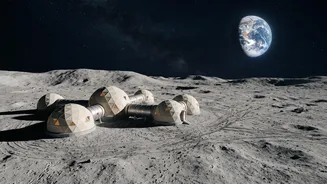
Food for a Martian Outpost
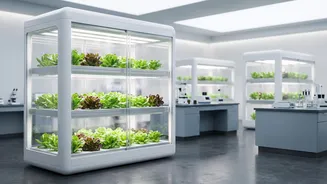
The implications for long-duration space travel are immense. A compact bioreactor could potentially supply the daily protein needs of a crew, dramatically reducing the mass that needs to be launched from Earth. This not only makes missions more feasible but also enhances astronaut autonomy and safety. Teams like SATED developed fire-safe space appliances to cook a variety of meals, from pizza to peach cobbler, using these novel ingredients. Another grand prize winner, Interstellar Lab, designed a modular system for growing microgreens, vegetables, mushrooms, and even insects to provide a wider variety of fresh food. The combination of grown produce and manufactured proteins offers a path toward a varied and psychologically satisfying diet, a crucial factor for crew morale on long, isolated missions.
From Spaceship to Supermarket Shelf?
While the technology was born from the needs of space exploration, its creators have their sights set firmly on Earth. The process of creating protein from air and electricity is incredibly efficient. It requires a fraction of the land and water compared to traditional animal or plant agriculture, and since it is not dependent on weather or climate, it can be done anywhere in the world. Solar Foods has already begun commercial production at its first factory and has received regulatory approval to sell Solein in Singapore and the United States, with approval in the EU expected in 2026. As global food demand rises, this technology offers a powerful tool for producing sustainable, nutritious protein with a minimal environmental footprint, potentially helping to address food security challenges around the globe.