

A Celestial Partnership
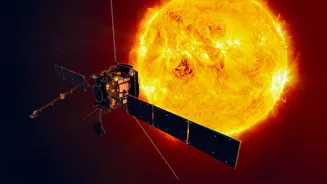
For the first time, scientists have combined observations from India's maiden solar mission, Aditya-L1, and the European Space Agency's (ESA) Proba-3 to jointly analyse solar eruptions. This collaborative effort, led by researchers at the Indian Institute
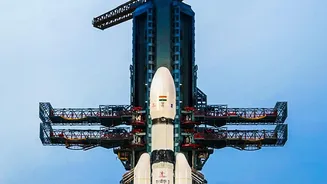
of Astrophysics (IIA) in Bengaluru, provides unprecedented insight into how these powerful events, known as Coronal Mass Ejections (CMEs), evolve near the Sun. The partnership highlights India's growing prominence in space research and the immense value of international cooperation. Adding a layer to the collaboration, the Proba-3 mission itself was launched from India's Satish Dhawan Space Centre in Sriharikota aboard an ISRO PSLV-XL rocket in December 2024.
Understanding Solar Fury
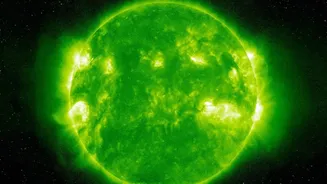
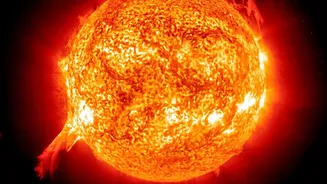
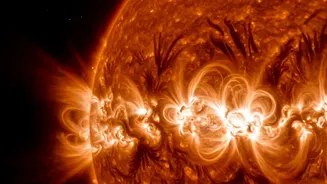
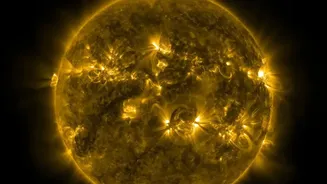
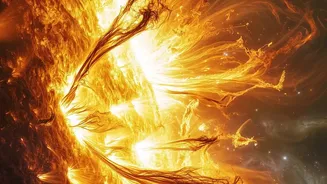
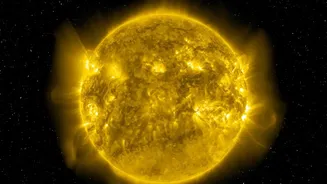
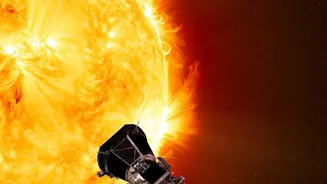
Coronal Mass Ejections are colossal explosions on the Sun, capable of hurling billions of tons of magnetized plasma into space at incredible speeds, sometimes reaching nearly 3,000 kilometres per second. When these eruptions are aimed at Earth, they can trigger geomagnetic storms that pose a significant threat to our modern, technology-dependent society. These solar storms can disrupt satellite operations, interfere with communication and navigation systems like GPS, and even overload power grids, potentially causing widespread blackouts. Understanding their properties—like mass, density, and speed—right after they leave the Sun is crucial for improving space weather forecasts and protecting our infrastructure.
Two Spacecraft, One Unique View
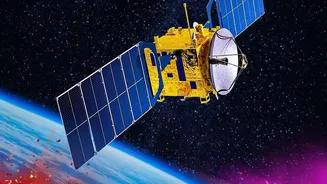
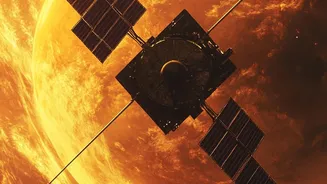
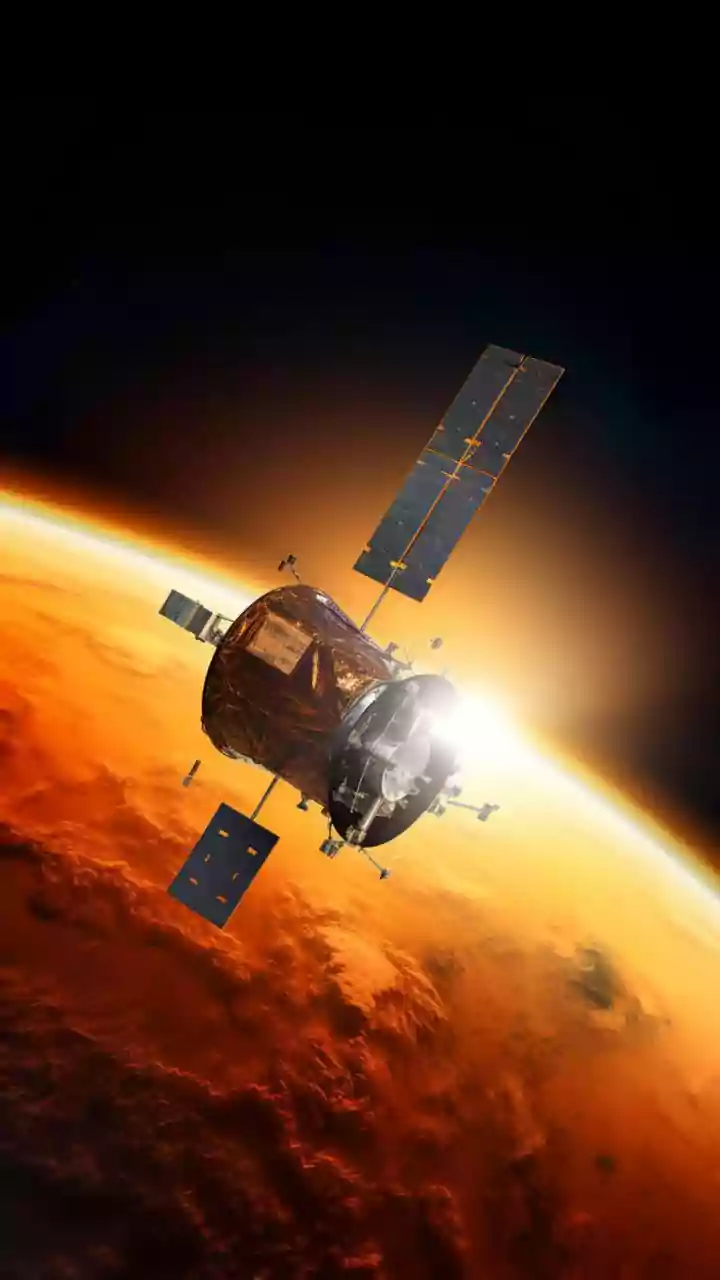
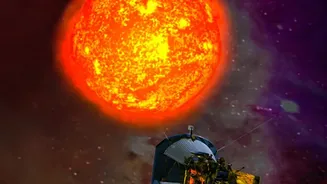
The success of this research lies in the complementary capabilities of the two missions. ESA's Proba-3 is a revolutionary mission that uses two satellites flying in precise formation, about 150 metres apart, to create a sustained artificial solar eclipse. One satellite blocks the Sun's bright face, allowing the other's coronagraph, named ASPIICS, to capture incredibly detailed images of the faint, million-degree corona, which is normally invisible. Meanwhile, India’s Aditya-L1, stationed 1.5 million kilometres from Earth, uses its own advanced coronagraph, the Visible Emission Line Coronagraph (VELC), to perform spectroscopic observations, studying the temperature, velocity, and density of the coronal plasma. By combining the high-resolution imaging from Proba-3 with the spectroscopic data from Aditya-L1, scientists can build a much more complete 3D picture of a CME's structure and energy in its earliest moments.
Weighing a Solar Storm
Observing CMEs close to the Sun has always been a major challenge for scientists. Earlier instruments could not fully track the initial evolution of these eruptions, leaving crucial gaps in our knowledge. This new joint study, published in the journal Astronomy & Astrophysics, focused on two CMEs observed in September 2025. For the first time, researchers were able to independently calculate the mass, density, and thermal energy of the eruptions using data from both ASPIICS and VELC. The fact that the estimates from two different instruments showed strong agreement gives scientists high confidence in the accuracy of the measurements. The team found that one CME was fast, travelling at 645 km/s, while the other was much slower at 145 km/s, showing stronger early expansion.
What This Means for Earth
This breakthrough isn't just an academic exercise. Accurately measuring the mass and density of a CME is a critical step toward better space weather prediction. These parameters help determine how a CME will travel through space and how severe its impact might be if it hits Earth. By understanding the initial energy and structure of these solar storms, scientists can create more reliable models to forecast their arrival time and potential for causing geomagnetic disturbances. This advanced warning—potentially extending from hours to days—is vital for satellite operators to put their spacecraft into a protective 'safe mode' and for power grid managers to take preventative measures, ultimately mitigating the most damaging effects of solar fury.