




The Lost Capital of a Forgotten Kingdom
For centuries, the city of 'Shripura', meaning the 'city of abundance', was the thriving capital of the Dakshina Kosala kingdom. From roughly the 5th to the 12th centuries, it was a major political, commercial, and religious hub under dynasties like the Sharabhapuriyas
and later, the Panduvamshis. During its golden age, particularly in the 7th century under the Panduvamshi king Mahashivagupta Balarjuna, Sirpur was a beacon of prosperity and architectural innovation. The famed Chinese traveller Xuanzang (also known as Hiuen-Tsang) visited in 639 CE and documented a prosperous city with numerous monasteries and a devout population. Then, for reasons historians are still piecing together, this magnificent city was lost to the jungle, its stories buried under layers of earth until extensive excavations began in the 20th and 21st centuries.
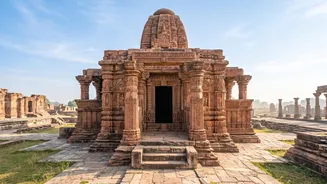
The Crown Jewel: Laxman Temple
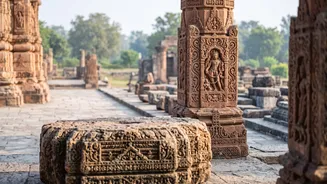
The most iconic structure rising from Sirpur's ruins is the Laxman Temple, dedicated to Lord Vishnu. Believed to have been built in the 7th century by Queen Vasata in memory of her husband, King Harshagupta, it is celebrated as one of India's finest and best-preserved brick temples. What makes it extraordinary is its intricate detail and sophisticated design, a marvel of engineering for its time. The carvings on its stone doorframe and exterior walls depict scenes from mythology, including the graceful Sheshnaag providing a canopy for Lord Vishnu. The temple's precise construction and unique symmetry offer a masterclass in early Nagara-style architecture, standing as a testament to the skilled artisans of the Dakshina Kosala region.
A Tapestry of Faiths
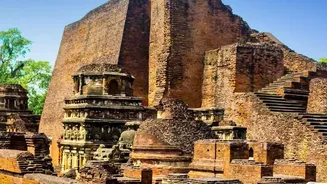
Sirpur was not just a centre for one religion; it was a remarkable example of religious harmony. Excavations have unearthed an incredible landscape where Hindu, Buddhist, and Jain monuments co-existed peacefully. The patronage of rulers extended across faiths. For instance, though King Mahashivagupta Balarjuna was a devout Shaivite, he generously supported the construction and maintenance of grand Buddhist viharas (monasteries). Archaeologists have discovered at least 12 Buddhist monasteries, including the impressive Teevardev and Ananda Prabhu Viharas, alongside numerous Shiva and Vishnu temples. This syncretic culture is visible in the art itself, with some structures blending Hindu motifs with Buddhist iconography, creating a unique artistic dialogue that defined the city.
Unearthing a Forgotten Metropolis
Modern excavations, especially those since the year 2000, have radically transformed our understanding of Sirpur. The discoveries have been nothing short of spectacular, revealing a highly organized urban centre. Archaeologists have found evidence of a sixth-century bathhouse, an underground granary market, and even facilities for Ayurvedic treatments. The sheer scale of the findings, including monolithic statues of Buddha and Mahavira, and a huge cache of exquisite bronze sculptures, suggests Sirpur was a major production centre for religious art. Some experts believe the complex of monasteries and learning centres here was so vast that it could rival even the famed university at Nalanda. These findings continue to add new chapters to the story of this ancient metropolis.
Visiting Sirpur Today
Located about 80 kilometres from Raipur, Sirpur is now a serene and captivating destination for history buffs and curious travellers alike. Managed by the Archaeological Survey of India, the sprawling site invites visitors to wander among the ruins and imagine its former grandeur. The on-site museum houses many of the stunning artefacts unearthed from the area, providing further context to the temples and monasteries. As a destination that has recently been added to UNESCO's Tentative List of World Heritage Sites, Sirpur's profile is rising, yet it retains a tranquil atmosphere, far from the crowds of more famous heritage sites. Efforts are also underway to develop the site further under tourism initiatives, promising better accessibility while preserving its ancient soul.