







The Pre-Step: A Ruthless Edit
Before you can organise, you must declutter. You cannot organise clutter; you can only move it around. Begin by emptying your shelves completely. Sort every item into one of three piles: keep, donate, or discard. Be honest with yourself about what you truly
wear and need. This initial purge is the most crucial step toward achieving a closet that feels both spacious and serene. Once you're left with only the items you love, group them into logical categories—sweaters, t-shirts, workout gear, accessories, and so on. This will help you determine how many baskets you need and what sizes will work best.
Choosing the Perfect Baskets
The right baskets are the foundation of this system. Unlike clear plastic bins, woven baskets conceal clutter while adding warmth and texture. Materials like seagrass, water hyacinth, and rattan are not only durable and eco-friendly but also bring a natural, calming element to your space. Before you buy, measure your shelves carefully—depth, width, and height. Look for baskets that are slightly smaller than your shelf dimensions to ensure an easy fit, leaving at least a couple of inches of space on the sides for a less cramped look. If you want to grab items without pulling the whole basket out, choose one that is significantly shorter than the shelf's height clearance.
Create a Cohesive Look
To achieve a high-end, intentional look, consistency is key. Sticking to one or two styles of baskets will create a sense of rhythm and calm. You can use matching baskets in different sizes to accommodate various items—shallow ones for belts and scarves, and deeper ones for bulky sweaters. Consider the colour of your shelves and walls. Baskets in neutral, natural tones work with almost any decor style and create a unified, peaceful aesthetic. Using uniform sizes and shapes can create a pleasing symmetry, especially on higher shelves.
The Art of Folding and Storing
How you place items in your baskets matters. For clothing like t-shirts and knits, the file-folding method is a game-changer. Fold items into neat rectangles and place them vertically in the basket, like files in a filing cabinet. This allows you to see everything at a glance and pull one item out without disturbing the rest. For other items, like scarves or socks, rolling them tightly is an effective, space-saving technique. For delicate items, consider baskets with a soft linen liner to prevent snagging. Loosely woven baskets are excellent for things that need airflow, such as workout clothes.
To Label or Not to Label?
Labels can be incredibly helpful, especially if you have many identical baskets. They turn a pretty storage system into a highly functional one, saving you from pulling down every basket to find your favourite yoga pants. You don't have to use a clunky label maker. Stylish options abound, from chic leather luggage tags to simple cardstock tags tied on with twine. Alternatively, if your system is simple enough—for example, one basket for sweaters, one for jeans—you might opt to go without labels for a cleaner, more minimalist appearance. The choice depends on how much you store and how how often you'll need to access it.
Arranging for Visual Impact
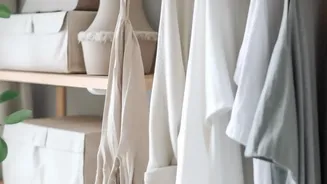
The final step is arranging the baskets on your shelves. Don't be afraid to leave some empty space; a little breathing room prevents the shelves from looking overstuffed. Place baskets with everyday essentials on shelves that are easy to reach. Seasonal items or things you use less frequently can go on the higher shelves. To break up the monotony, you can mix in a few decorative objects, like a small plant, a stack of books, or a framed photo, but keep them minimal to maintain a clean, uncluttered feel. The goal is to create a display that feels both personal and impeccably organised.