






Why Good Ventilation Is Not Just About Smells
The lingering smell of last night’s curry is one thing, but the real reason to use your extractor hood is to tackle the invisible pollutants created by cooking. The very act of heating food, especially frying or using a gas stove, releases fine particulate
matter (PM2.5), nitrogen dioxide, and other compounds into your kitchen air. Studies have shown these pollutants can reach levels that would be considered unsafe outdoors and may irritate the respiratory system, especially for those with asthma or allergies. An effective range hood is designed to capture these airborne particles—along with grease, smoke, and steam—at the source, preventing them from spreading throughout your home and settling on surfaces. Properly venting your kitchen isn't just about odour control; it's a critical step for maintaining good indoor air quality.
Start Early: Create the Current Before You Cook
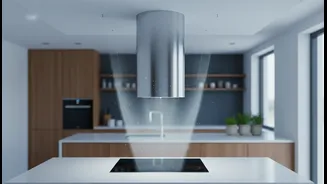
One of the most common mistakes is waiting until smoke or steam appears before flicking the switch. For a range hood to work its best, it needs to establish a proper airflow pattern. Experts recommend turning on your hood to a low setting about five to ten minutes before you even put a pan on the stove. This simple action creates a gentle updraft. When you start cooking and pollutants begin to rise, they are immediately drawn into this existing air current and guided directly into the hood. Without this preparatory step, smoke and steam can easily escape the hood’s capture area and disperse into the room. Think of it like getting a gentle river flowing in the right direction before you release a boat; it ensures everything moves smoothly where you want it to go.
Use the Back Burners: The Prime Capture Zone
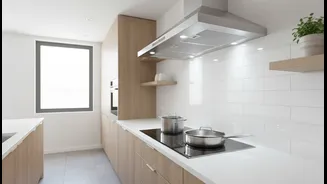
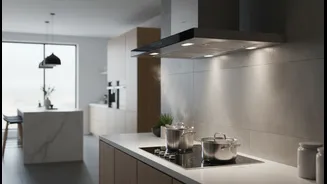
It’s tempting to use the front burners for convenience, but when it comes to ventilation, the back burners are your best friends. Most range hoods, especially standard models, are designed in a way that they fully cover the rear burners but only partially extend over the front ones. Pollutants rise in a column directly above the heat source. By cooking on a back burner, this entire column is positioned directly underneath the most effective part of your hood's suction area. Research has shown that this simple shift can make a huge difference; some studies suggest that using a back burner can allow your hood to capture up to twice as many pollutants compared to using a front burner. Whenever possible, give your most intensive cooking tasks—like searing meat or stir-frying—a prime spot on the back burners.
Let the Hood Finish the Job: The 15-Minute Rule
The cooking might be over, but your hood’s work isn’t. Once you turn off the stove, the hot pans, the food itself, and the cooktop surface continue to release steam, grease, and odours into the air. To catch these lingering emissions, you should leave your extractor fan running for 10 to 15 minutes after you’ve finished cooking. This post-cook purge ensures that any residual contaminants are thoroughly cleared from the kitchen, leaving the air significantly cleaner. While some may worry about the noise or energy use, this final step is crucial for preventing grease buildup on cabinets and keeping the air fresh. Consider it the cool-down lap for your kitchen, ensuring a clean finish every time.