

Meet the Cosmic Lion
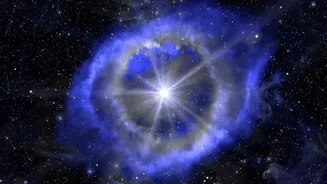
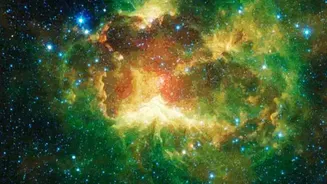
Located about 10,000 light-years away, the Lion Nebula, formally known as NGC 2392, is what astronomers call a planetary nebula. This has nothing to do with planets; the term is a historical holdover for the colourful, glowing shells of gas and dust expelled
by a dying star. For thousands of years, the star at the center of NGC 2392, one similar in mass to our own Sun, has been shedding its outer layers. This process has created a spectacular structure that, when viewed through telescopes, bears a striking resemblance to the head of a lion, complete with a flowing mane. It’s a snapshot of a star's final, beautiful, and chaotic farewell.
A Portrait of Stellar Death
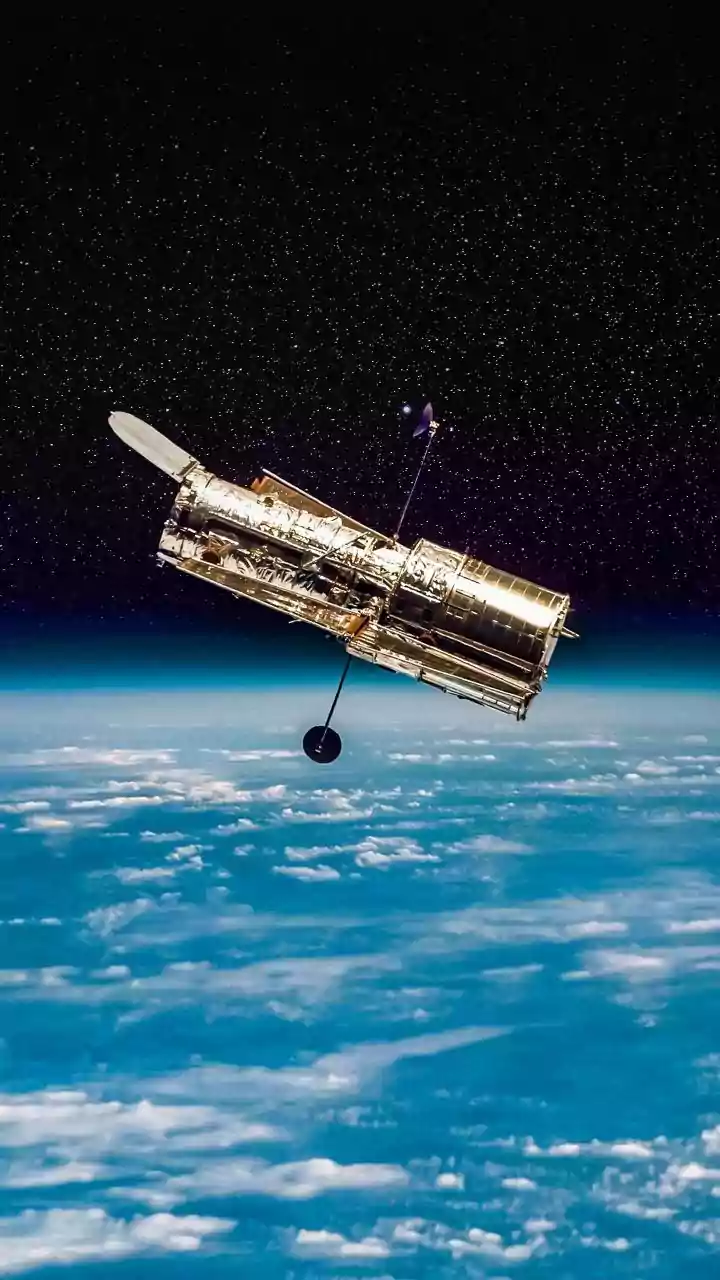
At the heart of the lion's face sits a tiny, intensely hot stellar core known as a white dwarf—the remnant of the once-mighty star. This white dwarf is 'cooking' the nebula from the inside out, blasting it with powerful radiation. For years, based on images from telescopes like Hubble, scientists understood this process in broad strokes. They could see a bubble of gas forming the lion's 'face' and a 'mane' made of hazy, comet-like objects. The prevailing theory held that the star’s radiation was pushing this material outwards, creating the intricate patterns seen from afar. Yet, the precise mechanics of how these detailed structures formed and survived remained an area of active research.
Webb's Infrared Revelation
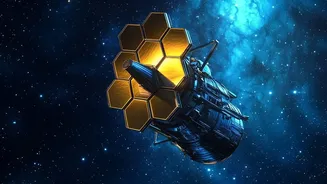
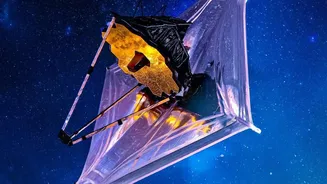
The new images from the James Webb Space Telescope (JWST) have provided a much clearer, more detailed view. While at first glance the overall structure looks similar to what Hubble saw, Webb’s ability to see in infrared light cuts through the haze. Its vision highlights features that were previously obscured, such as compact clumps of dust within the mane and the delicate structure of the ionized gas. The images reveal that the lion's mane is not a uniform cloud but the illuminated interior of a dust shell. The 'tufts' of hair are dense clumps of dust that have so far survived the intense radiation from the central white dwarf, protecting the material lying behind them like a shield.
Rewriting a Star's Final Chapter
This new perspective changes the case for how the nebula is evolving. Instead of a simple story of outward expansion, Webb shows a dynamic and violent struggle between the dying star and the material it cast off. The central white dwarf is creating an expanding bubble of superheated gas that forms the lion’s face, a bubble that is actively destroying dust in its path. However, the survival of the dense clumps in the mane indicates a more complex interaction. These clumps are not just passive travellers but are actively resisting their own destruction. This detailed view of destruction and survival helps astronomers better understand how planetary nebulae get their complex shapes, a long-standing puzzle in astrophysics.
A Glimpse into Our Sun's Future
Studying the Lion Nebula isn’t just about one distant star; it’s a preview of our own Sun's distant future. Billions of years from now, our Sun, which is not massive enough to go supernova, will also shed its outer layers to form a planetary nebula with a white dwarf at its center. Understanding the processes at play in NGC 2392 provides a direct window into the fate of our solar system. The new JWST data offers a 'frozen' moment in time, capturing the intricate dance of gas, dust, and radiation. It helps refine models of stellar evolution, giving us a clearer picture of how stars live, die, and enrich the universe with the materials necessary for the next generation of stars and planets.