

Containers Are Not Mini Garden Beds
The core of the issue lies in a simple fact: a pot is a closed system, fundamentally different from the earth in your garden. In a garden bed, excess water drains away into the surrounding soil, and a vast ecosystem of worms and microbes helps aerate
the soil and buffer nutrients. A container has none of these advantages. Its drainage is limited to the holes in the bottom, it has no surrounding soil to absorb excess moisture or nutrients, and there are no earthworms to prevent compaction. This isolated environment is why a material that is a blessing in the garden can become a problem in a pot.
The Danger of Compaction and Waterlogging
Finished compost has a fine texture and is packed with organic matter. While loose and fluffy at first, repeated watering in the confined space of a pot causes these fine particles to settle and compact. Sometimes, it can lose 30-50% of its initial volume in just a few weeks. This compaction squeezes out the air pockets that roots need to breathe. The result is a dense, heavy medium that drains poorly, leading to waterlogged soil. Plant roots sitting in stagnant water are starved of oxygen and become highly susceptible to root rot and other fungal diseases, which can quickly kill a plant.
Too Much of a Good Thing: Nutrient Burn and Salt Buildup
Compost is celebrated for being nutrient-rich, but in a container, this can be a double-edged sword. As compost continues to break down, it releases nutrients. Without the vastness of a garden to dilute them, these nutrients can become too concentrated. This can lead to a condition known as 'nutrient burn', where an excess of nutrients, particularly salts found in fertilizers and manure-based composts, becomes toxic to the plant. Symptoms of nutrient burn include yellowing or browning leaf tips and edges, and stunted growth. Over time, these salts can build up in the pot, further stressing the plant.
The Correct Way: Compost as an Ingredient, Not the Whole Meal
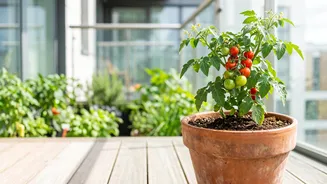
The solution is not to avoid compost, but to use it wisely as a component of a balanced potting mix. Most experts and university extension programs recommend that compost should make up no more than 10% to 33% of your total mix, with 25% being a common and effective ratio. The rest of your mix should consist of materials that provide structure and aeration, such as perlite, vermiculite, or coconut coir, which are staples of commercial potting mixes. A reliable all-purpose formula is to blend about two parts of a quality potting mix or peat/coir with one part compost. For plants that are heavy feeders, like tomatoes, you can lean towards 30%, while for succulents, you would use much less. This blend provides the benefits of the compost—nutrients, moisture retention, and microbial life—while the other ingredients ensure the mix remains light and well-draining.