






The Final Hurdle: Human-Rating
Before Indian astronauts, or ‘Gaganyatris’, can journey to a 400-kilometre orbit, every single component of their spacecraft must be proven safe. This exhaustive certification process is known as “human-rating,” and it’s what separates a satellite launcher
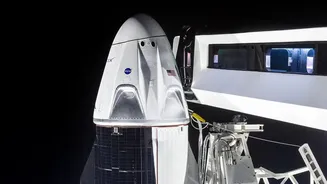
from a vehicle trusted with human lives. The Indian Space Research Organisation (ISRO) is systematically tackling this challenge, with the Crew Module—the capsule where astronauts will live—undergoing a battery of rigorous qualification tests. These trials are designed to push systems beyond their expected operational limits on the ground to guarantee they will perform flawlessly in space and during the perilous return to Earth. Each successful test builds confidence, validating the complex engineering required to protect the crew.
A Three-Part Gauntlet for Safety
ISRO recently announced the successful completion of three major qualification tests for the Crew Module, each one vital for astronaut safety. The first was a test of the Crew Module Uprighting System (CMUS). The second validated the umbilical separation system, which ensures the Crew Module cleanly disconnects from the Service Module before re-entry into the atmosphere. The third test confirmed the capsule's structural integrity when the apex cover, which protects the parachutes, is jettisoned. Together, these tests address critical moments in the mission's final stages, which are largely automated and must work perfectly to ensure a safe splashdown and recovery.
The Crucial Uprighting Challenge
Of these recent tests, the one that truly captures the mission's attention to detail is the uprighting system. After a fiery re-entry and parachute-assisted descent, the Crew Module is designed to splash down in the Indian sea. However, there is no guarantee it will land perfectly upright. Ocean waves and slight imbalances can cause the capsule to settle in an inverted, or 'apex-down,' position. This scenario poses significant risks: the exit hatch could be submerged, communication antennas might not function, and it would make recovery by the Indian Navy far more difficult and hazardous for both the astronauts and the recovery teams. Ensuring the capsule can quickly right itself is not just a matter of convenience; it's a fundamental requirement for crew survival.
How Gaganyaan Gets It Right
ISRO's solution to this challenge is the Crew Module Uprighting System (CMUS), a clever engineering system designed for reliability. It consists of a set of inflatable flotation bags, much like high-tech balloons, attached to the capsule. During a recent qualification test, ISRO demonstrated how this system works. If the module lands upside down, high-pressure bottles containing a cold, stored gas are triggered by control valves. This gas rapidly inflates the flotation bags. The strategic placement and buoyancy of these bags create the necessary torque to flip the multi-tonne capsule into the correct, upright orientation in the water. The successful test confirmed that the system inflates within the required time across its full range of operating pressures, proving its readiness for a real-world splashdown.
The Path to the Launchpad
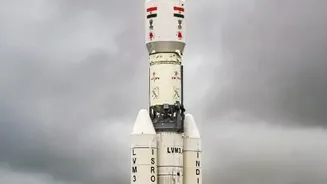
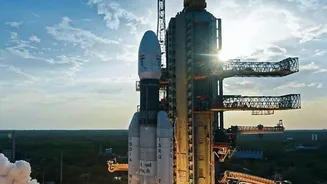
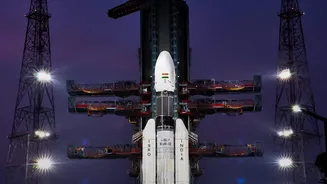
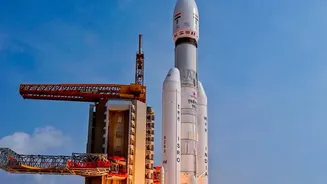
These qualification tests are part of a much larger series of trials designed to validate every aspect of the Gaganyaan mission. This includes Integrated Air Drop Tests (I-ADT), where a simulated crew module is dropped from a helicopter to test the entire parachute sequence, from the small drogue chutes to the massive mains that slow the final descent. ISRO has also worked extensively with the Indian Navy to practice recovery procedures, using mock-up capsules in closed pools and in open seas to refine standard operating procedures for safely bringing the astronauts home. With the human-rated LVM3 launch vehicle components being assembled and key safety systems passing their tests, ISRO is methodically clearing the final hurdles before the first uncrewed flight, setting the stage for India’s historic crewed mission.