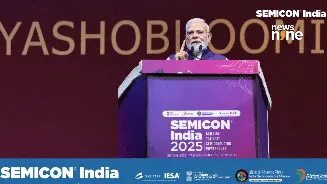






A Landmark Gathering in Delhi
From September 17th to 19th, the state-of-the-art Yashobhoomi convention centre in Delhi will become the epicentre of the global semiconductor world. SEMICON India 2026, jointly organised by the India Semiconductor Mission (ISM) and the global industry
association SEMI, is shaping up to be the country's most significant electronics event yet. More than 500 exhibitors, including over 240 international firms from 40 countries, are expected to participate. Big names from across the supply chain, such as Applied Materials, Advantest, and Disco Hi-Tec, are listed as exhibitors, highlighting the serious global interest in India's market. The event, set to be inaugurated by Prime Minister Narendra Modi, signals a major push to integrate India into the complex global chip ecosystem.
More Than Just a Conference
SEMICON India is not merely a series of talks; it's a platform for high-stakes business. The theme, “Silicon to Systems: Building the Ecosystem,” points to the event’s core purpose: to connect every part of the value chain, from raw materials and chip design to manufacturing and final electronics systems. For the first time, an immersive “Value Chain Experience” will guide visitors from 'sand to systems,' showcasing India's expanding capabilities. The conference floor will be a hotbed of deal-making, policy discussions, and strategic partnerships. It’s where global executives meet government officials, where startups pitch to investors, and where the future of India's tech manufacturing landscape is actively shaped.
Why All Eyes Are on India
The massive global turnout is no accident. It's the result of a deliberate, high-priority national strategy. The Indian government's India Semiconductor Mission (ISM) has been aggressively wooing global players with substantial financial incentives. Building on the initial phase, the government has approved Semicon 2.0 with a massive fiscal outlay to accelerate development. This push is driven by a desire for technological self-reliance and to de-risk global supply chains that have been historically concentrated in a few countries. India's domestic semiconductor requirement is projected to nearly double to around $200 billion, making it one of the world's most attractive growth markets.
The Journey from Design to Fabs
For years, India has been a powerhouse in chip design, with a significant portion of the world's semiconductor design engineers based in the country. However, the physical manufacturing of chips has remained elusive. SEMICON India 2026 is occurring as this narrative begins to change. The event’s focus reflects India’s ambition to move beyond design and assembly into full-scale fabrication plants, or 'fabs'. With three projects under the initial Semicon programme already in commercial production and more expected by year-end, the country is starting to show tangible progress. This shift is crucial for capturing more value and building a truly resilient domestic industry.
What This Means for India's Future
The congregation of global chip giants in Delhi is a powerful vote of confidence in India's economic trajectory. For the nation, a robust semiconductor ecosystem means more than just technological prestige. It translates into a wave of high-skilled jobs, with projections suggesting the industry could create a million direct and indirect jobs. It means potentially lower costs for everything from smartphones to cars by reducing dependence on imports. Furthermore, it bolsters national security by ensuring a stable supply of the critical components that power modern defense and infrastructure. The success of events like SEMICON India 2026 is a critical step in turning this ambitious vision into a reality.