








A Groundbreaking Vision in Orbit
GalaxEye, a Bengaluru-based startup founded by alumni of IIT Madras, aimed for the stars with its maiden satellite, 'Mission Drishti'. Launched on May 3, 2026, aboard a SpaceX Falcon 9 rocket, it wasn't just another satellite. Drishti was billed as the world's
first 'OptoSAR' satellite, a pioneering spacecraft designed to combine two powerful imaging technologies: optical sensors and Synthetic Aperture Radar (SAR). This hybrid approach was meant to solve a major problem in Earth observation. While optical sensors capture clear, detailed images like a standard camera, they are useless in darkness or when clouds get in the way. SAR, on the other hand, uses radar to see through clouds and at night, but the data can be complex to interpret. By fusing both, GalaxEye promised clients in agriculture, insurance, and defence a revolutionary capability: clear, all-weather, day-and-night imagery. The mission represented a significant leap for India's private space sector.
Silence After the Solar Storm
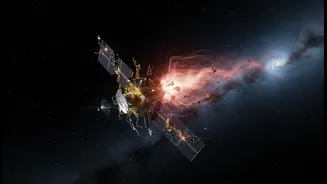
For over two months, the mission appeared to be a resounding success. GalaxEye confirmed that the satellite successfully completed a large part of its Launch and Early Orbit Phase (LEOP). The team established communication, deployed critical systems, and demonstrated control from their in-house mission centre in Bengaluru. However, during the final stage of this crucial setup phase, disaster struck. The company reported that the spacecraft encountered a geomagnetic solar storm. Soon after, communication with the Drishti satellite became intermittent before being lost entirely. The initial analysis points to radiation from this space weather event as the likely culprit, which is believed to have damaged a critical onboard system. As of early July, the company stated that while recovery efforts are ongoing, the likelihood of re-establishing contact is low.
A Painful But Valuable Lesson
In the face of a significant setback, GalaxEye's leadership has been transparent about the challenge while focusing on the positives. CEO Suyash Singh emphasized that even with the anomaly, the mission was not a total loss. In the weeks it was operational, the satellite successfully validated many of the core technologies, operational processes, and infrastructure the company had built. These are crucial engineering insights that can only be gained from a live space mission. According to Singh, these "invaluable engineering insights" will directly strengthen their future missions. The company has already announced its intention to launch two new, more advanced OptoSAR satellites within the next 24 months, incorporating the hard-won lessons from Drishti. This experience has also spurred the company to accelerate its plans to bring more of its supply chain and manufacturing processes in-house, giving it greater control over quality and reliability.
A Reality Check for India's Spacetech Dreams
The trouble with Mission Drishti serves as a sobering reminder of the brutal physics and economics of the space business. While failures are always disappointing, they are a baked-in part of the industry, especially for companies attempting to fly new technology for the first time. This incident is less an indictment of GalaxEye and more a reflection of the high-risk, high-reward nature of the spacetech frontier. For India's burgeoning private space ecosystem, it's a critical learning moment. As more startups join the fray, inspired by government support and the promise of a multi-billion dollar global market, they will all face similar risks. The ability to endure setbacks, learn from them, and build more resilient systems is what will separate the enduring players from the footnotes in history. The success of the sector will not be defined by avoiding failure, but by the ability to recover from it and push forward.