




A Landmark Flight into Orbit
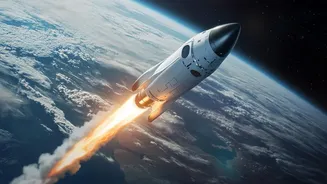
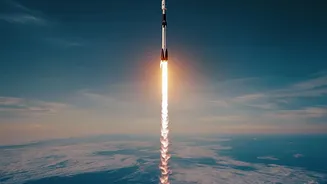
Lifting off from its Starbase facility in Texas, the 120-metre-tall rocket embarked on its 14th test flight, a mission that would prove to be its most successful yet. The launch itself was a spectacle, but the real triumph came 25 minutes later when Starship
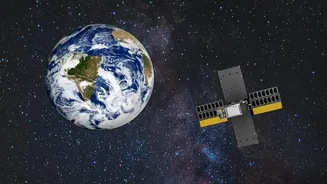
successfully performed its orbital insertion burn, officially entering orbit at an altitude of about 275 kilometres. While the flight was not without its challenges—an engine on the upper stage shut down prematurely—mission control made the bold decision to proceed. This success marks the first time the vehicle has achieved a stable orbit, a feat that had eluded its thirteen previous test flights. The mission also included the deployment of 26 next-generation Starlink satellites, demonstrating Starship's capability as a heavy-lift launch vehicle for the first time with an operational payload.
An Early but Controlled Return
The original plan was for a nearly 10-hour flight, circling the Earth six times before a splashdown near Chile. However, out of an abundance of caution due to the earlier engine issue, SpaceX opted to shorten the mission. After about three hours in orbit, Starship performed a deorbit burn and began its fiery descent through Earth's atmosphere. It successfully executed its complex 'belly-flop' maneuver to control its speed before splashing down in the northern Pacific Ocean. While the spacecraft was not recovered intact, the Super Heavy booster had already completed its own successful splashdown in the Gulf of Mexico as planned. Proving the ability to control the vehicle through launch, orbit, and reentry is a massive step forward, even if a perfect landing remains a future goal.
Why Reusability Is a Game-Changer
The core vision behind Starship has always been full and rapid reusability, a concept that promises to fundamentally alter the economics of space travel. Traditional rockets are used once and then discarded, making space access incredibly expensive. SpaceX’s Falcon 9 rocket already revolutionised the industry by making its first stage reusable. Starship aims to take this a giant leap further by making the entire launch system—both the Super Heavy booster and the Starship upper stage—capable of being reused. The goal is to eventually catch both stages with mechanical arms at the launch tower, enabling them to be refuelled and relaunched in a short amount of time. This efficiency could slash the cost of sending cargo and, eventually, people into orbit by orders of magnitude, making space far more accessible.
From the Moon to Mars
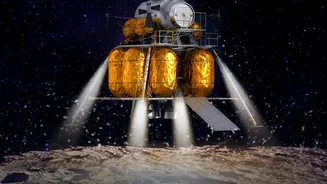
This successful orbital flight is not just a victory for SpaceX, but also for NASA. The US space agency has selected a version of Starship to serve as the human landing system for its Artemis program, which aims to return astronauts to the Moon. Future missions will require Starship to perform in-space refuelling from other tanker Starships to make the journey to the Moon, a capability that can only be tested now that the vehicle can reliably reach orbit. The Artemis IV mission, targeted for 2028, plans to use Starship to land astronauts on the lunar surface for the first time since the Apollo era. Beyond the Moon, Elon Musk’s ultimate ambition for Starship remains the settlement of Mars, a goal that relies entirely on the rocket's ability to be fully and rapidly reusable.
The Dawn of a New Space Race
Starship's success significantly intensifies the modern space race, which is increasingly dominated by commercial players. For India and its own ambitious space program, ISRO, this development underscores the rapid pace of innovation in the private sector. The sheer payload capacity of Starship—designed to carry over 100 tons to orbit—dwarfs that of existing rockets. This capability will not only accelerate the deployment of satellite constellations like Starlink but also enable entirely new ventures, from orbital data centres to space tourism. It puts pressure on competitors, including nations and private companies like Blue Origin, to develop their own next-generation, super-heavy-lift reusable rockets or risk being left behind in a market that Starship is poised to redefine.