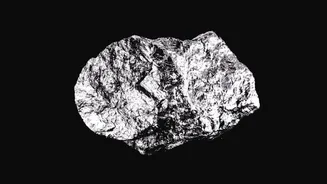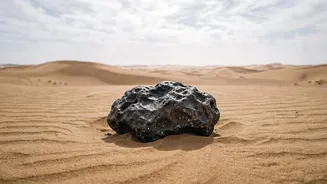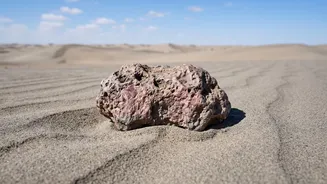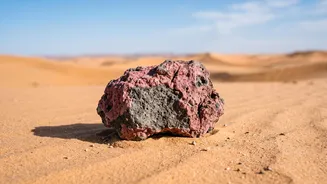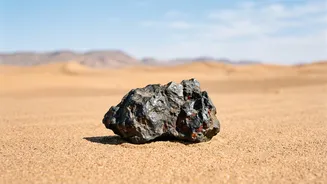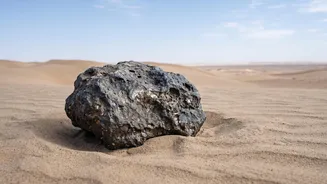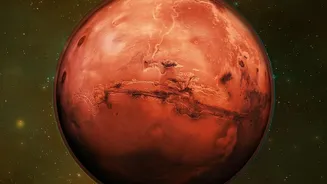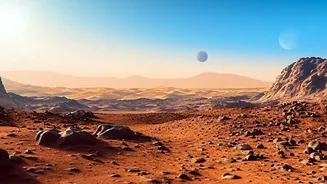

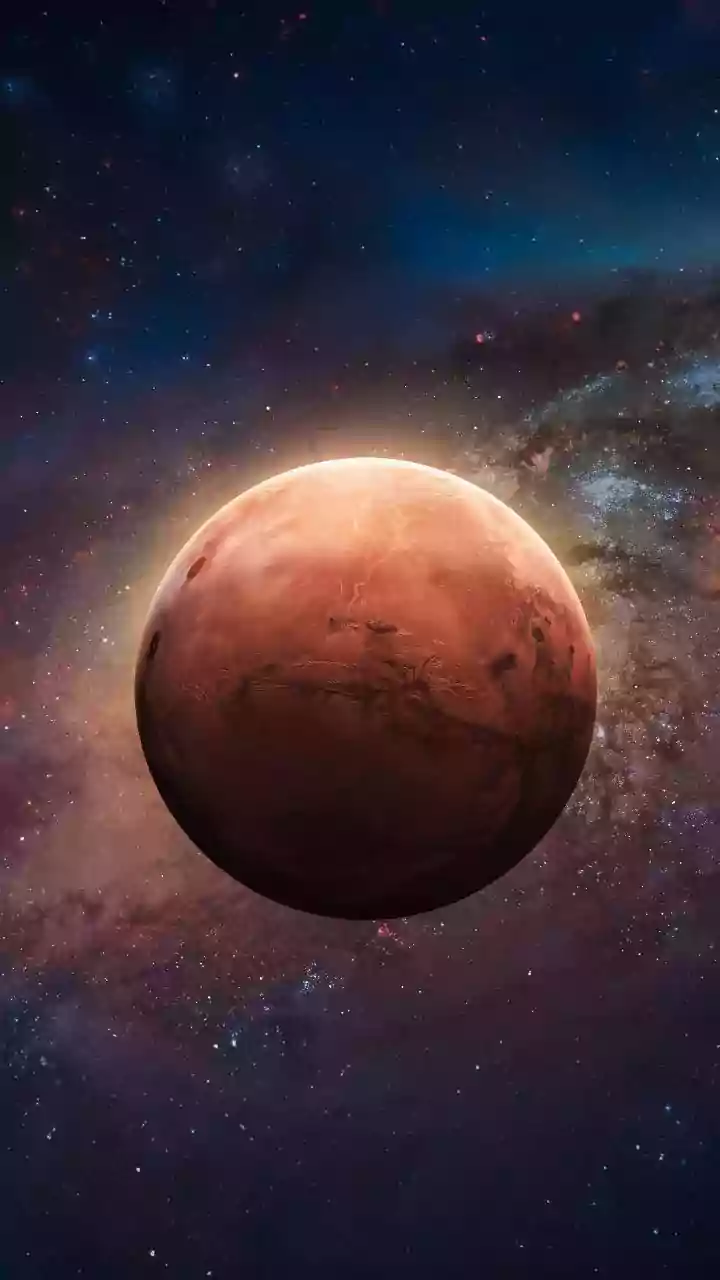

A message in a bottle from across the cosmos has been found in the sands of the Sahara. This is no ordinary rock; it is a piece of Mars, and it’s offering a tantalising glimpse into the Red Planet's ancient, and possibly watery, history.
A Messenger From the Red Planet
Discovered in
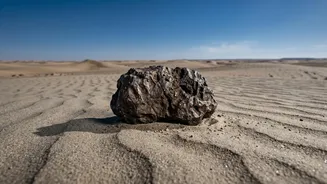
Mali in 2022, the rose-coloured rock named Teghaza 001 is one of the oldest Martian meteorites ever found. Scientists have confirmed it is a genuine piece of our planetary neighbour through telltale chemical fingerprints called oxygen isotopes, which act like a planetary 'return address'. The story of its journey is dramatic: billions of years ago, a powerful asteroid or comet impact likely blasted this piece of rock off the Martian surface, sending it tumbling through space for millions of years before it was eventually captured by Earth's gravity and landed in the desert, waiting to be found. Weighing nearly 800 grams, it is a free sample-return mission, courtesy of the cosmos, providing a tangible piece of Mars for study right here on Earth.
A Geological 'Rosetta Stone'
While over 400 Martian meteorites have been identified, Teghaza 001 is exceptionally special. Some have even called it a 'Rosetta Stone' for understanding early Mars. The reason lies in its age and composition. Using zircon crystals trapped inside the rock like miniature time capsules, scientists dated it to more than 4.1 billion years old. This means it formed during Mars's earliest chapter, a period from which we have very few samples. Unlike other ancient Martian rocks found on Earth, Teghaza 001 contains a unique mix of volcanic minerals, telling a complex story of how the planet's crust first formed from cooling magma and was then changed by other forces. It provides a sample from a part of the Martian crust scientists have never been able to study before.
Unlocking a Watery Past
The most exciting revelation from Teghaza 001 is the strong evidence of water. Minerals within the meteorite show clear signs of 'aqueous alteration', meaning they were chemically changed by interacting with liquid water. This critical event happened around 4.1 billion years ago, suggesting that a water cycle was active very early in the planet's history. This water could have come from magma within the planet's mantle or from surface water that seeped deep into the crust. The discovery points to the existence of ancient hydrothermal systems on Mars—think hot springs or geysers. Such environments are considered prime locations for the potential emergence of life, making this find a crucial piece of the puzzle in the search for past habitability on the Red Planet.
A Glimpse of Primordial Mars
This rock's chemistry not only speaks of water but also of the planet's formation. Its distinct mineral makeup matches observations made by NASA's Mars Reconnaissance Orbiter of the southern highlands, one of the oldest and most heavily cratered regions on Mars. Scientists have even pinpointed 13 potential launch sites from which the rock could have originated. Analysis also shows that Teghaza 001 carries an imprint of Mars losing its atmosphere and water over time. By studying this rock, we get a snapshot of a dynamic planet in transition, moving from a warmer, wetter world to the cold, dry desert we see today. It helps explain why Earth remained a blue marble while its sibling planet turned into a red, arid world.
Why This Desert Find Matters
Discoveries from rovers like Curiosity and Perseverance are invaluable, but they can only study their immediate surroundings. Meteorites like Teghaza 001 offer a different, but equally important, perspective. They are random samples from across the planet that give us a broader geological context. This meteorite provides physical proof of processes that rovers may observe from afar but cannot touch. By analysing these rocks in labs on Earth, scientists can perform tests that are far too complex for any robotic mission. Teghaza 001 fills a critical gap in our knowledge, providing ground truth for orbital data and giving us a physical link to a time when Mars might have been a much more Earth-like world.