


The Problem with Seeing Fires
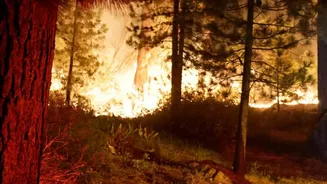
For decades, spotting a new wildfire has relied on a patchwork of systems: human observers in watchtowers, aircraft patrols, and public reports. More recently, ground-based cameras with AI have joined the effort. Existing government satellites can also
spot large fires, but they were never designed for this specific purpose. This means they often have critical blind spots. Their orbits can result in long delays—sometimes hours—between passes over a specific location, giving a small, manageable blaze time to explode into an uncontrollable inferno. Furthermore, their sensors may lack the resolution to detect smaller fires, and their view can be easily obscured by smoke or clouds.
An Eye in the Sky, Purpose-Built for Fire
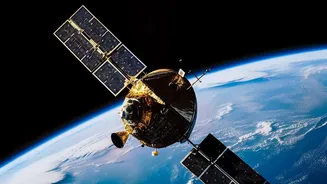
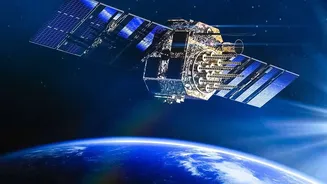
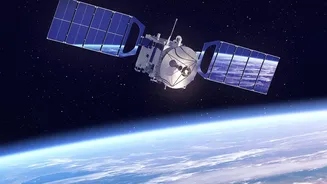
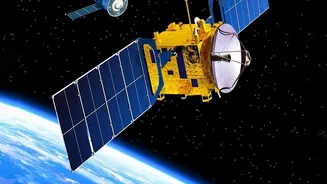
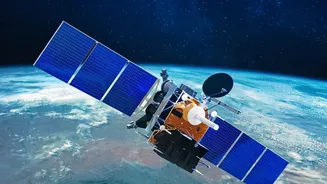
This is where FireSat comes in. It represents a new approach: a dedicated constellation of satellites designed specifically for wildfire detection. Rather than repurposing weather or imaging satellites, FireSat is a specialised tool. The project, led by the non-profit Earth Fire Alliance and its technical partners, aims to create a network of over 50 satellites that can scan the entire globe with unprecedented frequency. The goal is to provide near real-time alerts for new ignitions, detecting fires as small as 5x5 meters and revisiting every point on Earth much more frequently than current systems allow. This rapid detection capability could revolutionise how first responders tackle wildfires, giving them a crucial head start.
How the Technology Works
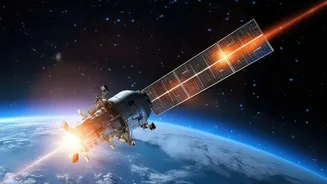
FireSat satellites are equipped with advanced thermal infrared sensors. These instruments don't rely on visible light like a normal camera; instead, they detect heat signatures. This allows them to spot the intense energy of a new fire day or night, and even see through smoke that would blind a conventional camera. The system uses multiple infrared bands to distinguish between high-intensity flames and lower-temperature smouldering. Onboard artificial intelligence processes the imagery, comparing it to previous scans of the same area and factoring in other data to identify a fire's heat signature while filtering out false positives like a sun-heated rock or industrial facility. Once a fire is confirmed, an alert can be sent to firefighters on the ground in minutes, not hours.
The Collaborative Effort Behind FireSat
Bringing such an ambitious system to life requires a massive collaborative effort. The headline-making name "FireSat" is primarily associated with the Earth Fire Alliance's mission, which launched its first three satellites in July 2026 in partnership with the state of California. These were built by spacecraft manufacturer Muon Space. However, the broader concept of dedicated fire-watching constellations involves multiple key players. The German company OroraTech, for instance, has already launched its own constellation of wildfire-detection satellites, built in partnership with Spire Global. Meanwhile, major aerospace and technology firms are also entering the fray. Lockheed Martin has partnered with companies like PG&E and Salesforce to form EMBERPOINT, a venture aimed at integrating advanced tech for wildfire management. Google is also involved in the FireSat program, lending its AI expertise to help analyse the vast amounts of data the satellites will collect.
What's Next for Wildfire Detection
The system is still in its early stages. The first FireSat prototype was launched in March 2025, followed by the first three operational satellites in the summer of 2026. These initial satellites will undergo calibration before they begin delivering operational data. The full constellation of more than 50 satellites is expected to be in orbit by 2030, which will enable the planned high-frequency global coverage. As more satellites join the network, the time between detections will shrink, and the data will become richer. This will not only empower firefighters to contain blazes more effectively but also provide scientists with an unprecedented dataset to better understand fire behaviour and improve predictive models, ultimately helping to protect communities and ecosystems around the world.