

What is the Bullet Train Project?
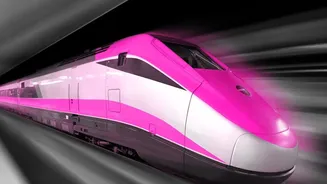
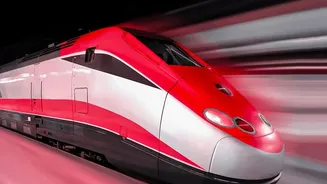
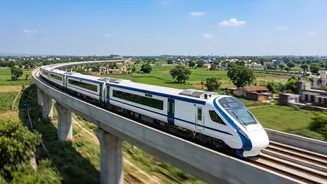
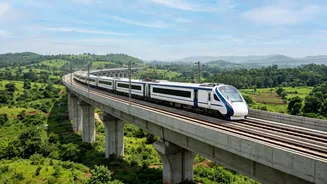
India's inaugural bullet train project is the Mumbai-Ahmedabad High-Speed Rail (MAHSR) Corridor. Spanning 508 kilometres, it will connect Maharashtra's financial capital with Gujarat's largest city. The project aims to slash travel time between the two
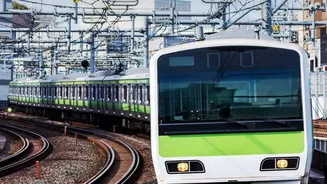
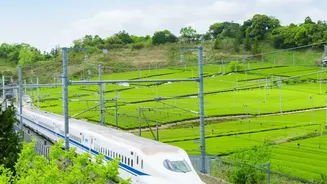
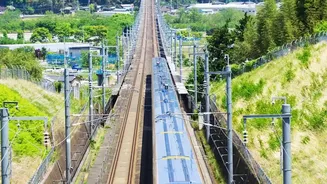
economic hubs from around eight hours by conventional rail to just over two hours. Using Japan's renowned Shinkansen technology, known for its impeccable safety and punctuality, the trains are designed to operate at speeds up to 350 km/h. The corridor will feature 12 modern stations, including hubs in Surat, Vadodara, and Vapi, transforming connectivity across the region. A significant portion of the route, about 92%, is elevated on viaducts to minimise land acquisition issues and environmental impact, with a key engineering feat being a 7-km undersea tunnel in Thane Creek.
A Landmark Collaboration with Japan
The MAHSR project is a cornerstone of India-Japan bilateral cooperation. The venture is being built with both financial and technological assistance from Japan. A substantial 81% of the project's cost is financed through a soft loan from the Japan International Cooperation Agency (JICA). The collaboration extends beyond funding to include the transfer of Shinkansen technology, covering advanced signalling systems, track infrastructure, and construction methods. While Japan's expertise forms the project's backbone, there is a strong push for 'Atmanirbhar Bharat' (Self-Reliant India). Indian companies are involved in manufacturing key components, and an indigenous high-speed train, capable of 280 kmph, is also being developed in parallel.
The Journey Through Delays
Since its foundation was laid in 2017, the project has navigated significant turbulence. The initial deadline has been pushed back several times due to a variety of challenges. The most significant hurdles were related to land acquisition, particularly in Maharashtra, which involved complex legal disputes with landowners. The COVID-19 pandemic further compounded delays, causing supply chain disruptions and affecting the collaborative work between Indian and Japanese teams. More recently, a former Japanese minister publicly commented on the delays, attributing them to the Indian side, a claim the Indian government has since addressed, stating the project is on track. These obstacles led to a substantial cost escalation, with estimates nearly doubling from the original projection.
Current Status: Construction in Full Swing
As of September 2026, the project is moving at a rapid pace. According to Railway Minister Ashwini Vaishnaw, significant construction milestones have been achieved. The National High Speed Rail Corporation Ltd (NHSRCL), the agency executing the project, has reported that pier work and viaduct construction have been completed along large sections of the corridor. Construction on the Surat-Vapi section is expected to be finished by December 2026. A major recent development is the completion of the first body frame for an India-made bullet train, which has been sent for structural testing. This marks a critical step, shifting the project's focus from purely civil construction to also include rolling stock manufacturing and testing.
What is the New Timeline?
According to recent announcements from the Railway Minister, the first service is expected to be inaugurated in 2027. The plan is to open the corridor in phases, with the Surat-Bilimora section in Gujarat slated to be the first operational stretch, potentially by August 2027. Testing for India's indigenous bullet train is scheduled to begin on the tracks around May or June 2027. After a testing period of two to four months, the train is expected to be officially inaugurated. While the first section is targeted for a 2027 launch, the completion of the entire 508-km corridor, including the more complex portions in Maharashtra, is anticipated to be around 2028-2029.