


Uttar Pradesh: Strengthening the Core Network
As one of India's most populous states, Uttar Pradesh is at the heart of a massive railway infrastructure overhaul. Dozens of projects are currently underway, including the construction of new lines, gauge conversions, and extensive multi-tracking works
designed to ease congestion on some of the country's busiest routes. One of the significant projects is the Ghaziabad–Sitapur third and fourth line, a critical part of the Delhi-Guwahati corridor. This expansion aims to tackle sections where capacity utilisation has reached up to 168%, promising to enhance connectivity between the northern and eastern regions of India. Other notable projects include new lines like Bahraich-Khalilabad and the doubling of key sections such as Varanasi-Prayagraj. These upgrades are not just about adding more tracks; they are about building a more fluid, reliable network to support the state's economic and social growth, improving punctuality and allowing for more train services.
Rajasthan: Enhancing Border and Regional Connectivity
Rajasthan is witnessing a strategic expansion of its rail network, with a strong focus on improving connectivity in its vast border regions. The Ministry of Railways has expedited three key projects totaling 827 km to bolster links in districts like Bikaner, Jaisalmer, and Barmer. These include proposed new lines such as Anupgarh-Khajuwala and Jaisalmer-Barmer-Bhiladi. Final location surveys and detailed project reports are in advanced stages for some of these routes. Beyond strategic needs, the expansion will drive economic growth and benefit local communities in remote desert areas. The state is also seeing significant upgrades under the Amrit Bharat Station Scheme, with 85 stations being redeveloped to include modern amenities, better accessibility, and commercial spaces to boost tourism and trade. The doubling of the Ringas-Sikar section is another project set to improve reliability and provide better access to important pilgrimage sites like Khatu Shyamji.
West Bengal: A Multi-Pronged Approach
West Bengal is the focus of a railway revolution, with numerous projects aimed at overhauling its dense network. As of early 2026, 43 projects were in various stages of planning and construction, including new lines, gauge conversions, and 26 track-doubling initiatives. A recent Cabinet approval includes the Kharagpur-Jharsuguda fourth line, a crucial project for a corridor that passes through industrial and mineral-rich regions. Another approved project is a bypass line between Adra and Joychandipahar, designed to create a dedicated route for freight trains and ease bottlenecks caused by industrial traffic. These developments are expected to significantly boost freight movement, particularly for commodities like iron ore and coal. For passengers, the expansion will improve connectivity for nearly 4,790 villages across the state and its neighbours, making travel to major cities, markets, and healthcare facilities easier.
Maharashtra: Boosting Urban and Rural Links
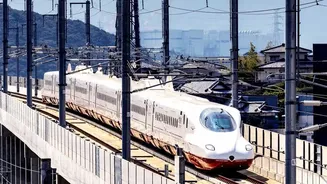
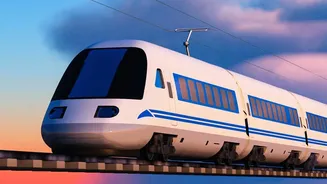
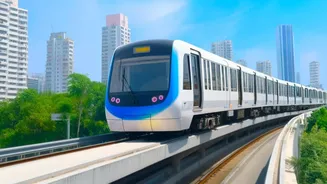
In Maharashtra, railway expansion is tackling both urban congestion and rural connectivity. The state is seeing a flurry of activity, from the high-profile Mumbai-Ahmedabad bullet train project to crucial upgrades in regional networks. MahaRail, the state's rail infrastructure body, is rolling out projects across six districts to eliminate traffic delays at level crossings by building new road over bridges and underpasses. In Pune, the railway station is undergoing a massive makeover, with plans to double the number of platforms from six to twelve and extend existing ones to accommodate longer trains. Furthermore, major projects like the Daund-Manmad doubling and the new Ahilyanagar-Beed-Parli Vaijnath line are significantly enhancing capacity across the Marathwada region. A proposed east-west rail corridor connecting Surat and Dankuni is also being designed to link previously unserved areas of the state, promoting industrial and rural development.
Gujarat: A Vision for Future-Ready Infrastructure
Gujarat is planning one of the most ambitious state-level railway projects in India's history: a new, eight-track electrified network designed to connect all 33 districts. This visionary plan aims to create a high-capacity rail grid completely independent of the existing Indian Railways infrastructure, optimized for industrial freight, express passenger services, and logistics. This project, spearheaded by the Gujarat Rail Infrastructure Development Corporation (G-RIDE), is envisioned as an economic accelerator to reinforce the state's position as a logistics capital. In addition to this futuristic plan, significant developments are already underway. The completion of the Western Dedicated Freight Corridor, a major portion of which passes through Gujarat, is already transforming freight movement and boosting operations at its major ports. The state is also central to the Mumbai-Ahmedabad bullet train, with the first section expected to open in 2027.