




Beyond the usual tourist trails, India is a land of superlatives. This journey takes you to incredible destinations that hold national and world records, offering a unique way to witness the country's grand scale and diverse achievements.
Statue of Unity, Gujarat: The World's Tallest
Towering over
the Narmada River in Gujarat, the Statue of Unity is the world's tallest statue, standing at an imposing 182 metres (597 feet). Dedicated to Sardar Vallabhbhai Patel, the first Deputy Prime Minister and Home Minister of independent India, this colossal monument is nearly twice the height of the Statue of Liberty. Inaugurated in 2018, it has quickly become a major tourist destination, drawing millions of visitors. The statue was built as a tribute to Patel's role in uniting more than 560 princely states into the Union of India. Beyond its sheer scale, the site features a viewing gallery at 153 metres, offering panoramic vistas of the surrounding Vindhya and Satpura mountain ranges and the Sardar Sarovar Dam. The entire complex is an integrated tourist destination with attractions like a zoological park, a flower valley, and a sound and light show, making it a testament to both history and modern engineering.
Mawsynram, Meghalaya: The Wettest Place on Earth
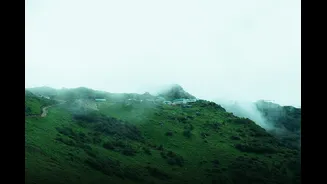
In the East Khasi Hills of Meghalaya lies Mawsynram, a village that holds the Guinness World Record for being the wettest place on Earth. It receives an average annual rainfall of about 11,872 millimetres. This staggering amount of precipitation is due to its unique geography. Warm, moist winds from the Bay of Bengal are forced to rise over the Khasi Hills, causing them to cool and release their moisture in torrential downpours. Life in Mawsynram has adapted to the constant rain. Locals use 'knups', which are traditional turtle-shell-shaped umbrellas made of bamboo and banana leaves, to shield themselves from the deluge. The sound of rain is a constant companion for much of the year. For travelers, it offers a vision of nature's power, with lush, vibrant green landscapes, powerful waterfalls, and an atmosphere unlike anywhere else.
Umling La, Ladakh: The Highest Motorable Road
For adventure seekers and road trip enthusiasts, Umling La in Ladakh represents a pinnacle of achievement. For a time, it was recognized as the world's highest motorable road, reaching an altitude of 19,024 feet. Built and maintained by the Border Roads Organisation (BRO), this pass connects the remote villages of Chisumle and Demchok near the Indo-China border. The journey to Umling La is not for the faint of heart, as the extreme altitude presents challenges like low oxygen levels. However, the reward is an otherworldly experience, traversing a stark, high-altitude desert landscape with minimal traffic and untouched beauty. While the nearby Mig La pass recently claimed a higher motorable elevation, Umling La remains an iconic and formidable destination that symbolizes human endeavor in one of the planet's most extreme environments.
Majuli, Assam: The World's Largest River Island
Nestled in the mighty Brahmaputra River in Assam, Majuli holds the distinction from Guinness World Records as the world's largest river island. This serene and lush island is the cultural capital of Assamese neo-Vaishnavite culture, established in the 15th century. It is home to numerous 'Satras' or monasteries, which are centres for traditional arts like mask_making, dance, and music. Accessible only by ferry, a visit to Majuli feels like stepping back in time. The island's landscape is a beautiful tapestry of rice paddies, wetlands, and small villages inhabited by the Mising, Deori, and Sonowal Kachari tribes. However, Majuli is a fragile paradise, facing significant erosion from the Brahmaputra's powerful currents, which threatens its existence and makes a visit all the more poignant.
Chenab Rail Bridge, Jammu and Kashmir: The World's Highest Railway Bridge
Soaring 359 meters (1,178 feet) above the riverbed, the Chenab Rail Bridge in Jammu and Kashmir is the highest railway bridge in the world, standing taller than the Eiffel Tower. This engineering marvel is a key component of a project to connect the Kashmir Valley to the rest of India's railway network. The construction of the steel and concrete arch bridge was a monumental challenge due to the difficult terrain and seismic activity in the region. The bridge is designed to withstand high‐velocity winds and major earthquakes, making it a symbol of India's advanced engineering capabilities. The completion of its main arch was a major milestone, and the bridge now facilitates travel and trade in this remote and beautiful part of any Himalayas.