







A Groundbreaking Launch and a Sudden Anomaly
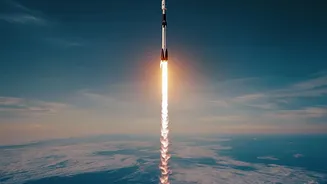
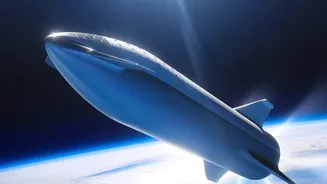
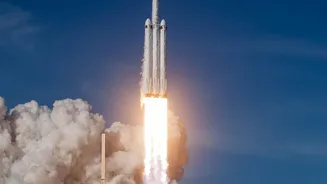
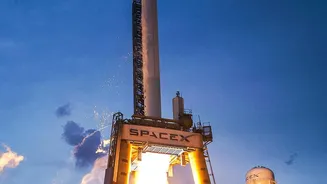
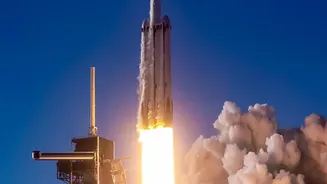
On Monday, the 14th test flight of SpaceX’s Starship vehicle lifted off from its Texas launch site, marking a pivotal moment in the rocket's development. For the first time, the massive spacecraft successfully achieved Earth orbit, a primary goal that
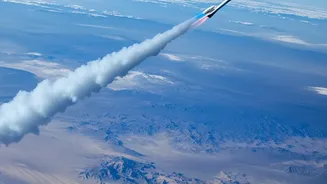
had eluded it in all previous attempts. This success represented a significant step forward in the company's quest to create a fully reusable transportation system for deep space missions. However, the triumph was quickly complicated when one of the upper stage's Raptor engines shut down prematurely during its ascent. While the remaining engines compensated to push the vehicle into a stable orbit, the malfunction introduced a critical element of risk into the flight plan.
An Abundance of Caution
The original mission was an ambitious one: a ten-hour journey that would see Starship circle the globe six times. But with a faulty engine, SpaceX opted for a safer, shorter flight path. Citing an “abundance of caution,” the company decided to end the mission after just three hours, bringing the spacecraft back to Earth much earlier than planned. The flight concluded with a dramatic, high-speed descent into the Pacific Ocean. While the vehicle managed to orient itself for a controlled splashdown, it hit the water hard and exploded in a massive fireball moments later, an ending that underscored the volatile nature of rocket testing.
Milestones Amidst the Mishap
Despite the shortened flight and explosive ending, the mission was far from a total failure. A key achievement was the successful deployment of its first-ever commercial payload. The spacecraft released 26 next-generation Starlink satellites into orbit, a task that represents the core of SpaceX's business model for Starship. Previous flights had only carried dummy weights, so proving its ability to deliver functional cargo to space is a major commercial victory. This success is vital for SpaceX's plan to use Starship to build out its lucrative Starlink internet constellation. The lower-stage Super Heavy booster also performed a controlled splashdown, achieving another of the flight's core objectives.
Ripple Effects for NASA's Moon Shot
The engine failure has implications that extend far beyond SpaceX. NASA is heavily reliant on a modified version of Starship to serve as the lunar lander for its Artemis program, which aims to return astronauts to the Moon by 2028. The same Raptor engines that malfunctioned on this flight are critical for safely landing astronauts on the lunar surface and lifting them off again. The incident has raised concerns within the aerospace community about potential delays to the Artemis timeline. Experts note that the crucial next step is determining whether the failure was an isolated issue with a single component or indicative of a more fundamental design flaw that would require a fleet-wide overhaul.
A High-Stakes Race Against Time
According to aerospace engineer Dean Sladen, who has been quoted in multiple reports, any fix that delays subsequent test flights eats into a schedule that is already extremely tight. SpaceX is not only under pressure to deliver for NASA but also to maintain its lead in the commercial space race. NASA has stated it will use whichever lunar lander is ready first, with Blue Origin's Blue Moon serving as a competitor. Furthermore, the United States is in a geopolitical race with China, which has announced its own goal of landing astronauts on the Moon by 2030. Every setback for the Starship program increases the pressure on both SpaceX and NASA, as the timeline for returning to the Moon allows little room for error.