




More Than Just a Streak of Light
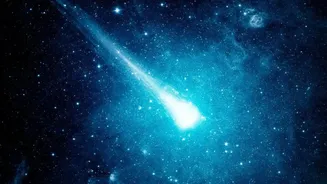
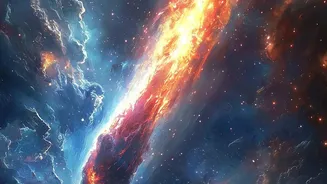
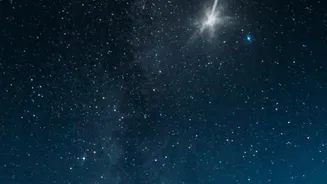
On August 3, 2026, NASA released a captivating image that has given both scientists and amateur stargazers a beautiful new perspective on meteors. The image, captured by an observatory in Nevada, shows a brilliant meteor streaking across the sky, photobombing
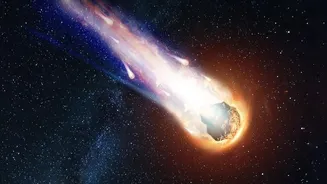
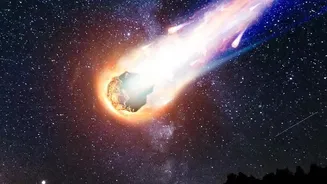
the Lacerta Nebula. But it’s not just the meteor’s brightness that’s exciting; it's the subtle shifts in color along its path. This isn't just a white or yellow streak. Instead, it’s a detailed receipt of the object’s demise, telling a story of its elemental composition as it vaporized in Earth's atmosphere. This image serves as a perfect illustration for what happens when space debris, often no bigger than a pebble, slams into our atmosphere at immense speeds.
A Rainbow of Cosmic Clues
So, what do these colors mean? Think of it like a cosmic flame test. Different chemical elements burn with distinct colors, and the same principle applies to a meteor. As the intense heat from atmospheric friction vaporizes the meteoroid, the elements within it glow. A flash of orange or yellow often points to the presence of sodium, while a bright yellow can indicate iron. A brilliant green, one of the more common colors, is typically a sign of nickel or magnesium. And if you spot a rarer blue or violet hue, you're likely witnessing the vaporization of calcium or magnesium. The air around the meteor itself, primarily nitrogen and oxygen, can also be superheated, often glowing red. This colorful display is essentially the meteor’s chemical fingerprint, laid bare for us to see.
The Science of a Meteor's Glow
For scientists at agencies like NASA, these colors are invaluable data points. By using a technique called spectroscopy, they can analyze the light from a meteor to determine its precise chemical makeup. This helps them understand where the meteoroid came from. For instance, the mineral composition can help link a meteor shower to its parent comet or asteroid. The upcoming Perseid meteor shower, which peaks in mid-August, is caused by debris from Comet Swift-Tuttle. Observing the colors of Perseid meteors—which often show a green tint from nickel—helps confirm and study the composition of that specific debris stream. Networks of cameras, like NASA's All Sky Fireball Network, constantly monitor the sky to capture these events, helping to build a comprehensive model of the meteoroid environment around Earth.
Your New Skywatching Superpower
This is the “one main check” for skywatchers. You don’t need a high-tech lab to appreciate this science; you just need to know what to look for. The next time you’re out watching a meteor shower, like the famously bright Perseids which are set for a great show this year with a new moon ensuring dark skies, challenge yourself. Instead of just counting the streaks, try to identify their colors. Did you see a quick flash of orange? That was sodium. A lingering green trail? You just saw nickel burn up 60 miles above the ground. This simple observation transforms the experience from passive viewing into active, amateur science. It connects you directly to the material that built our solar system, turning a simple wish upon a shooting star into a moment of genuine cosmic connection.
Why This Matters for Space Science
Each meteor is a tiny piece of history. These fragments are leftover building blocks from the formation of our solar system billions of years ago. By studying their composition, scientists can piece together the story of how planets, including our own, came to be. Analyzing the mineral content of meteoroids helps us understand the makeup of comets and asteroids, some of which may one day pose a threat to Earth. Tracking their paths and properties is crucial for planetary defense. So, while a colorful meteor provides a spectacular, fleeting show for us on the ground, the data it provides offers a lasting contribution to our understanding of the universe and our place within it.