







Meet NASA's Exoplanet Specialist
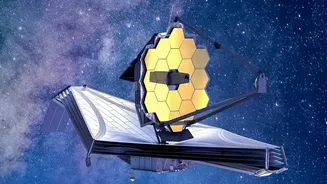
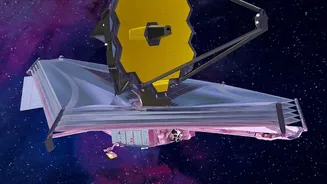
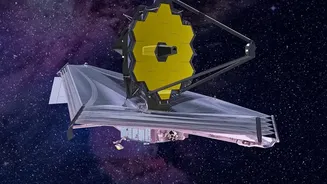
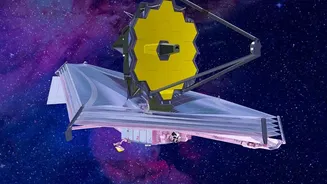
Pandora is a small satellite, or SmallSat, that launched in early 2026 as part of NASA's Astrophysics Pioneers program. Unlike massive, all-purpose observatories like the James Webb Space Telescope (JWST), Pandora is a specialist. Its entire purpose is to solve
one very specific and tricky problem that has stumped astronomers for years. The mission will focus on at least 20 known exoplanets, studying them in more detail than ever before. The goal is to figure out what their atmospheres are made of, paying close attention to clouds, water, and especially hazes. It’s a low-cost, highly focused mission designed to do one job extremely well.
The Stellar Contamination Problem
To understand an exoplanet's atmosphere, scientists use a technique called transit spectroscopy. When a planet passes in front of its star, some of the starlight filters through its atmosphere. By analyzing this light, astronomers can detect the chemical fingerprints of gases. However, stars are not perfect, static spheres of light. They have active regions, like sunspots, that can make the star's light flicker or change. These stellar variations can distort the data, mimicking or completely hiding the signals from the planet's atmosphere. This issue, known as 'stellar contamination,' makes it incredibly difficult to be certain about what an exoplanet's sky really contains.
Pandora's Clever Solution
This is where Pandora's ingenious design comes in. The satellite will stare at a star and its planet for long periods—about 24 hours at a time—observing them simultaneously in both visible and near-infrared light. By watching the star for an extended duration, Pandora can create a baseline understanding of its normal variations. When the planet then transits, the satellite can use this data to mathematically separate the star's own light patterns from the subtle changes caused by the planet's atmosphere. This allows scientists to effectively subtract the star's 'noise' and get a clean, reliable signal from the planet itself, untangling the two sources of light for the first time.
Why Haze Is So Important
Identifying haze is a primary goal for Pandora because it's a critical, and complicated, piece of the habitability puzzle. A hazy atmosphere can be a good or a bad sign. On one hand, some organic hazes can absorb harmful UV radiation, protecting a planet's surface and potentially creating a soup of carbon-rich molecules that could be precursors to life, much like on early Earth. On the other hand, a thick, reflective haze could block too much light, plunging the world into a deep freeze. Haze can also obscure the very molecules, like water, that astronomers are trying to detect. Pandora’s ability to characterize these hazes will help scientists determine which hazy worlds are intriguing candidates for life and which are likely barren.
A Partner to the Giants
While Pandora is a small mission, its impact could be huge. It's not competing with giants like JWST but complementing them. JWST is powerful but its time is in high demand, making it difficult to book for the long, repetitive observations needed to solve the stellar contamination problem. Pandora can perform these long stares, providing crucial data that will make observations from JWST and future telescopes more accurate and reliable. By vetting targets and solving the haze-and-starspot puzzle, Pandora lays the groundwork for more advanced observatories to confidently search for signs of life on the most promising alien worlds.