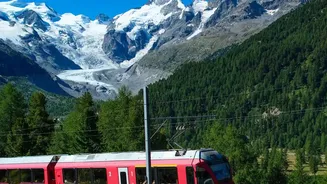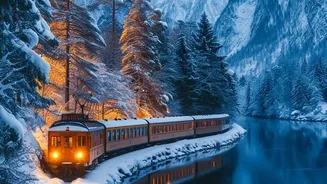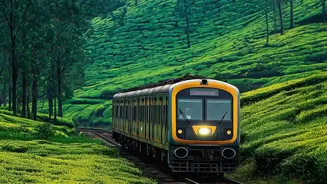


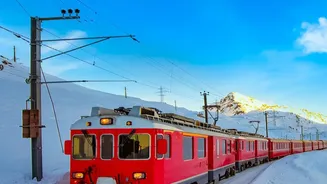
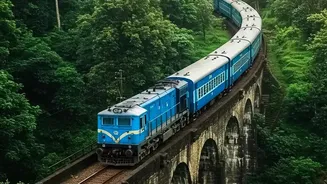
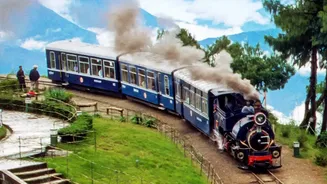
The Challenge of Winter Tracks
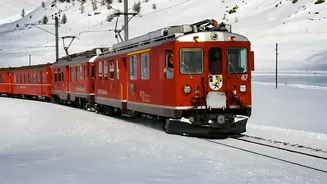
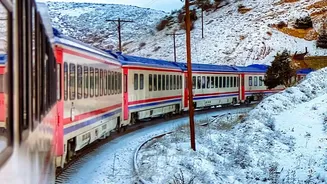
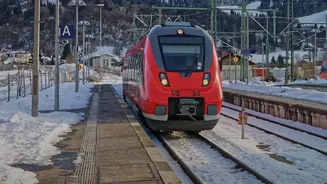
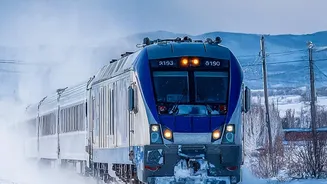
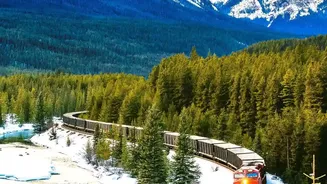
Winter transforms India’s mountain railway routes into breathtaking landscapes, but it also introduces significant operational risks. The primary concerns are dense fog, heavy snowfall, and the potential for landslides. Fog drastically reduces visibility
for loco pilots, making it difficult to spot signals and potential obstructions on the track. Snowfall can cover the tracks entirely, while sub-zero temperatures can threaten critical onboard systems, such as water tanks freezing on trains traversing high-altitude corridors. On historic narrow-gauge lines like the Kalka-Shimla route, the steep gradients and numerous curves compound these challenges, demanding extreme vigilance and specialised safety measures to prevent accidents.
A Look at Key Safety Protocols
To combat winter conditions, Indian Railways implements a multi-layered safety strategy. One of the most critical tools is the GPS-based Fog Safety Device (FSD), which is installed in locomotives. This device alerts the loco pilot of upcoming signals, even in zero visibility, allowing them to control the train's speed effectively. During dense fog, train speeds are capped, typically at 75 kmph, to ensure pilots can stop short of any obstruction. For enhanced visibility, key railway markers like signal sighting boards and level crossing barriers are painted with luminous yellow and black strips. In some areas, staff even place detonators on the tracks, which explode with a loud bang to audibly warn drivers of an approaching signal.
Human Vigilance and Ground Operations
Technology alone isn't enough; human oversight is paramount. Before the winter season begins, railway divisions conduct extensive preparatory tasks and staff training. Trackmen are deployed for continuous patrol, keeping a close watch on the condition of the rails, especially in landslide-prone areas. Station masters use a 'Visibility Test Object' (VTO) to officially assess the level of fog before giving a train the green signal. Furthermore, loco pilots are specially trained to handle low-visibility conditions and are instructed to whistle frequently, especially near level crossings, to alert road users. On some single-track heritage lines like the Kalka-Shimla railway, a time-tested manual procedure called the Neale's Ball Token system is still used, which provides physical proof that the track ahead is clear.
Spotlight on the Kalka-Shimla Route
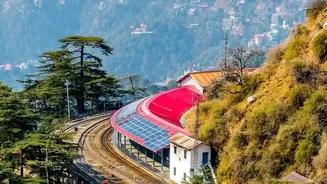
The UNESCO World Heritage Kalka-Shimla line is a prime example of winter railway operations. This narrow-gauge track, with its 102 tunnels and over 800 bridges, is particularly vulnerable to weather. Heavy monsoon rains often cause landslides that disrupt services, requiring extensive repair work that can sometimes affect the lead-up to the winter season. During winter, while snowfall enhances the route's charm, it also necessitates careful management. Indian Railways often runs special 'Holiday Special' trains to cater to the tourist rush during Christmas and New Year, all while operating under strict safety protocols. These measures ensure that despite the challenging terrain, the 'toy train' remains a major attraction for tourists seeking a memorable winter experience.
What Passengers Should Expect
For travellers planning a winter train journey in the mountains, it's wise to be prepared for potential disruptions. Despite the extensive safety measures, severe weather can still lead to delays, rescheduling, or even cancellations. Indian Railways often announces changes to its schedule in advance of the peak fog season, sometimes reducing the frequency of certain trains to prevent cascading delays across the network. Passengers are advised to check the train's status before starting their journey using the Railway Helpline (139) or the National Train Enquiry System (NTES) app. While the journey might take longer than scheduled, these precautions are essential for ensuring that every passenger's trip through the stunning winter landscapes of India is a safe one.