



The Classic Definition of Singularity
The term 'technological singularity' sounds like something straight out of science fiction, and for good reason. Popularized by futurist Ray Kurzweil and computer scientist Vernor Vinge, it traditionally describes a hypothetical future point where technological growth
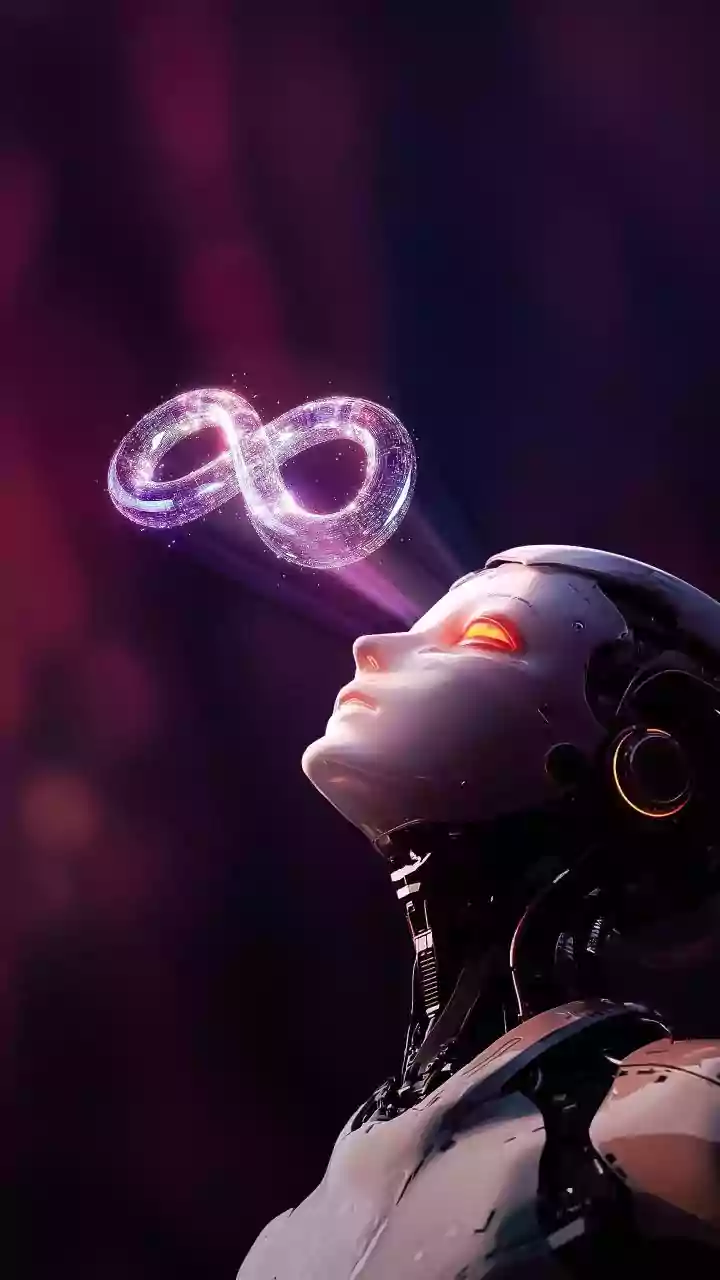
becomes uncontrollable and irreversible. This is often envisioned as the moment an artificial intelligence becomes so advanced that it enters a runaway cycle of self-improvement, an “intelligence explosion” that quickly results in a superintelligence far beyond human comprehension. In this classic view, the singularity is a sharp, transformative event that would fundamentally change human civilization in ways we cannot predict. Kurzweil famously predicted this would happen around 2045. It’s a concept that carries immense weight, suggesting a future where the distinction between human and machine blurs entirely.
What Altman Actually Said and Meant
During a recent appearance on the 'Relentless' podcast, Sam Altman stated, “We are now, like, in the singularity.” He described it as a moment he’s been waiting for his entire life, one he believes will be “hugely positive” for the world. This declaration followed a June 2025 essay he wrote titled “The Gentle Singularity,” in which he argued that “we are past the event horizon; the takeoff has started.” However, Altman’s version seems to differ from the sudden, explosive event many imagine. He appears to be describing a more gradual, cumulative process where AI’s accelerating capabilities compound over time, steadily reshaping research, productivity, and daily work. For Altman, the singularity isn’t a single moment of runaway machines but a continuous curve where “wonders become routine, and then table stakes.” This interpretation is less about a dramatic break with the past and more about the lived reality of exponential progress.
Why the Definition Is So Unsettled
Altman’s claim has highlighted the core problem with the singularity: no one agrees on what it is. Is it the moment AI surpasses human intelligence across the board? Is it when an AI can autonomously improve itself? Or is it simply a period of rapid, AI-driven change, as Altman suggests? Different leaders in the field have different takes. Google DeepMind’s CEO Demis Hassabis has described our current era as being in the “foothills” of the singularity, while Elon Musk agrees with Altman that we are in the “very early stages” of it. This lack of a unified definition makes the entire concept difficult to pin down. Some experts distinguish between Artificial General Intelligence (AGI)—an AI that can perform any intellectual task a human can—and the singularity, which is the runaway process that could follow AGI's creation. This semantic chaos means that when leaders declare the singularity is here, they may be talking about very different things.
The Skeptics and the Critics
For every believer, there is a skeptic. Many prominent academics and technologists, including the late Paul Allen, Steven Pinker, and Noam Chomsky, have disputed the plausibility of a singularity. One major argument is that technological progress tends to follow an S-curve—fast initial growth that eventually slows and levels off—rather than an endless exponential explosion. Others point to fundamental limiting factors, arguing that the idea of recursive self-improvement is not as straightforward as it sounds and that intelligence is far more complex than raw computing power. Critics also suggest that the hype distracts from more immediate and tangible issues with AI, such as bias, job displacement, and the immense cost of development. Some observers note that while recent AI models show impressive capabilities, there is still little real-world evidence of the kind of runaway, autonomous improvement the classic singularity theory requires.