







A Strategic Pivot, Not Just Cuts
In a move negotiated with employee representatives, BMW is set to offer voluntary severance packages starting this October. This is not a broad, sweeping layoff but a targeted effort aimed specifically at white-collar roles. The programme will be open
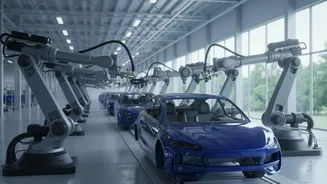
to employees in administration, research, and development, while pointedly excluding production line workers. This distinction is crucial; it signals that BMW is not scaling back its manufacturing capacity. Instead, the company is reallocating resources and streamlining its overhead to become leaner and more agile. The goal, according to company statements and industry analysis, is to reduce costs in areas that support the business, freeing up capital and focus for the immense challenges of vehicle development and technological transformation in a rapidly changing global market.
Why Germany Bears the Brunt
The focus on Germany is a direct reflection of BMW’s operational footprint. The automaker employs roughly 150,000 people worldwide, but more than half of them—about 85,000—are based in its home country. As a result, any significant restructuring of its corporate and development teams will inevitably have a disproportionate impact there. From October, offers will be made to a pool of approximately 40,000 eligible desk-based employees. Strong labour protections in Germany make outright layoffs difficult and costly, which is why major corporations typically rely on these voluntary programmes with attractive severance packages to reduce headcount. This move is also part of a wider trend, as other German giants like Volkswagen and Mercedes-Benz are undertaking similar measures to adapt their domestic operations to new market realities.
The Electric and Chinese Challenge
This restructuring is not happening in a vacuum. It is a direct response to a perfect storm of economic pressures. A primary driver is the intense and growing competition from Chinese electric vehicle (EV) manufacturers like BYD. These rivals have not only captured significant market share in China, BMW's single largest market, but are also beginning to make inroads in Europe. This has coincided with a general slowdown in the Chinese market, which prompted BMW to issue a profit warning in June 2026. Furthermore, the transition to electric vehicles is a capital-intensive process with currently slimmer profit margins compared to traditional combustion engine cars. By reducing overhead in administrative functions, BMW aims to fortify its financial position to better navigate the costly EV transition and compete more effectively on a global stage where the rules are being rewritten.
The Path Forward for Workers and the Brand
For the thousands of employees in Germany who will be presented with an option to leave, the programme offers a structured path out of the company. These voluntary exit schemes are typically designed to be more generous than standard redundancy packages, providing a financial cushion for those who accept. The process was agreed upon with BMW’s works council, ensuring that employee representatives had a say in its structure and terms. For the company, this is a calculated manoeuvre to prepare for the future. By protecting its manufacturing workforce, BMW is safeguarding its ability to produce its next generation of vehicles, particularly the upcoming all-electric models based on its 'Neue Klasse' architecture. The move is expected to begin boosting profitability by 2028, positioning a leaner BMW to better withstand geopolitical uncertainties, shifting market demands, and the high-stakes race for dominance in the electric era.