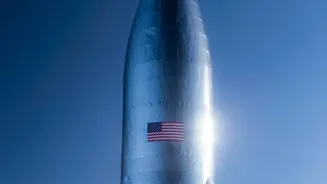



SpaceX just achieved a landmark feat in the history of rocketry. On November 14, the Starship upper stage was caught by its launch tower after a nearly day-long trip in orbit. This is a monumental step, but it's not the whole story.
The Holy Grail: A Ship Snatched from the Sky
For the first time
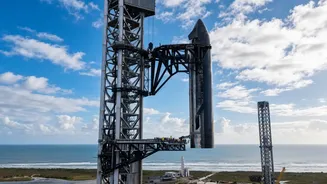
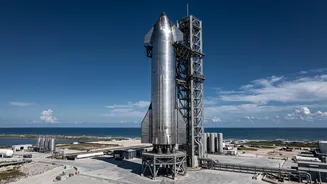
ever, an orbital-class spacecraft has returned from space and been caught, ready for reuse. After launching on November 13, the vehicle known as Ship 42 spent over 22 hours in orbit before beginning its fiery descent. Travelling at supersonic speeds over Mexico and the US, it precisely navigated back to its launch site in South Texas. In the mission's final, heart-stopping moments, the ship reignited its engines, flipped into a vertical position, and descended into the waiting 'chopstick' arms of the launch tower, known as 'Mechazilla'. The arms closed around the vehicle, securing it hundreds of feet above the ground in a maneuver previously confined to science fiction and computer animations. SpaceX commentators described the achievement as 'the holy grail of spaceflight', a missing link that could unlock rapid and full reusability.
A 22-Hour Journey Around the World
The successful catch was the grand finale of a long and complex mission. After reaching orbit, the Starship vehicle completed 14 laps around the planet. The journey was not just for show; during its time in space, the ship successfully deployed a payload of 26 next-generation Starlink V3 satellites into low Earth orbit. This demonstrates Starship's capability not just as a test vehicle, but as a functional satellite deployment platform. The extended 22.5-hour duration was a critical test of the vehicle's systems, from life support to thermal management, proving it could operate for long periods in the harsh environment of space before being commanded to return home. The decision to proceed with the landing attempt was only made after confirming the integrity of the ship's heat shield tiles while in orbit.
The Other Half of the Rocket
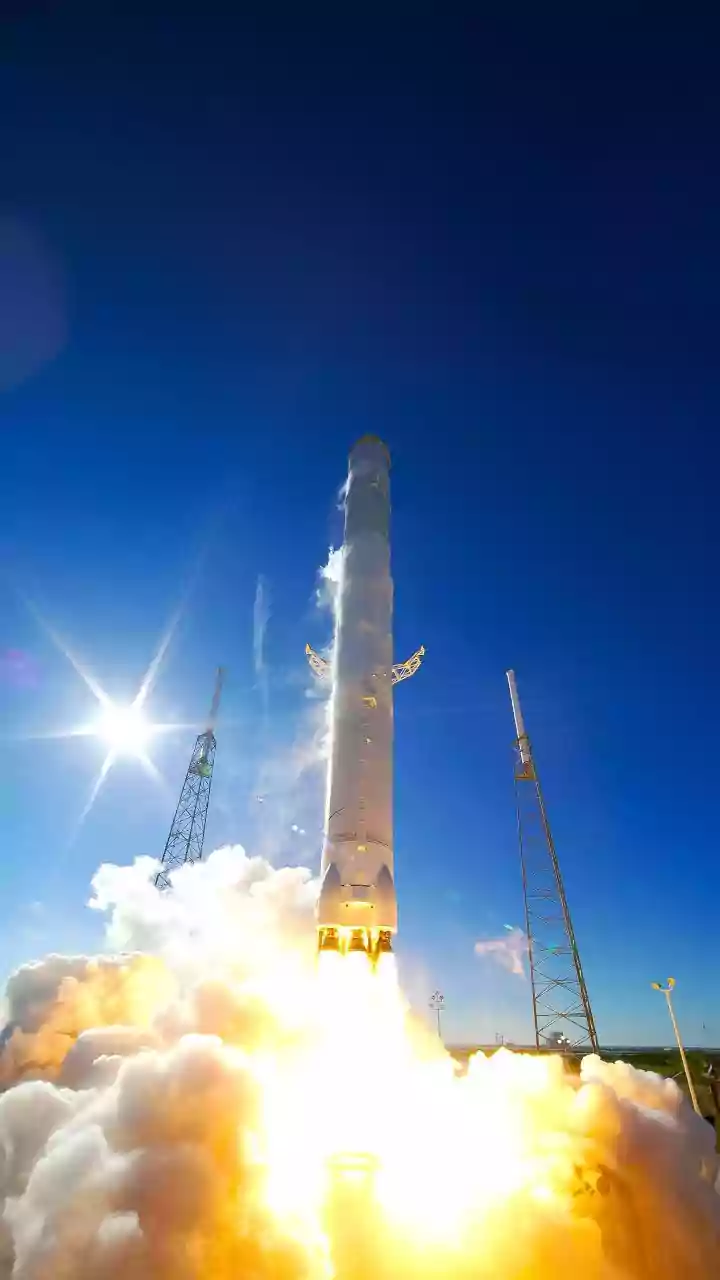
While the recovery of the Starship upper stage was a stunning success, the mission's other primary objective was not met. The ultimate goal is to recover both the ship and its massive Super Heavy booster on the same flight. Minutes after a successful liftoff, the booster separated and began its own return journey to the launch site. However, its guidance, navigation, and control system detected an anomaly — later attributed to slight engine underperformance and low fuel reserves — and automatically aborted the tower landing attempt. Instead of being caught, the booster diverted to a pre-planned splashdown zone in the Gulf of Mexico, where its flight was terminated. While SpaceX has successfully caught boosters on previous flights, this particular attempt at a 'double catch' was only halfway successful.
Why a Partial Success Is a Giant Leap
In the world of aerospace development, a test that is not a 100% success is not necessarily a failure. SpaceX's strategy has always been to fly, learn, and iterate quickly, often in public. While the loss of the booster was a setback, the successful recovery of the orbital stage is arguably the more difficult and significant achievement. No company has ever done it before. It validates the most challenging part of the system's design: bringing a vehicle back from orbital velocities and landing it with enough precision to be caught by a tower. This milestone provides invaluable data that will be used to improve the performance and reliability of the booster's return on subsequent flights. The November 14 catch proves the fundamental concept works, transforming the ambitious goal of a fully and rapidly reusable two-stage rocket from a dream into a tangible engineering reality that is now within reach.