






Why Timetables Change
Every year, from roughly June to October, railway authorities implement a monsoon schedule to ensure passenger safety. Heavy rains can cause waterlogging on tracks, landslides in hilly sections, and reduced visibility, making it dangerous to operate trains
at normal speeds. To mitigate these risks, loco pilots are instructed to reduce speeds, particularly in vulnerable areas like the geographically challenging Konkan Railway route, which features numerous tunnels and deep cuttings prone to mudslides. Speed restrictions, which can drop from 120 km/h to as low as 75 km/h in sensitive zones, naturally increase travel time. This forces a system-wide adjustment of schedules to prevent chaos.
The Ripple Effect on Transfers
These necessary safety measures have a significant cascading effect, especially for commuters who rely on interchanges to get to their final destinations. A delay of 15-20 minutes on one line can mean missing your connecting train on another, leading to long waits on crowded platforms. Major interchange stations like Dadar, Kurla, and Andheri in Mumbai, which are already saturated during peak hours, can become severe bottlenecks. A train arriving late means the crowd waiting for it swells, and by the time it arrives, another train might be due on the same platform, creating a confusing and potentially dangerous situation. The first spell of rain often exposes these vulnerabilities, leading to dozens of cancellations and network-wide delays as the system struggles to cope.
Rethinking Your Key Interchange
The station that works perfectly for your transfer on a dry day might become your worst enemy in the monsoon. For example, a commuter travelling from the Central suburbs to the Western suburbs in Mumbai might prefer Dadar for its direct connectivity. However, during heavy rain, Dadar is notoriously prone to overcrowding. A smarter, albeit potentially longer, alternative might be to travel further to a less congested interchange station or use a different mode of transport to complete the second leg of the journey. The key is to assess which stations handle monsoon pressure better. Sometimes, a station with fewer lines but better crowd management and less susceptibility to waterlogging is a more reliable choice during the rains.
How to Plan Your Monsoon Commute
Adapting to the monsoon schedule requires a shift in strategy. Blindly following your usual route is a recipe for frustration. First, stay constantly informed. Use official railway apps like the National Train Enquiry System (NTES) or other reliable third-party services to check the live status of your train before you even leave home. Railway zones often post real-time updates on social media. Second, build buffer time into your schedule. If your journey usually takes an hour, plan for it to take 90 minutes. Third, identify at least one or two alternative routes. This could mean using a different combination of train lines, or integrating a bus or metro leg into your journey to bypass a problematic section.
What the Railways Are Doing
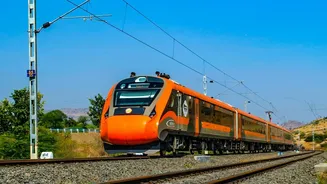
Beyond issuing new timetables, railways are also taking proactive steps. For the 2026 monsoon, Central Railway and Konkan Railway have revised schedules for dozens of long-distance and premium trains, including the Vande Bharat and Tejas Express, often reducing their frequency to ensure punctuality and safety. For suburban commuters, some relief comes in the form of longer trains. Central Railway recently upgraded several 12-coach services to 15-coach trains, increasing carrying capacity by 25% on key routes to ease overcrowding. Furthermore, new technologies like Intelligent Rainwater Monitoring Systems are being deployed to monitor water levels on tracks in real-time, allowing for quicker responses to potential disruptions.